
A typical day in Hangzhou: 7 home-style dishes from breakfast stalls to late-night food stalls.
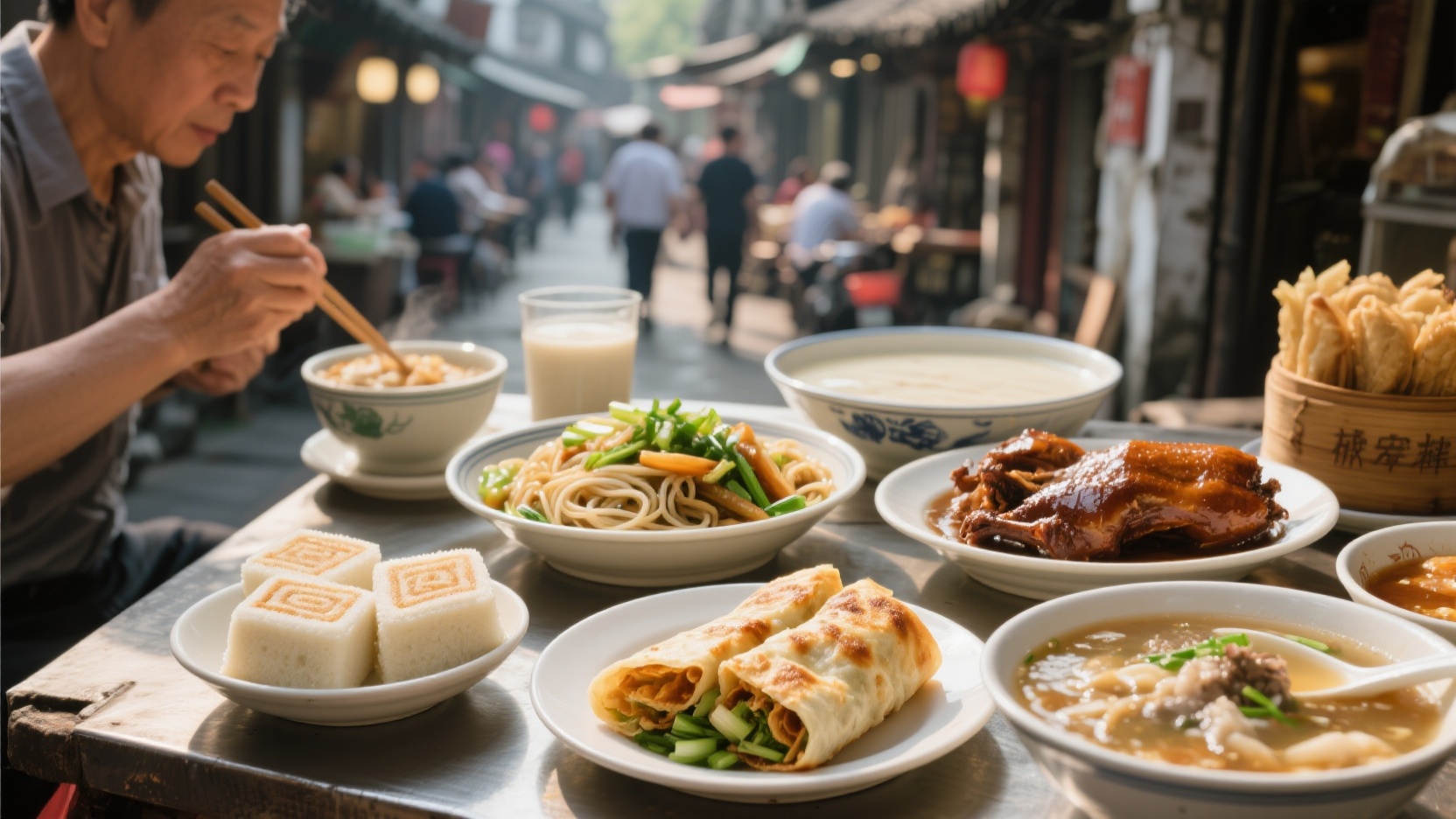
For Hangzhou locals, a day begins with the aroma of hot iron plates and steaming soy milk buckets. Tourists often flock to places like West Lake Fish in Vinegar Sauce and Longjing Shrimp, but the locals' dining logic is simpler: a hearty street breakfast in the morning, a noodle shop or stir-fry restaurant at noon, a pastry in the afternoon, and a bowl of hot soup to finish the night.
Breakfast stall in the early morning
Scallion pancakes with scallion filling are a common street food at Hangzhou breakfast stalls. The preparation is simple: wrap pieces of fried dough sticks and scallions inside a spring roll wrapper, press it on a griddle, and brush it with sweet bean sauce or chili sauce while pressing, until the surface of the wrapper is slightly charred and the edges are crispy. One bite reveals a crispy exterior, a soft fried dough stick inside, and a delightful blend of sweet and savory sauce with the pungent aroma of scallions. The "桧" in its name is related to Qin Hui, the legendary traitor of the Southern Song Dynasty. For older Hangzhou residents, eating it evokes both a folk imagination of the corrupt official and a down-to-earth humor of "even when life is tough, you can still find something crispy."
Scallion pancakes are often paired with savory soy milk. Soy sauce, vinegar, chopped scallions, dried shrimp, and pickled mustard greens are placed at the bottom of the bowl beforehand. When boiling soy milk is poured in, it quickly coagulates into a flocculent consistency, and then a small handful of fried dough sticks are sprinkled on top. The texture is richer than sweet soy milk, a complex blend of sour, salty, and savory flavors, with the aroma of soybeans and the dampness of dried shrimp. People in Hangzhou don't stir the savory soy milk to the bottom; instead, they sip it along the rim of the bowl, believing that if there are still flocculent pieces at the end, it's considered "full of flavor."
Lunch at a local eatery
Pian'erchuan is the foundation of Hangzhou's noodle cuisine. It's topped with pickled mustard greens, bamboo shoots, and lean pork slices. The noodles must be alkaline noodles, cooked until slightly firm before being stir-fried with the toppings or served with broth. The pickled mustard greens provide a savory flavor, the bamboo shoots offer a crisp texture, and the lean pork slices are thinly sliced and coated with a thick sauce. The broth is clear but rich in flavor. Locals don't crave heavy spiciness or oil in Pian'erchuan; they appreciate the freshness released by the bamboo shoots and pickled mustard greens. A bowl of this—first the noodles, then the broth—is a highly efficient and satisfying weekday lunch.
If the season is right, stir-fried winter bamboo shoots and pickled mustard greens are a "winter limited edition" on Hangzhou's dining tables, served in local eateries. Winter bamboo shoots are peeled and cut into chunks, while the stems of pickled mustard greens are cut into sections. The pickled mustard greens are first stir-fried in lard until fragrant, then the winter bamboo shoots are added and stir-fried together. A small amount of sugar is added for flavor, and no thickening is done. The winter bamboo shoots are crisp and sweet, while the pickled mustard greens are sour, salty, and have a fermented aroma; one green, one white, one crisp, one chewy. It's like the character of Hangzhou people: understated, but emphasizing seasonality and a balance of freshness and condiment.
Afternoon tea snacks
Dingsheng cake is a popular afternoon snack, often enjoyed around 3 PM. It's made by mixing glutinous rice flour and regular rice flour, adding red yeast rice powder to give it a light pink color, filling it with red bean paste, and then steaming it in a mold shaped like a dingsheng (a traditional Chinese symbol of victory). The steamed cake is soft with a slight rice grain texture, the red bean paste is smooth but not overly sweet, and the outer layer has a fragrant rice aroma. Its slightly upturned diamond shape was traditionally used to pray for "certain victory," but now it's more of a convenient snack for older Hangzhou residents picking up their children from school or chatting in teahouses.
Midnight Diner Stall
Song Sao's Fish Soup is a hidden menu item at many late-night food stalls. The main ingredients are usually mandarin fish or sea bass. The fish meat is steamed, then shredded into garlic cloves and cooked with shredded bamboo shoots, shiitake mushrooms, and ham. It's thickened with a light cornstarch slurry, topped with beaten eggs, and drizzled with a little vinegar before serving. The fish soup is fresh without being fishy, with a mild sour taste. The tenderness of the fish, the crispness of the bamboo shoots, and the savory aroma of the ham all come together in one spoonful. Drinking it late at night won't overwhelm your appetite, but rather provide a comforting feeling of being enveloped in its delicious flavor.
Hangzhou-style braised duck requires patience. Local Ma ducks are selected and marinated for several hours in soy sauce, rice wine, sugar, and various spices. It is then air-dried or smoked at a low temperature, and steamed and chopped before serving. The duck skin is a glossy, reddish-brown, the meat firm and not falling apart, with a savory-sweet aftertaste that intensifies with each chew, releasing the rich aroma of soy sauce and duck fat. It's a staple cold dish in Hangzhou households and one of the most irresistible dishes at food stalls. A piece of braised duck with rice late at night—its savory flavor instantly soothes away the day's fatigue.
From the streets to the alleys, experience the city through its food in a single day.