
A Stroll Through Artistic Landscapes in Southern Hangzhou: A Citywalk Checklist of 4km Old Alleys Avoiding West Lake (Including 2 Side Routes)
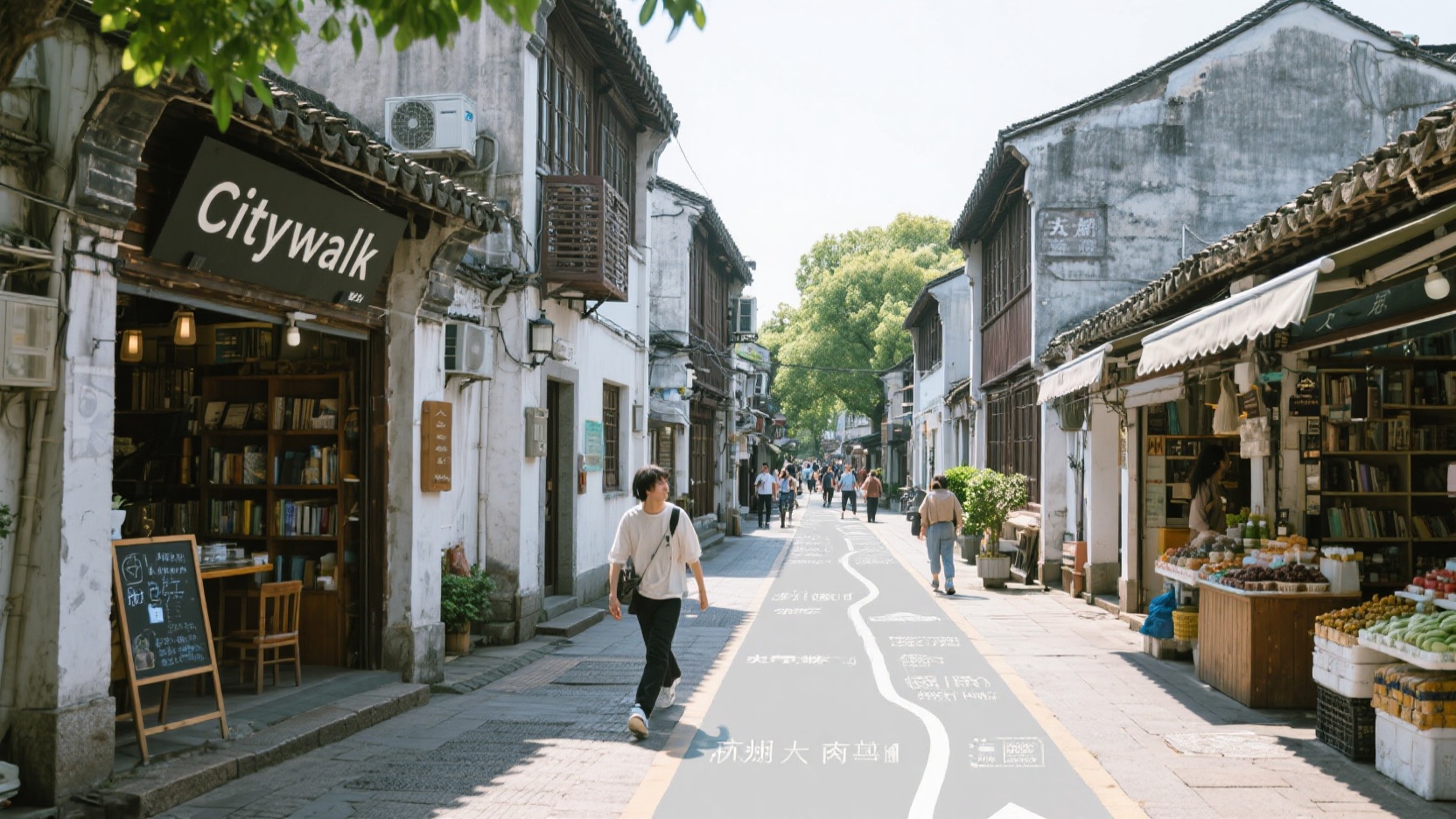
This is my ninth trip to Hangzhou specifically for street exploration. The first eight times I wandered around West Lake, Lingyin Temple, and Hefang Street, until one time I accidentally stumbled upon Wuliu Lane and discovered a nearly deserted walking route hidden in the south of the city. The entire route is about 4 kilometers long, from the Wuliu Lane historical district to the Youth Road Pocket Park, connecting Ming and Qing dynasty gates, a Republican-era bank building, a community market, secondhand bookstores, vinyl record shops, and vintage clothing stores. Below is a walking plan I compiled after two separate explorations, including two branch paths, suitable for travelers who want to avoid crowds and see only the true fabric of the city.
Main route starting point: Wuliu Lane and Donghe Greenway (approximately 10 minutes walk)
Get off at Jiangcheng Road Station or Chengzhan Station on the subway and walk into the Wuliuxiang Historical District. Here, clusters of two-story wooden houses from the late Qing Dynasty and early Republic of China era are preserved, with continuous covered walkways along the Donghe River. The blogger's camera angle: Standing on the "Doufu Sanqiao" (Three Bridges of Doufu) facing south, you can capture the river, old gates, and bamboo clotheslines all in one frame. At 8 am, residents are washing mops by the river, creating a strong sense of everyday life. Why it's worth stopping for five minutes: Wuliuxiang isn't a tourist attraction, but a living community. You'll see old Hangzhou residents playing chess in front of their doors, enamel cups in hand, vines climbing over faded doorplates—this unspoiled daily life is hard to find in Hangzhou's main urban area anymore.
Walking north along the Donghe Greenway for about ten minutes, you'll pass several century-old camphor trees and a small stone bridge. Be careful not to walk too fast; this section is best suited for using a 35mm lens or a mobile phone with 2x zoom to capture the reflections on the river and the overlapping shadows of the old houses' walls. If it rains, the reflections on the bluestone slabs will make the photos even more "wet."
Side Route 1 | Enter Dama Lane from Meihuabei fork and see the wildest side of Hangzhou (round trip approximately 20 minutes)
Near the Plum Blossom Monument, you'll encounter the first fork in the road. If you have enough time, it's recommended to turn right and cross Youshengguan Road to enter the Dama Lane-Shiwukui Lane area. This is the most densely populated community vegetable market corner in the old southern part of Hangzhou. The blogger's camera angle: Standing at the entrance of Dama Lane, using a telephoto lens to compress the cooked food stalls, fruit carts, and hanging braised ducks on both sides, with the mottled old residential buildings in the background. Why it's worth stopping for five minutes: The shouts of vendors, the clanging of scales, and the sizzling of oil in pans here are the most vibrant sound samples of Hangzhou. You can also see local aunties squatting by the roadside picking shepherd's purse, with vendors announcing prices in Hangzhou dialect—the atmosphere is just as immersive as any documentary.
This branch line takes about 20 minutes round trip. You don't need to go too far; just turn back when you see the sign for "Tai Miao Ruins". Avoid the peak grocery shopping hours from 11:30 am to 12:30 pm, otherwise it will be quite crowded.
Mid-section of the main route | Republican-era buildings and vintage vinyl record stores on Zhongshan Middle Road (approximately 20 minutes walk)
After returning to the Plum Blossom Stele, continue north along Yousheng Temple Road, then turn west onto Qingtai Street, and you'll soon enter Zhongshan Middle Road. This road boasts Hangzhou's most complete collection of Republican-era commercial buildings, with former bank buildings, time-honored shopfronts, and terrazzo walls lined up in a row. The blogger's camera angle: Near Yangbatou, find a neoclassical bank building, stand on the opposite sidewalk, wait for a bus or electric scooter to pass, and capture both the dynamic silhouette and the static stone pillars in the same frame. Why it's worth stopping for five minutes: Most of these buildings were constructed in the 1920s and 30s; every Roman column and bronze doorknob bears the marks of the Qiantang River's heyday as a commercial port, more directly relevant than any museum's illustrated display.
Continuing north along Zhongshan Middle Road, pay attention to the second-floor windows. Many shops have renovated their ground floors, but the second floors still retain the original wooden shutters and wrought iron balconies. There are several vintage clothing stores and vinyl record shops along the roadside; they don't have flashy signs, so look for half-open glass doors. Push open the door and browse through old leather jackets or vinyl records; the owners usually won't bother you. I won't provide specific shop names here because the turnover is rapid, but if you walk the entire length of Zhongshan Middle Road, you'll encounter at least two or three.
Side Route 2 | Turn into Dajing Alley and explore independent bookstores and cafes (approximately 25 minutes round trip)
Upon reaching the southern section of Zhongshan Middle Road, you'll see a narrow entrance leading to Dajing Lane. This is the second branch road, and it's recommended to turn in. Dajing Lane connects Zhongshan Middle Road and Hefang Street, but it's a completely different world from the hustle and bustle outside. The blogger's camera angle: beside an old well in the middle of the lane, shooting from a low angle towards the end, capturing the bluestone path, old wooden doors, and loquat trees peeking over the walls. Why it's worth stopping for five minutes: The tranquility of Dajing Lane is created by the high walls on both sides; occasionally, a bicycle bell rings, its echo lingering on the stone path. Hidden here are several independent bookstores and hand-drip coffee shops, with extremely small storefronts, some even without signs, only a handwritten wooden plaque.
This side route is best taken after 3 PM, when the light softens and there are window seats available in the bookstore. You can buy a coffee, flip through a few pages of a book about Hangzhou's urban history, and wait for the sunlight to slant from the west onto the top of the bookshelves before slowly making your way back to Zhongshan Road. The round trip takes about 25 minutes, so avoid weekend afternoons if you want to avoid crowds.
Main route endpoint: Youth Road Pocket Park and Huansha Road (approximately 15 minutes walk)
Turning off Zhongshan Middle Road onto Pinghai Road and walking west for about ten minutes, you'll enter the Qingnian Road area. Here you'll find several pocket parks nestled among residential buildings. They're small, but planted with osmanthus and Japanese maple trees. The blogger's camera angle: Find a pocket park with a circular archway, stand inside the archway and shoot outwards, using the archway frame as a foreground to include passing commuters or elementary school students in the frame. Why it's worth stopping for five minutes: Walking this route, you see Hangzhou's history layered from the Ming and Qing dynasties to the Republic of China era and then to the present day, and these pocket parks are a microcosm of contemporary community life. In the evenings, you'll see elderly people practicing Tai Chi, and young people sitting on the steps eating their lunchboxes—the warmth of the city is right here.
Continue west to Huansha Road to end your trip, or take a bus to West Lake to watch the sunset. The entire route is about 4 kilometers long, and if you walk slowly and take photos, it will take about three to four hours.
In summary, this route is not suitable for first-time visitors to Hangzhou, but rather for repeat travelers who have already seen West Lake and want to explore the city's unpretentious side. All the side routes lead to the same conclusion—Hangzhou is not just about lakes and mountains, but also about streets and alleys. It's recommended to set off on a weekday morning, wear comfortable shoes, and bring a fixed-focus camera or mobile phone. If you only follow the main route, it will take about two hours; if you add the two side routes, allow about four hours. When you encounter a farmers' market or a used bookstore, don't just take pictures; buying some vegetables or a used book is the best way to respect the street.
Practical Tips: First, there is almost no shade along the way, so avoid midday in summer; second, the ground in Dama Lane is often oily, so don't wear white shoes; third, many residents live in Wuliu Lane and Zhongshan Middle Road, so avoid taking photos facing the windows; fourth, vinyl record shops and vintage clothing stores usually only open in the afternoon, so don't go too early; fifth, this route is more charming on rainy days, but be careful as the bluestone slabs are slippery.