
Hangzhou's Artistic Undercurrents: 7 Spiritual Corners from Old Factories and Private Art Galleries to Independent Bookstores
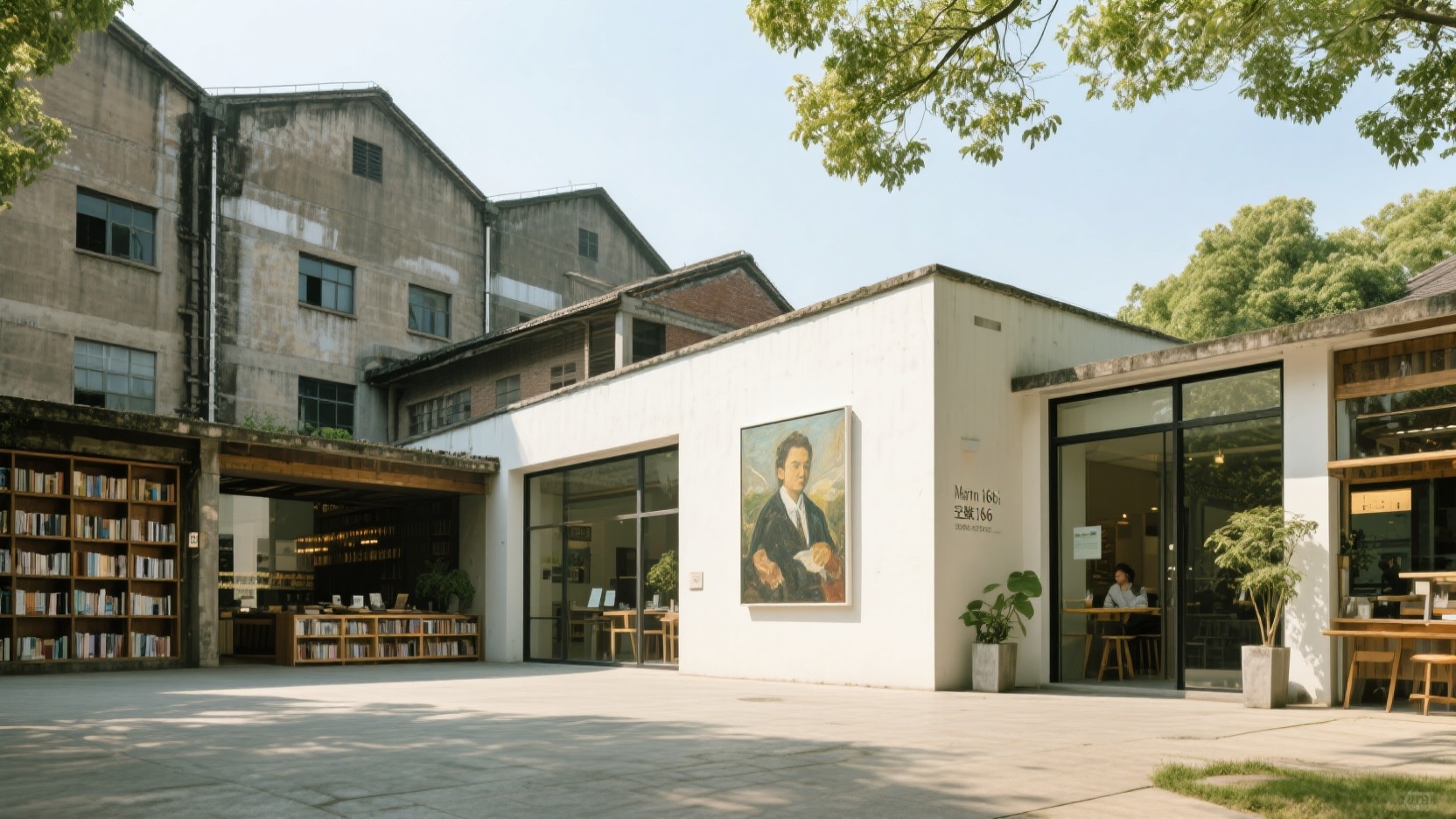
If you limit your Hangzhou tourism map to West Lake, Lingyin Temple, and Hefang Street, you'll miss the city's truly relaxed side. This route doesn't focus on landmarks; instead, it takes you through old factories, old neighborhoods, and independent spaces, making it ideal for tourists who have already visited Hangzhou and want to experience the city in a different way. The following seven locations mainly consist of independent bookstores, private art galleries, vintage spaces, creative parks, and community cafes, and can be explored over two days at a leisurely pace.
Big Barn · One-Way Space
Designed by architect Liu Yichun, the Liangzhu Grand Granary was originally a granary. The building retains its sloping roof and concrete beams and columns, while floor-to-ceiling windows bring in natural light. The bookstore's selection leans towards humanities, architecture, art, and design, and its exhibition area often features small document exhibitions. The overall atmosphere is restrained and quiet, making it ideal for a morning visit. Highlights include the long bookshelves, the mezzanine reading area on the second floor, and the geometric lines of the building's facade. For photography, it's recommended to go around 3 PM to capture the shadows of the trees outside the glass curtain wall against the light; alternatively, stand on the east side of the building and look up at the relationship between the sloping roof and the sky to avoid overexposure from the midday sun.
Dongxinhe Innovation Park
Located near Liuxia, Dongxin Hechuang Park is a renovated old factory area, preserving red brick factory buildings, water towers, and old chimneys. The park features furniture boutiques, design studios, general stores, and small exhibition spaces. Its atmosphere lies between industrial heritage and everyday aesthetics, without a rigidly defined tour route. Highlights include the continuous red brick walls of the old factory buildings, the window displays in various studios, and the occasional exhibitions. For photos, wearing solid-colored clothing against the backdrop of the red brick walls makes for better shots; in the evening, when the lights come on, the old chimneys and greenery create a retro feel.
Silk Union 166 Cultural and Creative Park
Silk Union 166, located by the canal, was originally the Hangzhou Silk Printing and Dyeing Joint Factory. Some of its sawtooth-shaped factory buildings and old equipment have been preserved. The park mainly houses small design companies, photography studios, and cafes, resulting in low visitor density. Highlights include large sawtooth skylights, old-fashioned exhaust fans, and weathered workshop signs on the walls, which will resonate with those interested in industrial archaeology. For photography, it's recommended to utilize the light streaks created by the sawtooth skylights to capture localized light and shadow; the old machines in the workshop corridors can be used as foreground elements to create a contrast between old and new.
Kongshan Art Museum
Nestled near an old neighborhood, the Kongshan Art Museum is a small space that primarily features solo and group exhibitions by young artists, encompassing painting, video, and installation. The museum includes a courtyard and a café, creating a relaxed atmosphere. The ambiance is light and independent, with the exhibition lighting more akin to natural light. The key elements are the curatorial logic and spatial flow, especially the semi-open courtyard at the entrance, which often becomes part of the exhibition itself. For photography, it's recommended to use a medium telephoto lens in the courtyard to capture moments of relaxation after viewing the exhibits, avoiding the use of flash or prolonged camera use inside the exhibition halls.
Martin Goya's business
Martin Goya Business in Zhuantang is one of Hangzhou's few avant-garde independent art spaces, encompassing contemporary art, live music, and subculture gatherings. The space is converted from an old factory building, with an inconspicuous entrance and retaining many industrial traces inside. The highlight is the immediacy of the exhibitions: most projects only run for a few weeks, often featuring installations and performances, making it suitable for readers interested in the contemporary art scene. Before taking photos, confirm whether photography is permitted; if so, you can capture the light boxes and projections in the dimly lit spaces, but please refrain from using flash to avoid disrupting the atmosphere.
Riverside Coffee
Riverside Cafe, located along Da Dou Road by the canal, is a community-style independent cafe nestled in an old residential building. Seating is limited, with bookshelves taking up nearly half the space. It offers hand-drip coffee and a small selection of homemade pastries. Its ambiance resembles a "readable public living room," where you can often encounter nearby residents and independent publishers. The highlights are the riverside window seats, the antique wooden furniture, and the owner's quirky book selection. For photography, it's recommended to capture details of the cups and tabletops when natural light shines obliquely through the street-facing wooden windows, avoiding direct shots of other customers.
Mantoushan Community and the foot of Fenghuang Mountain
Mantoushan Community retains the old Hangzhou lifestyle, with small galleries, photography studios, and handmade shops scattered along the streets at the foot of Phoenix Mountain. The lack of unified development and the eclectic mix of shop signs and wall styles create a sense of a wild art community. Highlights include graffiti on the walls of the old alleyways, the windows of independent galleries, and scenes of daily life within the old community. For photography, it's recommended to visit in the early morning or late afternoon to take advantage of the narrow alleyways and high light contrast to capture the interplay of shadows and highlights in the streetscape; check before entering any gallery to see if photography is permitted.
These locations are scattered in different directions, so it's recommended to break them up and visit them in the order of "Liangzhu—Liuxia—Grand Canal—Shangcheng—Zhuantang—Fenghuangshan Foot". Allowing sufficient travel time will allow you to see another side of Hangzhou beyond its traditional tourist attractions: it doesn't rely on a single landmark, but rather on the spiritual corners scattered throughout factories, old communities, independent bookstores, and cafes. Explore the city's spiritual corners on foot.