
What will you see if you stay one night on Binjiang Road in Guilin? I'll show you by the hour.
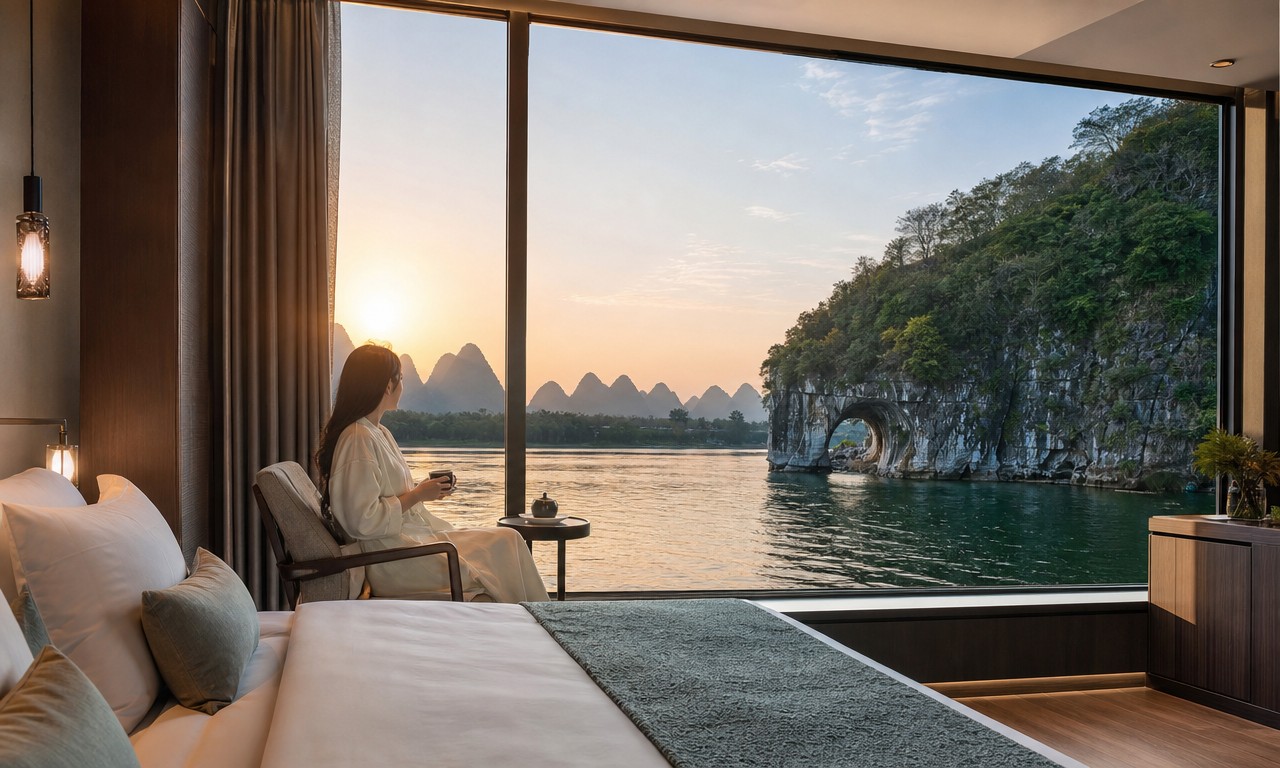
How to choose accommodation in Guilin? This is the question I get asked most often before every trip. Having lived in Guilin for a long time documenting the local culture, my most frequent advice is: don't just think of a hotel as a place to sleep; consider which area it's in and at what time of day it can save you a lot of hassle. So this article won't list room types or star ratings; it will focus on the most representative riverside area of Guilin, and in 24-hour order of the day of check-in, clearly explaining what you'll actually encounter and what you should do at each time.
2:00 PM – Don't check in too late; this time is perfect for catching the first glimpse of the river.
The Binjiang Road isn't a straight boulevard overlooking the Li River; it's actually a narrow road that hugs the river and connects Elephant Trunk Hill, Fubo Hill, and Diecai Hill. Checking in around 2 PM is ideal, not because of hotel rules, but because the light is best then. You can draw back the curtains to see the reflection on the river and the clearest outlines of the mountains. Arriving after dark will significantly diminish your first impression of the area.
Don't focus solely on "river view" when choosing a hotel. The Binjiang Road area offers everything from budget guesthouses to mid-range hotels; what truly determines the experience is the walking distance to the riverside promenade. Being able to walk across the street to the river is a completely different experience from having to walk for over ten minutes to reach the water. The criterion is simple: before booking, draw a map showing the walking route from the hotel to the first entrance of Elephant Trunk Hill. If it takes more than ten minutes, it's essentially outside the soul of this area.
16:30 – Head to Elephant Trunk Hill before evening; don't wait until the crowds have thinned out before you set off.
Most travel guides will tell you that the light is best to visit Elephant Trunk Hill in the morning. However, the best time to visit, especially for those staying along the riverside promenade, is actually between 4:30 and 5:30 pm. Tour groups generally leave before 5 pm, and the riverside walkway returns to its local pace. You can stroll slowly from your hotel, without queuing or crowding the viewing platforms, and watch Elephant Trunk Hill transform from its bright daytime glow to the greyish-blue hues of evening.
This spot also has a hidden advantage: near the No. 1 entrance to Elephant Trunk Hill, locals swim, fish, and stroll along the riverbank in the evening. What you see isn't a tourist attraction performance, but rather the true way the city and the Li River interact. If you're staying far away, you won't be able to catch this opportunity at all, as you'll worry about return transportation and dinner arrangements. But if you stay on Binjiang Road, these aren't problems at all.
18:00 – Head to Zhengyang Road for dinner, but don't make the pedestrian street your destination.
It only takes a few minutes to turn from Binjiang Road into Zhengyang Road Pedestrian Street, but my assessment is that Zhengyang Road itself isn't worth spending a whole evening there. It's suitable as a transition before dinner; buy a cup of herbal tea, look at the arcade buildings, and then walk directly to Lequn Road or Yiren Road to find local restaurants. The stir-fries, rice noodles, and oil tea shops there offer very satisfying meals for just a few dozen yuan per person.
Why not stay right in the middle of Zhengyang Road? Because it's too noisy. Zhengyang Road at night is for tourists, while Binjiang Road at night is all about the sound of the river breeze. You only need to walk five minutes to enjoy the hustle and bustle, and another five minutes to retreat to tranquility. This sense of location, offering both options, is the most valuable aspect of the Binjiang Road accommodation area.
20:30 - The Two Rivers and Four Lakes cruise departs from Wenchang Bridge Wharf. A short walk there is a good way to digest your meal.
Those staying on Binjiang Road don't need to take a taxi specifically to see the night view. Leaving the hotel at 8:30 PM, a leisurely walk along Shanhu Lake to Wenchang Bridge Wharf reveals the most scenic section of the Two Rivers and Four Lakes. The Sun and Moon Twin Towers are already lit up at this time, and their reflections in the lake are even more beautiful than during the day. You don't necessarily need to buy a boat ticket; a walk along the lakeside path takes about forty minutes, just enough time to digest dinner.
If you absolutely must take a boat, I recommend choosing the last one, around 9:30 or 10:00 PM. That departure is the least crowded, and by the time the boat is on the river, all the lights on both banks are already on, so you don't have to avoid crowds when taking photos. The advantage of staying on the riverside road is that after you get off the boat, it's less than a ten-minute walk back to your hotel, saving you the hassle of taking a taxi or waiting for a ride-hailing service late at night – a hidden cost many people overlook.
22:30 — Before returning to the hotel, stop briefly by the river before entering.
This is my consistent advice to everyone staying on Binjiang Road: before returning to your hotel at night, don't rush to swipe your room card; first, stand on the riverside promenade for ten minutes. The Li River quiets down at this time, the lights on the opposite bank become sparse, and the sound of the water is clearer than during the day. What you see during the day is Guilin's "scenery," but at this time, you see Guilin's "atmosphere."
The most common mistake people make when living along Binjiang Road is treating it merely as a convenient stop for visiting tourist attractions. In reality, Binjiang Road at night offers a complete experience in itself: no hawking, no loudspeakers, no tour guide flags, only the lapping of the river and a few joggers passing by. This kind of moment can't be bought in a city hotel.
6:00 AM – Don't oversleep in the morning; getting up at six is the biggest advantage of living by the river.
The riverside promenade is frequented by locals in the early morning. Just after six o'clock, people are already practicing Tai Chi, washing clothes, fetching water, and doing their morning exercises along the riverbank. If you leave your hotel and walk towards Fubo Hill, you'll see a thin mist still floating on the Li River, making the mountains on the opposite bank appear as if they're rising from the water. This scene is so beautiful it doesn't need editing; it looks great straight from the camera.
Why 6:00 AM instead of 7:30 AM? Because after 7:30 AM, the riverside promenade is filled with tourists and tour groups finishing their morning exercises. Every extra hour you sleep means missing out on the most "Guilin-like" hour of the entire riverside area. The greatest value of staying here is being able to steal this time that belongs only to the locals.
8:30 AM – Before checking out, have one last bowl of rice noodles from the alley next door to finish off with a local breakfast.
One last thing to do before checking out: don't eat the hotel's buffet breakfast. Hidden in the alleys behind Binjiang Road are many rice noodle shops that have been open for twenty or thirty years. The braised dishes are fragrant, and the rice noodles are crispy, costing around ten yuan per person. It's just a few minutes' walk with your luggage. Eat there, then head back to the hotel to check out – perfect timing.
The breakfast options in this area are far more plentiful than in the new city district, and the queues are mostly filled with locals. Instead of chasing after some trendy restaurant, just follow the students in school uniforms and the aunties carrying shopping baskets. Go into whichever restaurant they go into. Only after finishing a bowl of noodles like this will you truly have experienced the complete "living on Binjiang Road" lifestyle.
10:00 AM – Where to go after check-out depends on how many days you're staying.
If you're only staying one night in Guilin, the riverside area is enough to let you experience all the core attractions: Elephant Trunk Hill, the Two Rivers and Four Lakes, the Li River in the early morning, and local breakfast—all within walking distance. If you're staying two nights, you can confidently head to Yangshuo or Longji the next day; you can leave your luggage at the front desk and pick it up in the evening—it's very convenient.
What's the best season to visit? I'd say April to June and September to November. During these periods, the river is full and the weather isn't too dry; the morning mist and evening river breeze are the most pleasant. Staying along the riverside in the height of summer can be quite stuffy, but the riverside promenade at night is still cooler than other parts of the city. Winter is a bit chilly, suitable for those who prefer quiet.