
Guilin Art Scenery | Seeking the Spiritual Charm of Mountains and Rivers, Immersing in a Slow Cultural Journey
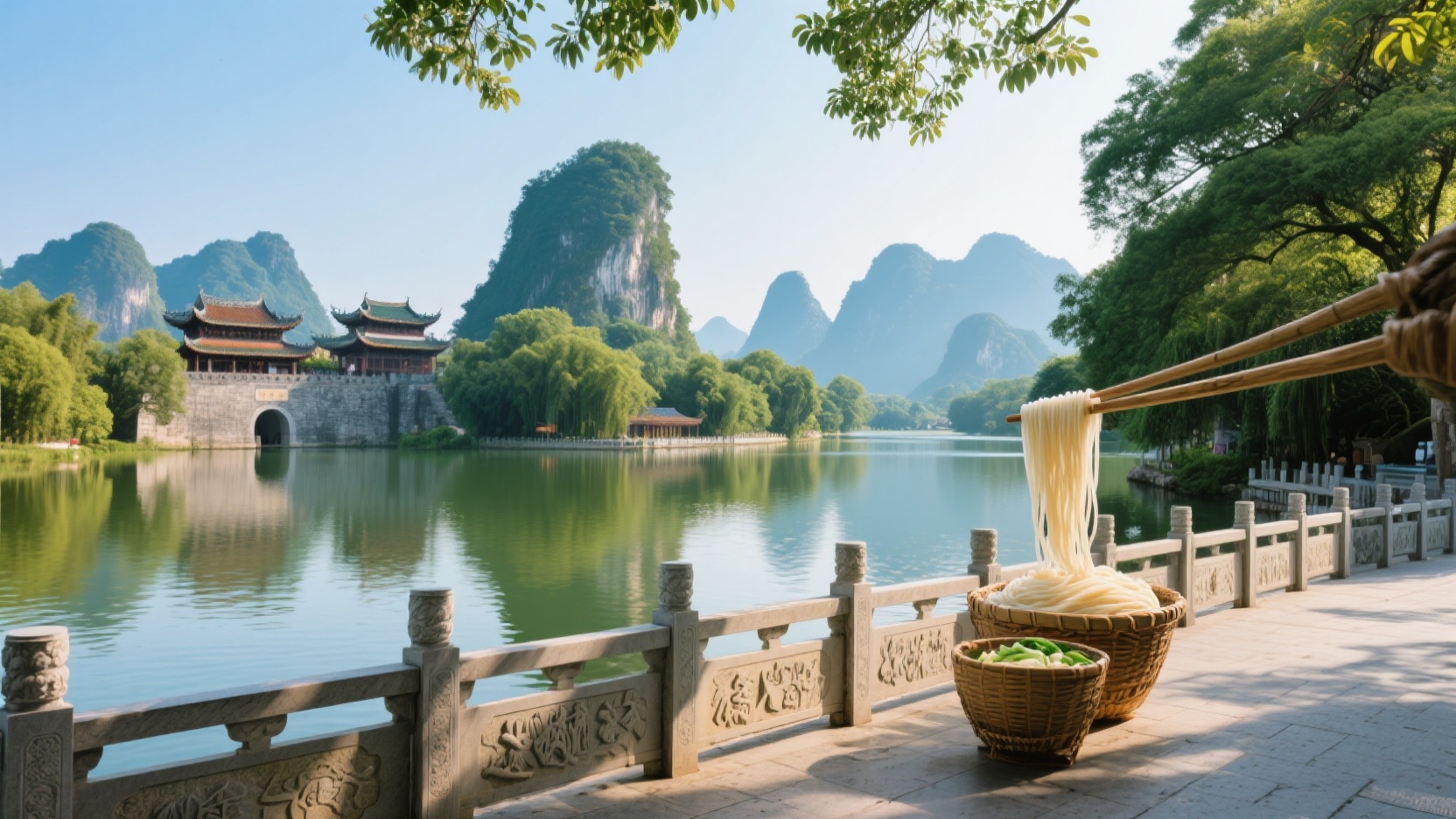
Guilin, renowned for its breathtaking karst landscapes, is a place that captivates visitors. However, beneath its stunning scenery lies a rich historical and cultural heritage and unique artistic charm. This curated blog post aims to guide you away from the usual tourist routes, deeper into the heart of Guilin, offering a slow-paced and in-depth cultural and artistic journey from a humanistic perspective, exploring the city's millennia-old spiritual essence.
Guilin's history can be traced back to the Qin and Han dynasties, flourished during the Tang and Song dynasties, and reached its zenith in the Ming dynasty, becoming a fiefdom of a prince. Its unique geographical location and the background of multi-ethnic integration have shaped its diverse and multifaceted cultural landscape. We will unfold a cultural panorama of Guilin for you from four dimensions: the legacy of the imperial city, the origins of cultural relics, the craftsmanship of intangible cultural heritage, and artistic inspiration.
Day 1: Imperial City Legacy and Cultural Heritage Tracing
Morning: Jingjiang Prince City & Duxiu Peak (Suggested visit time: 3-4 hours)
The journey begins at the most representative historical landmark in downtown Guilin—the Jingjiang Prince's City. This princely residence, originally built in 1370 (the third year of the Hongwu reign of the Ming Dynasty), was constructed by Zhu Shouqian, a grand-nephew of Emperor Hongwu (Zhu Yuanzhang), after he was enfeoffed as the Prince of Jingjiang. The city is grand in scale and imposing in its architecture, strictly adhering to ancient rites and reflecting the nobility and majesty of the Ming imperial family. A stroll through the city offers a glimpse into the luxurious life of the princes and the city's status as a political center.
The most central scenic spot within the Royal City is Duxiu Peak. This solitary peak rises abruptly, piercing the clouds, and is not only a symbol of Guilin's landscape but also a cultural landmark. Numerous cliff carvings adorn its walls, the most famous being the timeless inscription "Guilin's scenery is the best under heaven," a phrase said to have originated in the Southern Song Dynasty and later became widely known through a poem by Wang Zhenggong in the Ming Dynasty. Climbing Duxiu Peak offers panoramic views of Guilin, allowing one to experience the feeling of "viewing all mountains as small," and to imagine ancient scholars and poets composing verses from this vantage point. The Royal City also houses the site of the former Imperial Examination Hall, showcasing the imperial examination culture and revealing the hardships faced by Guangxi students during the Ming and Qing Dynasties in their pursuit of officialdom, as well as the profound influence of Confucian culture on society.
Afternoon: Guilin Museum (Suggested visit time: 2-3 hours)
Leaving the Royal City, head to the Guilin Museum, an important window into understanding Guilin's history and culture. The museum boasts a rich collection, covering various periods from prehistoric civilization, the Qin and Han dynasties' construction of the Ling Canal, the flourishing of poetry and painting in the Tang and Song dynasties, to the Ming and Qing dynasties' princely culture and modern revolutionary history. Through exquisite artifacts, detailed textual and pictorial materials, and modern exhibition methods, you can clearly trace the development of Guilin.
Pay special attention to the ethnic culture exhibition area. Guilin is home to many ethnic groups, including the Zhuang, Yao, Miao, and Dong, who have thrived and developed unique customs and art forms. The museum's displays of ethnic costumes, daily necessities, and musical instruments will allow you to experience the charm of Guilin's diverse culture. In addition, the museum features a dedicated exhibition area of Guilin landscape paintings. Through works by renowned artists throughout history, you can gain a deeper understanding of how Guilin's landscape became a classic subject in traditional Chinese painting, and the philosophical thoughts and aesthetic sensibilities behind it.
Evening: Stroll through Ronghu and Shanhu Scenic Area (Suggested visit time: 1-2 hours)
As night falls, stroll along the Ronghu and Shanhu scenic areas and experience the leisurely elegance of Guilin. This area is a microcosm of Guilin's history, with landmarks such as the Ancient South Gate, the Sun and Moon Twin Towers, and the Glass Bridge blending seamlessly with the surrounding lake and mountain scenery. The Ancient South Gate, the Zhengyang Gate of Guilin during the Song Dynasty, has witnessed the city's rise and fall over a thousand years. The ancient banyan trees, pavilions, and towers along the lakeside reveal the aesthetic tastes of scholars and literati. At night, the Sun and Moon Twin Towers, illuminated by lights, shine brilliantly, adding a modern romantic touch to this historical and cultural city. You can choose to relax in a lakeside teahouse, savor a cup of local tea, and experience the feeling of "walking through a painting."
Day Two: Intangible Cultural Heritage and Artistic Inspiration
Morning: Guilin Rice Noodles Intangible Cultural Heritage Experience and Taste Exploration (Suggested visit time: 2-3 hours)
Guilin rice noodles are not only a local delicacy but also a national intangible cultural heritage. Their preparation techniques have been passed down for thousands of years, embodying a profound spirit of craftsmanship and a philosophy of life. In the morning, we suggest you visit a well-known local rice noodle shop or an intangible cultural heritage base to experience firsthand the process of making Guilin rice noodles. From selecting rice, soaking, grinding, filtering, steaming, pressing, to cooking, every step reflects wisdom and experience. Learn about the origin story of rice noodles, the importance of different ingredients, and their significant role in the daily lives of Guilin people.
Savor a bowl of authentic Guilin rice noodles. Its chewy and smooth texture, rich and flavorful broth, and diverse toppings will bring you an ultimate taste experience. This is more than just breakfast; it's a cultural experience that immerses you in local life and allows you to feel the charm of intangible cultural heritage.
Afternoon: Guilin Stone Carvings and the picturesque scenery of the Li River (Suggested visit time: 3-4 hours)
Guilin's stone carving art has a long history and is closely integrated with its unique landscape. Besides the cliff carvings on Duxiu Peak, there are many other stone carving sites in and around Guilin, such as Seven Star Cave and Diecai Mountain. These carvings record the praise of Guilin's scenery by literati throughout history and reflect the calligraphic styles of different periods. You can choose to visit the Guilin Stone Carving Art Museum (if available) or go to representative stone carving sites such as Seven Star Park to carefully appreciate the brushstrokes and artistic conception of the carvings and feel the creative passion of the ancients who "used stone as paper and knives as pens."
Next, turn your attention to the Li River. The Li River is not only a representative of natural scenery but also a source of inspiration for Chinese landscape painting. It is recommended to choose a section of the Li River cruise (such as the Yangdi-Xingping section, which requires advance transportation planning), or take a bamboo raft in the city section to appreciate the scenery on both banks in a slower, more immersive way. On the boat, you can try to capture this flowing painting with a paintbrush or camera, experiencing the feeling of "boating on emerald waves, one is traveling in a painting." Learn how the Li River landscape has influenced the composition, brushwork, and artistic conception of traditional Chinese landscape painting, and how contemporary artists draw inspiration from it for their creations. This is not only a visual enjoyment but also a profound understanding of traditional Chinese aesthetics.
Evening: Appreciation of Gui Opera (Suggested visit time: 2 hours)
If time permits, a Guilin Opera performance can be arranged in the evening. Guilin Opera is one of the representative local operas of Guangxi, renowned for its unique singing style, performance form, and rich local flavor. Its repertoire is mostly based on folk tales and historical legends, vividly showcasing the local customs and moral values of Guilin. Watching a Guilin Opera performance in a professional theater not only allows you to appreciate the charm of traditional opera but also provides a more direct experience of the vitality and inheritance of Guilin's local culture.
This Guilin cultural and artistic journey aims to guide you beyond appearances and delve deeper into the city's intrinsic value. Every stop, every experience will be a dialogue with history, art, and humanity. May you find a unique cultural resonance and spiritual nourishment amidst Guilin's landscape.