
Guilin's Artistic Undercurrents: A Day Trip from Riverside Bookstores and Vintage Warehouses to Old Factories
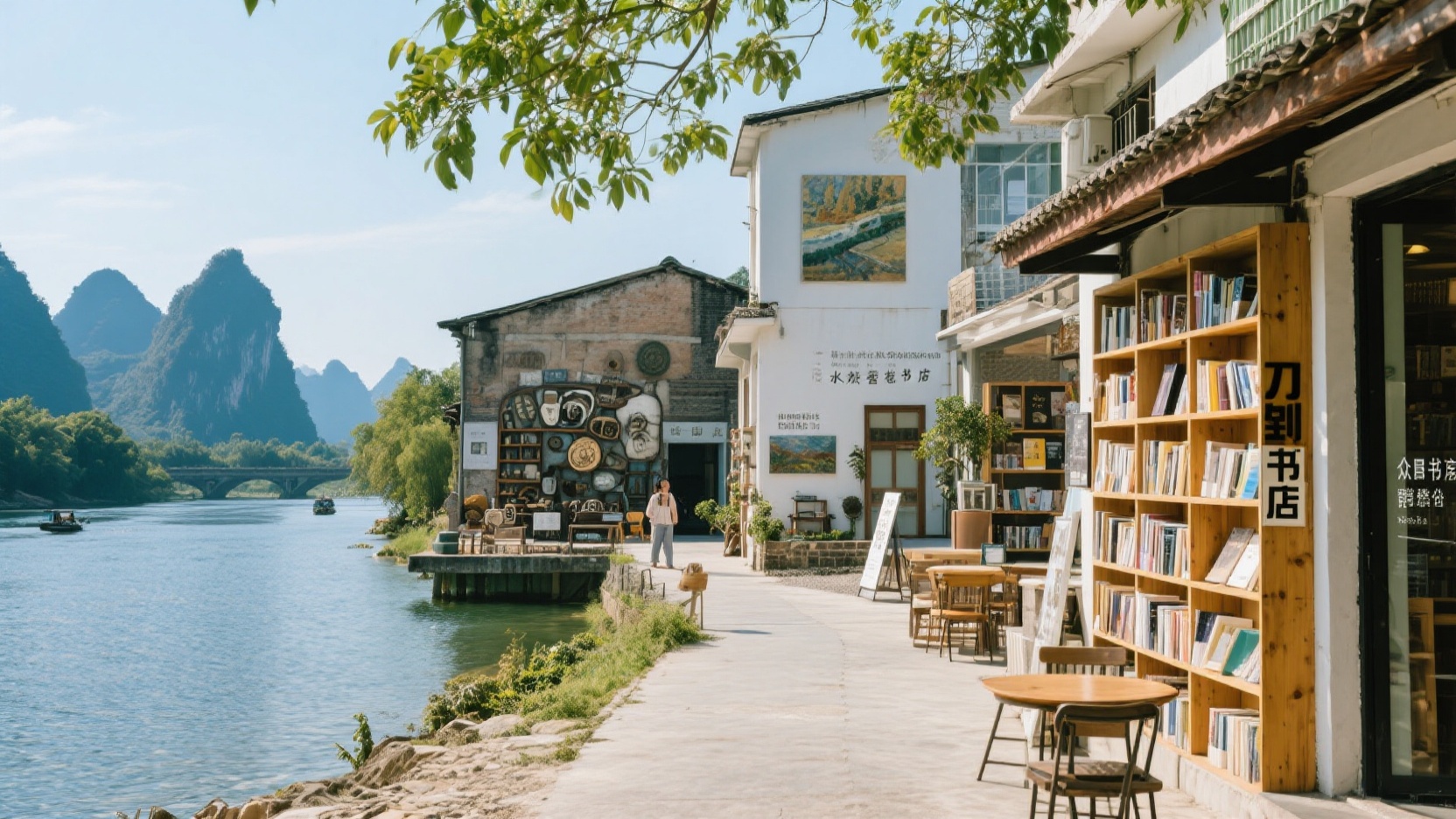
In Guilin, beyond the mountains and rivers, there lies a cultural pathway paved with paper, antiques, and red-brick factory buildings. It doesn't rely on Li River cruises, nor does it crowd into Yangshuo West Street; instead, it's scattered along the riverside road, the old factory area of Diecai, the Wayaoyao antique market, and the alleyways of Wangchenggen. The following is a walkable route that documents this city's artistic underbelly.
Blade Bookstore: A riverside reading window on Binjiang Road
Daofeng Bookstore is a rare "river-view reading space" among independent bookstores in Guilin. The store primarily features books on literature, poetry, art, and local Guangxi culture, with a more tranquil selection that doesn't chase bestsellers. Highlights include the Guilin local history and Li River culture sections at the entrance, and a row of seats by the window offering views of the river. The bookstore's exterior is a converted old residential building, and the inconspicuous wooden signboard is easy to miss. Photography tip: In the evening, utilize the natural light from the windows, using the bookshelves as a foreground to bring the river into view; photos taken when the colors are bluish-gray are most flattering.
Zhongmu Study Room: A reading living room downstairs in the community
This bookstore is tucked away on the ground floor of an old residential building. The storefront is small, with bookshelves stretching from floor to ceiling, leaving a long table in the center. It feels more like a community library, where young readers often study and exchange annotations. Highlights include handwritten recommendation cards and older editions by local authors. Small book clubs are frequently held on weekends, so arrive early to secure a seat. Photography tips: Use the long table and warm-toned lamps to create a sense of depth; take photos from above of open pages and handwritten cards; avoid using flash to prevent interrupting the reading experience.
Duxiu Bookstore Flagship Store: A Humanistic Scene with the Spirit of a Publishing House
Leveraging the resources of Guangxi Normal University Press, the Duxiu Bookstore flagship store prioritizes humanities, social sciences, and popular science books, while also including local Guilin literature. The space is designed primarily with wood tones and gray bricks, creating a quiet and restrained reading area. Highlights: Occasionally held scholar dialogues and editorial note exhibitions; the exhibition area must remain quiet. Photography tip: Around 10 AM, sunlight streaming through the high windows onto the bookshelves creates ideal conditions for photographing book spines and the interplay of light and shadow.
Guilin Wisdom Valley Cultural and Creative Park: Red Bricks and Graffiti in an Old Factory Building
Wisdom Valley is a renovated old factory area. The red brick factory buildings retain their original beams and columns, and the exterior walls are decorated with local graffiti and installations. The park is home to designer studios, small exhibitions, and handicraft workshops. Highlights include public seating converted from old machine tools and huge murals on the factory gable walls. Some studios require reservations for visits. Photography tips: Afternoon sidelight can illuminate the texture of the red bricks. Standing in the narrow alleys between the factory buildings and looking into the distance makes it easy to capture the depth of the industrial landscape.
Wayao Old Goods Warehouse: A Time Warehouse in the Flea Market
The old warehouses in the Wayao area are more like a space showcasing everyday objects that have stood the test of time, with old wooden crates, old doors, enamel mugs, and vintage radios piled up in abundance. It's not a well-organized exhibition hall, but its strength lies in the opportunity to touch and browse. Highlights: Old doors, windows, and factory signs that flowed in after the demolition of Guilin's old town. Finding bargains requires a keen eye; many items need to be discussed with the shop owners. Photography tips: Utilize the warehouse's overhead lighting and the dusty texture of the items; use a medium to long telephoto lens to compress the densely packed shelving layers for a more visually appealing image.
Watermark Academy Art Space: A private art museum on the upper reaches of the Li River
Located away from the city center, the Watermark Academy Art Space features private collections and small themed exhibitions, showcasing permanent works by the Lijiang School of Painting and contemporary ink painting. The building itself is primarily constructed of gray bricks and floor-to-ceiling windows, creating a visual interplay between the exhibition lines and the surrounding landscape. Highlight: The long window at the far end of the exhibition hall facing the Lijiang River is the best spot to linger. Note that opening days are subject to change, as exhibitions rotate slowly. Photography tips: On cloudy days, take photos of the exhibition walls and silhouettes of people under even lighting; on sunny days, capture the reflections of trees in the glass and the artworks superimposed on each other.
Independent galleries under the walls of the capital: miniature scenes of young art.
Hidden in the alleys surrounding the Royal City is a semi-commercial independent gallery with only two or three exhibition halls. It primarily features works on paper, photography, and installations by local young artists. There's no fixed entrance; it's more like an appointment-only exhibition space. Highlights: The exhibition layout changes according to the curatorial theme, and occasionally artists provide guided tours. Photography tips: Due to the small space, use a wide-angle lens to capture the relationship between the exhibition walls and the atrium; for details, use your phone's portrait mode to capture the texture of the artworks.
Longyin Road Community Cafe: A Respite for the Soul on the Street Corner
The neighborhood cafes along Longyin Road are mostly nestled among green trees and old walls, with limited indoor seating and seasonal menus. They serve as a buffer zone connecting the aforementioned locations and often display independent publications. Highlights: Window seats offer views of the old neighborhood's rhythm of life, and the hand-drip coffee menu is written on a blackboard. Photography tips: Utilize the window frame to compose your shot, compressing the coffee cup and street scene into the same frame; the side-backlighting around 3 or 4 pm is the softest.
These locations don't rely on sound, light, or electricity to attract visitors, but rather form a more private cultural fabric of Guilin. Most are within walking or short drive distances, perfect for a leisurely full day of exploration. Along the way, old books, antique objects, and quiet works of art constantly remind you that beyond the mountains and rivers, Guilin is a city that can be read. Measure the spiritual corners of this city with your footsteps.