
Dalian Food Avoidance Guides | Local Testimonials: Don't Be Fooled by Guides, These 8 Stalls Are the Real Local Spots
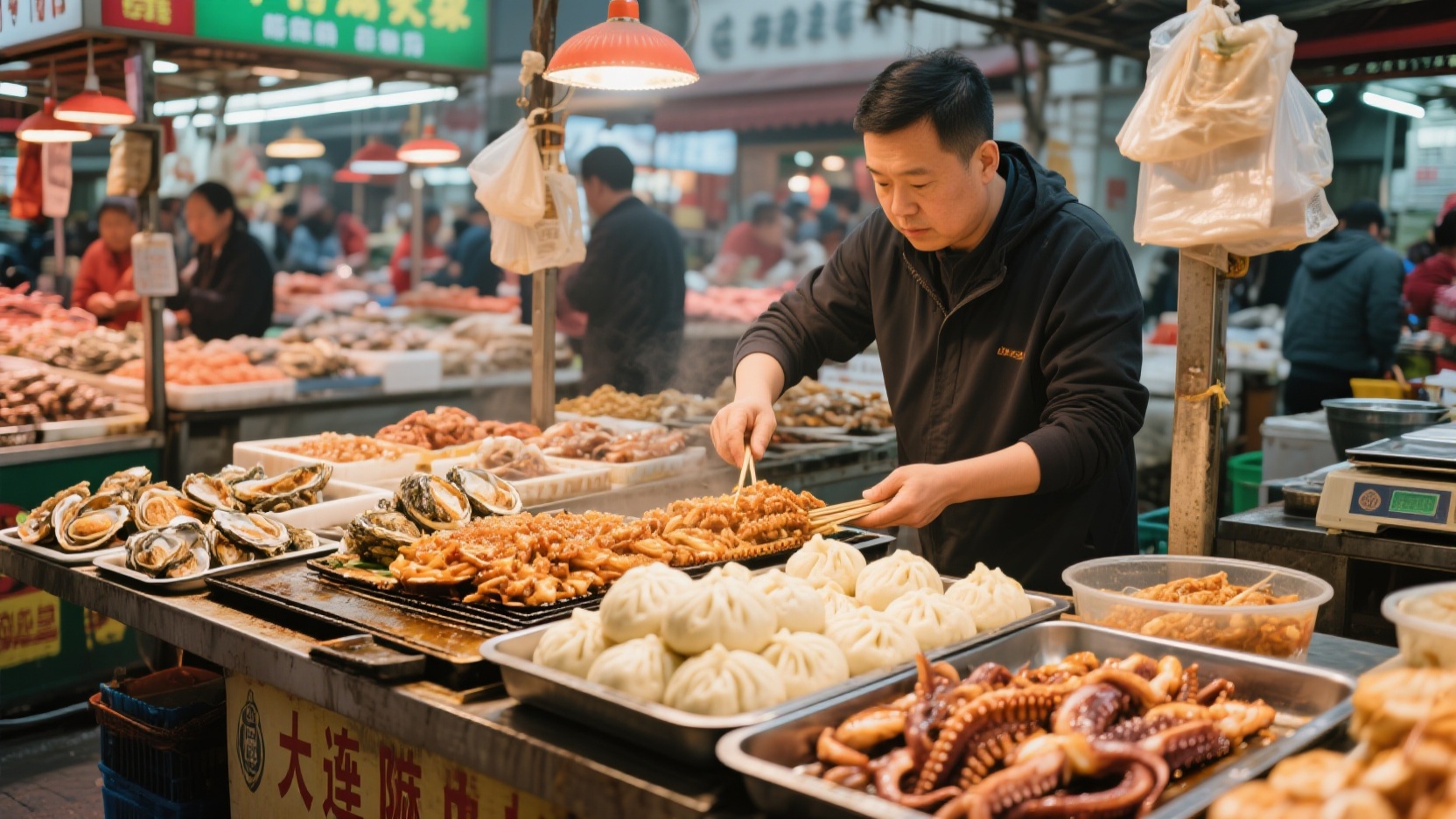
Having lived in Zhongshan District for six years, what I dread most is a friend sending me a message before visiting Dalian asking, "How about this must-eat restaurant, number one on the list?" Eight out of ten times, I haven't even stepped inside that restaurant. It's not that locals are aloof; it's just that those restaurants have long been transformed into "outsider-only" establishments by tourists and rent adjustments.
The essence of food in Dalian has never been about decor or plating, but rather the salty and savory aroma of the Bohai Bay. The truly worthwhile restaurants are often hidden at the end of a wet market, on the ground floor of a residential building, or on a metal cart that only opens after 9 p.m.
This post won't be about "must-eat" stalls, but only the ones I visit three times a week. First, a dose of reality, then the real stuff.
First, let me pour some cold water on this: Locals really don't go to these "must-eat" spots.
The first dish: a seafood platter. Frozen crabs, shrimp, and scallops are piled high on the table, with an alcohol lamp lit underneath. It looks impressive, but the actual freshness has long since dissipated. Locals only eat seafood steamed or boiled, perhaps with a little garlic, and would never let spicy sauce overpower the seafood flavor.
The second dish: the giant fried squid from the themed street. You can find that stuff in every tourist city in China; it's coated in a thick batter and deep-fried until you can't even tell it's squid anymore. People in Dalian either grill the whole squid on a hot plate or blanch it after slicing it; they don't eat it like a snack.
The third dish: chain seafood dumplings. This chain specializes in "sea urchin dumplings," and during peak hours, the queue can be up to two hours long. The filling is made from frozen ingredients delivered centrally from a kitchen. Dumplings made fresh at the market, with hand-wrapped dough and filling, are significantly cheaper.
The first set of hidden gems: Sea urchin dumplings and braised pork at the market.
When you go to any of the major markets in Dalian, don't just buy vegetables. There's a sea urchin dumpling stall in the southeast corner. The owner opens sea urchins fresh every morning, adding only a tiny bit of pork; it's almost entirely made of bright yellow sea urchin. When you bite into it after cooking, the broth is sweet with a hint of seawater.
How to order: Order a serving of sea urchin dumplings with a bowl of cornmeal porridge, and a separate dish of minced garlic. Definitely avoid the side dish "sea urchin fried rice," as the fried rice tends to overcook the umami flavor, unlike the dumplings which offer a more authentic taste.
Further into the market, there's a small stall that only sells braised sweet potato starch. The sweet potato starch is slowly fried in a pan until a crispy crust forms on the bottom, which the owner scrapes off with a spatula, then tops it with garlic water, sesame paste, and shrimp oil.
How to order: Order a small portion of braised meatballs, with plenty of garlic water and less sesame paste. Eat it while it's hot, standing by the plastic bucket. Once it cools down, the braised meatballs will harden, and the taste will drop drastically.
The second set of hidden gems: Braised Three Delicacies and Grilled Squid from the apartment building.
There's a restaurant on the ground floor of an old residential area with no signboard that makes the Three Delicacies Stewed Rice Noodles better than many big restaurants. The stewed rice noodles are deep-fried until the surface bubbles, then topped with a savory sauce made from sea cucumber, shrimp, and conch slices. It's still simmering when it's served.
Recommended order: One serving of Three Delicacies Stew for two people, two bowls of white rice, and a side of cold jellyfish salad. Don't listen to the staff's recommendation to order the "Seafood Family Platter," that dish is basically impossible to finish once it's served.
Not far from the restaurant, at the street corner, there's a grilled squid cart in the evening. The squid is killed fresh that day, flattened whole on the grill and sizzling, brushed with just a little sweet and salty sauce and sesame seeds, the edges are charred and fragrant, and the thicker parts are crispy.
How to order: Choose small squid, one skewer per person. Don't buy the giant, deep-fried squid like tourists do. Smaller squid are more tender, the sauce is more evenly distributed, and they won't be greasy after eating.
The third set of hidden gems: Mackerel dumplings and traditional sweet and sour pork from the old town.
A dumpling restaurant deep in the alleys of the old town has been open for almost thirty years. Every morning, they pick fresh mackerel meat, add a little fatty pork and chives, and knead it by hand until it's firm. The resulting dumplings are plump and white, with no fishy smell, and they're juicy when you bite into them.
Ordering suggestion: First, order half a pound of mackerel dumplings, which come with a free bowl of dumpling soup. Do not order sea cucumber or abalone dumplings. Sea cucumber dumplings are generally not very tasty and are overpriced.
Further down the path, there's a small restaurant that only serves traditional-style sweet and sour pork. The pork slices are thinly cut, coated in batter, fried until slightly golden, and then drizzled with a sauce made of white vinegar and sugar. It smells pungent and tastes crispy yet tender.
Recommended order: Small portion of sweet and sour pork with cold jellyfish salad, and half a steamed flatbread as your main dish. Definitely don't order the tomato sauce version of sweet and sour pork; you'll be considered an oddball in Dalian.
The fourth hidden gem: grilled seafood and seaweed buns sold late at night.
After 9 p.m., seafood grilling carts will appear promptly at the entrances of some older residential areas. They only grill oysters, scallops, and whelks, adding a little minced garlic and vermicelli after opening the shells, without marinating them beforehand. The oysters are grilled until half-cooked, with the meat still trembling inside the shell.
Ordering method: Order individually, do not order a platter set meal. Each person should order at least two oysters, accompanied by a bottle of chilled "Big White Pear" (a type of oyster), and drink a spoonful of the soup from the shell after eating.
There's a small shop near the seaside market that sells seaweed buns, a limited-edition spring treat. The seaweed is local seaweed, mixed with diced meat and cabbage to make the filling. Steamed, it turns brownish-green, and every bite is a taste of the seaside.
How to order: Go in the morning during spring and buy two steamed buns and a bowl of millet porridge. Don't ask if it's spicy; the seaweed buns aren't spicy to begin with, and the owner will glare at you if you ask too much.
In conclusion: Don't ask what the locals didn't tell you.
First, don't ask if it's spicy. Dalian cuisine is mainly salty and savory, and spiciness is not a local expression. Many old restaurants even use chili oil as a garnish.
Second, avoid peak meal times. This hidden gem restaurant is small and packed with people at noon and 6 pm. Go an hour off-peak, and you'll understand what it means to "enjoy a quiet meal."
Third, don't wear white clothes. Eating braised pork, teppanyaki, or barbecue can easily cause oil splattering; white clothes go in, and floral clothes come out.
Fourth, don't rely on reviews. Good restaurants in Dalian often have ratings below four stars. Whether there are local elderly men queuing outside is more accurate than any ranking list.
Fifth, don't order large portions. The portions in Dalian are generous; a small portion is enough for two or three people. Ordering a large portion will only lead to regret.