
Six hidden gem shops in Dalian | A local favorite I compiled after three trips (not the trendy ones)
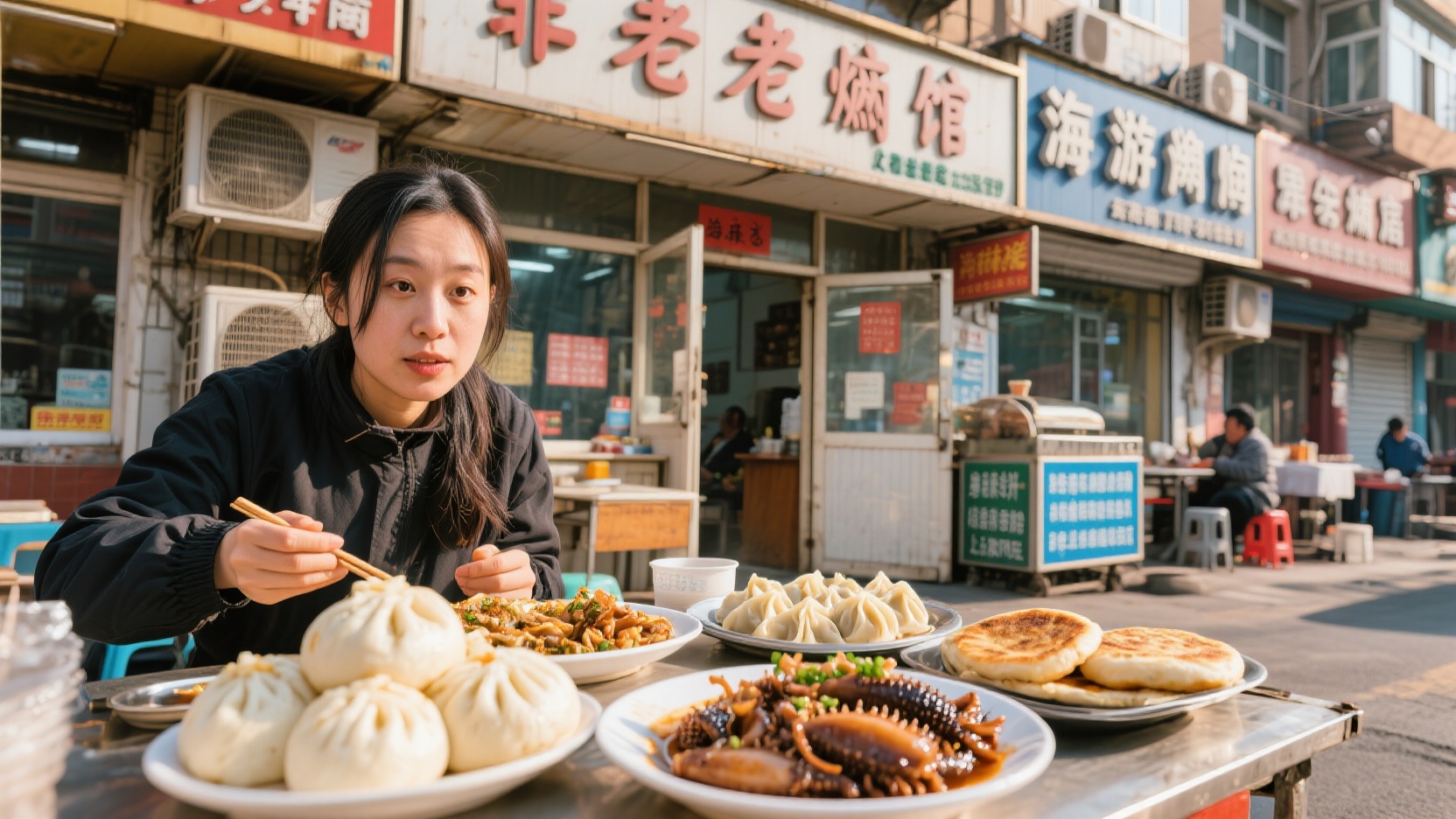
To avoid the overcrowded restaurants in Xinghai Square and Zhongyuan Street, fueled by short videos, I made three special trips this year to Siergou, Taoyuan, Heishijiao, Shandong Road, and Jinzhou Old Town, specifically seeking out unassuming neighborhood eateries with unfashionable storefronts, unrated ratings, and menus of no more than ten lines. The following six restaurants range from steamed bun stalls under tin sheds in the market to charcoal grill stalls that only open after dark. I've eaten at all of them more than three times. Not all of them were amazing, but every bite tasted like home cooking in Dalian.
1. Seaweed thread buns at the Siergou morning market: the best one from under the tin shed in the market.
Seaweed, a type of fine algae found on the rocks along the Dalian coast in spring, is considered a treasure by discerning locals. This stall, with its barely visible sign, is located at the east end of the Siergou morning market and only operates for half a day. The buns aren't distinguished by their thin skin, but by the wheat-like aroma of the leavened dough. The seaweed is chopped and mixed with a small amount of pork belly for the filling. After steaming, the seafood flavor is locked in, leaving a slightly grainy texture that is not fishy but rather incredibly fresh.
How to order the best way: Go for the first basket at 7 am and order "one basket of seaweed buns and half a basket of radish and oyster buns", along with a bowl of cornmeal porridge to cleanse your palate. You can also grab a serving of braised sea hare and cold sea jelly from the food stall next door, especially when there are lots of roe in the braised sea hare; it's absolutely delicious with buns back at the hotel.
2. The old-fashioned braised sea hare restaurant behind Taoyuan Market: There's no menu; ordering from the freezer is the first step to getting started.
This shop is located in a small alley behind Taoyuan Market. Beer baskets are piled up at the entrance, and newspapers are pasted on the walls. The owner doesn't offer QR code ordering; the first thing you see upon entering is the freezer: sea hare, yellow croaker, scallops, and oysters are all displayed on crushed ice. The reason it's worth making a special trip is because the braised sea hare is cooked to perfection—it's the best I've had in Dalian—the sea hare shrinks but doesn't harden, the sauce is salty with a hint of sweetness, and when it's full of roe, chewing it is like eating a marine version of popping boba.
Besides the braised sea hare, be sure to order a side of hand-pulled noodles with the broth, and a fried oyster to balance the flavors. Don't just order seafood; the steamed buns from the noodle shop next door are a great alternative—break one up, dip it in the braising sauce, and it's even better than rice. You can't rush the food at this kind of place; the owner cooks by the table, and you'll eat until you're stuffed for just a few dozen yuan per person.
3. A sea urchin dumpling shop in the old community of Heishijiao: They only sell three kinds, and close down when they're sold out.
Dalian sea urchin dumplings are often lauded, but the one my local friend took me to is located in a residential building in Heishijiao. The menu only includes "sea urchin dumplings, raw sea urchin salad, and steamed sea urchin with egg." The dumpling filling is primarily sea urchin, with pork only used for binding. When you bite into it, you can see bright orange sea urchin pieces; it's very fresh, sweet, and clean. The restaurant doesn't prioritize table turnover; after 12:30 pm, it's basically a matter of luck.
How to order: For two people, order one order of sea urchin dumplings and one order of raw sea urchin salad. Don't dip the dumplings in too much vinegar; eat one plain first and then decide whether to dip them in minced garlic. It costs around 100 RMB per person, which is mid-range, but the freshness is more consistent than many expensive seafood restaurants. There's a fruit stand to the right after you exit; buy Dalian cherries in spring and summer, and Akizuki pears in autumn, which will perfectly balance the sweetness of the sea urchin.
IV. The charcoal-grilled sea cucumber stall downstairs in a residential building on Shandong Road: It opens after dark and only offers a dozen or so kinds of small seafood.
This stall doesn't have a fixed location; it's just a pushcart with a few folding tables, appearing after dark at the foot of an old residential building on Shandong Road. The first time I went was with a local gourmet. The owner grills sea cucumbers incredibly fast, searing them over the charcoal fire for only ten seconds before serving them. He brushes on some homemade sauce, and each bite is crisp, tender, and bursting with the freshness of the sea. They get fishy when they cool down, so you have to eat them while they're hot.
The signature dishes are charcoal-grilled sea cucumbers and grilled clams. Don't order too much for your first round; try two skewers of each to test the doneness before deciding whether to order more. Pair them with a bottle of local Dalian soda and a slice of grilled mantou to finish off the meal. This place only operates in the evening; it closes when it rains. The owner sometimes only accepts cash, so it's best to have some change on hand.
5. Salted Fish Cake Shop in Jinzhou Old Town: Roughness is the essence of Dalian cuisine
I took the light rail all the way from the city center to Jinzhou just for this. The salted mackerel was cut into sections and steamed until thoroughly cooked. The saltiness was neutralized by the cornbread, and the bottom of the cornbread was pan-fried until it developed a crispy crust. The fish oil mixed with the aroma of coarse grains made it more substantial than most seafood feasts. This restaurant is located in a sloping alley in the old town of Jinzhou. At lunchtime, it's full of local residents, and tourists hardly ever see it.
How to order: Salted fish can't be eaten alone; it must be paired with freshly made cornbread and a bowl of corn porridge for a smoother taste. If there are many people, you can add a side of braised mixed fish, with the sauce also used for dipping the cornbread. The old-fashioned baked cakes and glutinous rice strips from the halal pastry shop next door are locals who often take them home after eating; their sweetness perfectly balances the saltiness.
6. The braised pork stalls on the back street of Zhongshan Square: a local's childhood afternoon tea that tourist attractions can't replicate.
The biggest difference between Dalian-style braised noodles and fried rice noodles from other places lies in the ratio of garlic sauce to sesame paste, and the golden-brown crust. This stall is located on a back street near Zhongshan Square, opening after 3 PM. To find it, look for locals sitting on small stools at the intersection eating small bowls. The stall owner only makes braised noodles and bean curd skewers. There isn't much oil on the griddle; the crust is made thick and crispy entirely through slow frying.
Order "small portion of braised meat, extra heat" and the owner will give you an extra spoonful of garlic sauce. Bean curd skewers are a standard accompaniment, with sesame sauce so thick it clings to the skin. Buy a bottle of Bangchui Island soda from the nearby convenience store, eat it standing by the roadside, and that's the complete way to enjoy a traditional Dalian afternoon tea.
After three visits, my deepest impression is that the truly delicious restaurants in Dalian generally have a "don't want you to find them" look. They don't artificially inflate their ratings, don't advertise, and the owners are quiet, yet they handle ingredients like sea lettuce, sea hare, and sea urchin with utmost care and clarity.
First rule to avoid these pitfalls: Never go during peak meal times. These older neighborhood restaurants have limited capacity; the best times are before 11:30 AM on weekdays, just as they open for dinner, or after 3 PM. Second rule: Don't just order their signature dishes. Sea urchin dumplings with raw sea urchin salad, braised sea hare with noodles, and salted fish with flatbread—you'll lose half the enjoyment without accompaniments. Third rule: Remember to bring cash. At least two places only accept cash or have unstable internet, so small change is always a good backup.
In addition, parking is generally difficult at these stores, so it is recommended to take a taxi or bus to the vicinity and then walk. Wearing a comfortable pair of shoes is more helpful than looking at a navigation app.