
The Enduring Flavors of Dalian: 8 Local Home-Style Flavors from Morning to Night
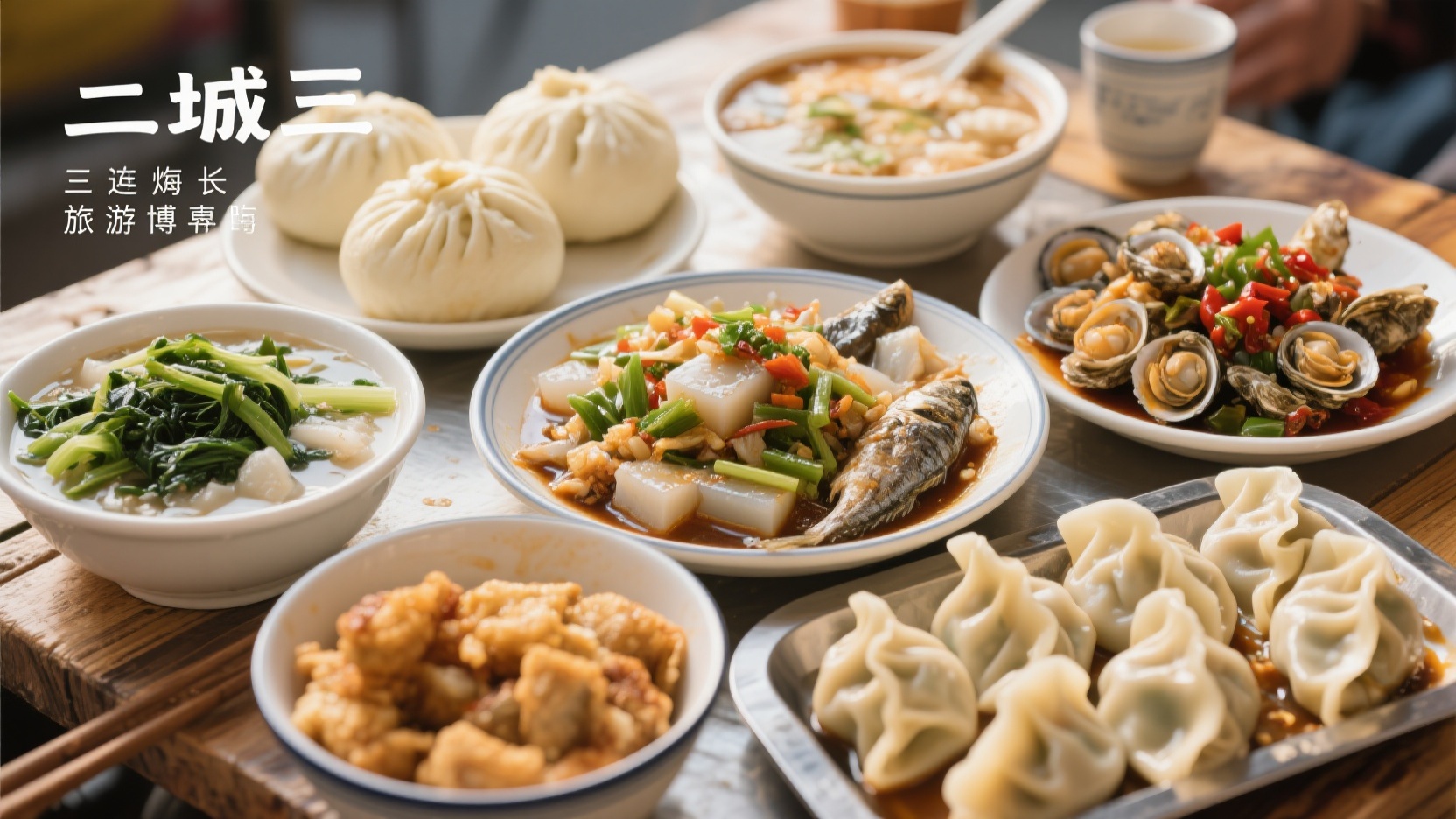
A Dalian resident's day doesn't begin at tourist attractions, but rather with the burst of steam rising from the bamboo steamers outside their apartment buildings. The salty winds from the Yellow Sea have incorporated seafood into their staple foods, ensuring that the locals' meals always revolve around the word "fresh." Dalian is surrounded by the sea on three sides, and the stalls in the markets are always stocked with fresh seafood caught that day, giving ordinary people's tables an extra layer of salty and savory flavor compared to inland cities. The following analysis breaks down eight everyday Dalian dishes, categorized by morning, noon, afternoon, and late at night, focusing only on the familiar flavors of the streets and alleys, avoiding tourist gimmicks.
Morning: Seaweed buns and savory tofu pudding
Seaweed buns are a staple seafood dish at breakfast stalls. The filling is mostly made from seaweed such as wakame and nori, which are blanched, squeezed dry, and mixed with a small amount of minced pork, oyster meat, or clam meat. Sometimes, shredded cabbage or radish is added to enhance the sweetness. The dough is made with semi-fermented dough, and after being wrapped, it is steamed until cooked. The skin is thin and soft, and the filling is smooth and tender with the crunchy texture of seaweed. Seaweed itself has no strong flavor; the umami flavor comes from the oysters and pork, making it moist rather than fishy. Older fishermen often brought a few with them before going out to sea. They don't harden when cold and are suitable for filling the stomach. Dalian-style tofu pudding is only made savory. It is topped with a spoonful of gravy made with pork bone broth, dried shrimp, wood ear fungus, and daylily, and sprinkled with dried shrimp, nori, chive blossoms, and chili oil. The tofu pudding is tender but not crumbly, and the gravy is savory with a slight sweetness from the sea. Many vendors start cooking the broth at three or four in the morning and close up shop at nine or ten o'clock. In old residential areas, seaweed buns with tofu pudding are the standard combination for early risers.
Lunch: Three-delicacy stew, braised mixed fish
During lunchtime, the most popular dish in local eateries is "Three Delicacies Stewed Noodles." The noodles are made by boiling sweet potato starch with water until it becomes a jelly-like consistency. After cooling, they are cut into pieces and pan-fried over low heat until the outer shell is golden and crispy, while the inside remains soft, chewy, and translucent. The "three delicacies" typically refer to shrimp, sea cucumber, and squid. A light cornstarch slurry is poured over the pan-fried noodles, followed by a sauce made with minced garlic, sesame paste, and soy sauce. The initial bite is crispy, followed by a chewy texture. The aroma of garlic and sesame complements the seafood sauce, resulting in a savory and slightly sweet flavor. This dish is practically a prerequisite for entry into local restaurants; the success of frying the noodles depends on the precise heat control. Another popular dish is braised mixed fish, which reflects a more homely, home-style approach. Small sea fish such as yellow croaker, blackfish, and yellowtail are cleaned, then braised in soy sauce, sugar, scallions, ginger, star anise, and a small amount of water. The fish is neither fried nor flipped, keeping its body intact. The resulting fish is tender and falls off the bone, with a slightly sweet and salty broth, often used by locals to soak cornbread. When cooking at home, you don't have to be picky about the type of fish. Just buy whatever small fish is plentiful at the fishing port that day, and you can create a slightly different savory sauce flavor in each family's dish.
Afternoon tea: Seaweed jelly, fried oysters
In the warm afternoons, Dalian locals often enjoy a bowl of seaweed jelly. It's not a starch product, but rather a transparent, gelatinous substance formed by repeatedly boiling agar-agar. Cut into strips, it's mixed with vinegar, minced garlic, cilantro, cucumber shreds, and dried shrimp, then drizzled with sesame oil. The taste is refreshingly cool and tangy, with a chewy, bouncy texture and a subtle seaweed aroma. Locals believe that seaweed jelly from the Changhai area is more translucent and has a firmer texture. On summer afternoons, street vendors in residential areas often soak the seaweed jelly in ice water, only taking it out and cutting it into strips after a customer orders. Fried oysters are the "must-have" at afternoon fried food stalls. Fresh oyster meat is drained, coated in a batter made from eggs and flour, and briefly fried. The batter shouldn't be too thick, otherwise it will mask the oyster's freshness; after frying, the outer coating is crispy, while the inside is piping hot with oyster juice. When eating, dip it in salt and pepper or local chili sauce. It's crispy on the outside and tender on the inside. Almost every child who grew up by the sea has the experience of eating fried oysters after school, clutching a paper bag and not letting go even when it's scalding hot.
Late at night: Spicy stir-fried clams, mackerel dumplings
As night falls, the firelight from the food stalls illuminates the plastic stools along the roadside. Spicy stir-fried clams are a frequent dish in Dalian's late-night food scene. Dalian-produced flower clams have thin shells and thick meat. After being cleaned of sand, they are stir-fried in a hot wok with scallions, ginger, garlic, and dried chili peppers. The clams are then added and stir-fried over high heat without adding water; the clam meat is cooked entirely by the juices released from the shells as they heat up. They are ready when they open, then a splash of light soy sauce and sugar is added, and cilantro is sprinkled on top before serving. The clam meat is small but intensely flavorful; the spiciness only enhances the aroma and doesn't overpower the seafood taste. A plate is often served first at the food stalls, and half the plate is devoured while waiting for the other dishes, piling up shells like a small mountain. The final main course is often a plate of mackerel dumplings. Fresh mackerel is deboned and the meat is mixed with a small amount of fatty pork, egg white, and scallion and ginger water until it becomes sticky. Then, chopped chives are added, and the mixture is wrapped into thin-skinned, generously filled dumplings. When you bite into the cooked dumplings, clear broth bursts out, the fish meat holds together without falling apart, and the texture is delicate and elastic, with a clean and fresh flavor, free of the muddy taste of river fish. Frozen mackerel cannot achieve this texture, so older generations only make mackerel dumplings when they are fresh at the fish market, making making mackerel dumplings a weekend ritual for many families in Dalian.
From seaweed buns and tofu pudding in the morning, to braised three delicacies and mixed fish at noon, and from seaweed jelly and fried oysters in the afternoon to spicy stir-fried clams and mackerel dumplings late at night, a day's meals in Dalian are not complicated. The ingredients and seasonings are all based on the Yellow Sea and home cooking. The ingredients are sourced from the near sea, and the cooking methods tend to be braising, frying, boiling, and deep-frying, resulting in a refreshing salty and savory flavor. From the streets to the alleys, you can get to know this city through its food in a day.