
When exactly should I buy Chongqing souvenirs? How long can they be stored at once? Please specify.
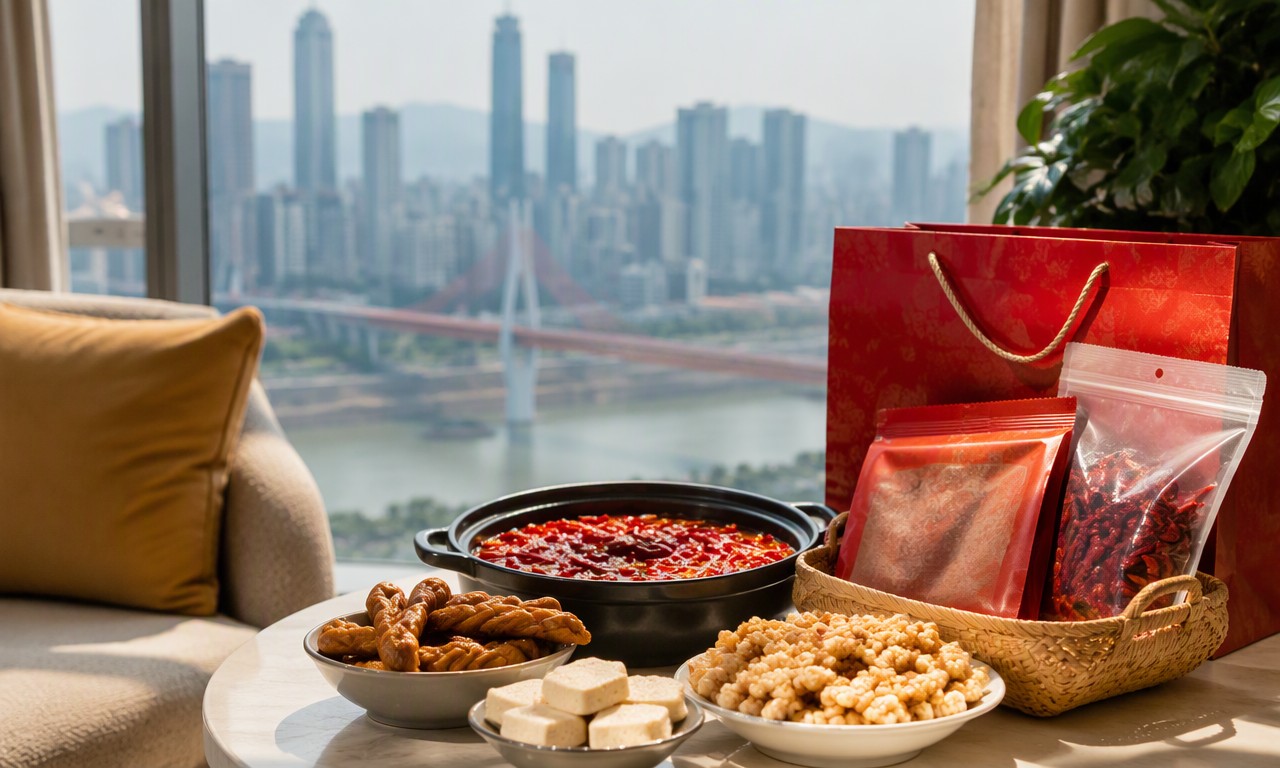
The question of "when to buy Chongqing souvenirs" is more easily overlooked than "what to buy," yet it has a greater impact on the taste and presentability of the souvenirs. Many people carry a large bag of Chen Mahua (a type of fried dough twist) throughout the entire trip on the first day, only to find it soggy and mushy when they get home. Others rush to buy hot pot base before their return trip, only to find their favorite brand sold out, ending up grabbing a couple of random bags at the airport. This article categorizes items by travel stage and shelf life: which items should be bought midway through the trip, which must be bought on the morning of the return journey, and how long each type can be kept and how to prevent it from spoiling.
Before departure: Don't buy anything, just make a "list".
There's no need to worry about souvenirs before you leave. Almost all Chongqing specialties have official stores on online shopping platforms, but buying them beforehand offers no advantage: carrying them yourself adds weight to your luggage, and mailing them lacks the ritual of "bringing them back from the local area." The only worthwhile thing to do is make a list, roughly dividing yourself and the recipients into two categories—one group preferring savory and strong flavors, and the other group favoring sweet and crispy snacks. This way, once you arrive in Chongqing, you only need to look at the list to find the items, instead of spending half an hour hesitating in shops in Jiefangbei or Ciqikou.
Before you depart, make a crucial decision: are you bringing a soft-sided or hard-sided suitcase, and how many carry-on items do you have? This decision will influence your confidence in buying souvenirs later. Soft-sided suitcases are susceptible to damage from pressure, while hard-sided suitcases are prone to breakage. Carry-on luggage has liquid restrictions. Hot pot base is semi-solid; you can check it in or carry it on the way, but if you plan to buy it before airport security, check for individual seals on the packaging. Think these things through before you leave to avoid last-minute panic upon arrival.
Days 1-2: Focus on tasting; buy dried goods and sauces that can be stored for a long time.
In the first couple of days, people are still getting used to the flavors of Chongqing, and their palates are at their best in terms of accepting and judging the numbing and spicy sensations. This is the best time to go to supermarkets and farmers' markets, rather than the souvenir shops in tourist areas. Items like Yongchuan fermented black beans, Zhongxian fermented bean curd, dried chili peppers, and dried Sichuan peppercorns can all be found in the dried goods section of local chain supermarkets and ordinary farmers' markets. The packaging is simple, but the quality is consistent, and the shelf life is generally over a year. There's no need to wait until the return trip to buy these kinds of souvenirs, nor is it necessary to spend a lot of money at tourist attractions to buy gift-boxed versions.
Among long-lasting souvenirs, the most practical combination is dried Sichuan peppercorns and dried chilies, but pre-ground chili powder is not recommended. Chili powder loses its aroma quickly once opened, and it's easily crushed and leaks powder in a suitcase. Pack whole dried chilies and Sichuan peppercorns in two sealed bags, then put the sealed bag inside another cloth bag, and place it at the bottom of your suitcase – no worries at all. If you find a solid block type of hot pot base (also sold by locals) in a supermarket outside tourist areas, you can buy a couple of blocks at this stage. The solid block type lasts longer than the soft-bag butter type; it can be stored at room temperature away from light for over 30 days, and refrigerating it at home will make it even more stable.
Around day 3 of the trip: Buy hot pot base, pickled vegetables, and spicy broad beans from the "30-day supply" store.
The middle of the trip is the best time to buy "30-day supply" souvenirs. These items are characterized by their room temperature stability, but they can't be stored indefinitely; their flavor starts to decline after a month at home, making them suitable for gifting to those you're sure will open and consume within a month. Buying hot pot base during this period offers a much wider selection than on the day of your return trip. When buying a pound of old-fashioned hot pot base, squeeze it by hand. If the whole block is soft and has noticeable oil seeping from the edges, it means it has been on the shelf for a long time and is not recommended. Good, firm base feels like semi-hard chocolate, and when broken open, it contains fine spice particles.
Fuling pickled mustard tuber and spicy broad beans are also available in 30-day supply. For the pickled mustard tuber, buy a combination that includes both whole tubers and shredded tubers. Whole tubers are suitable for elders who can cook, while shredded tubers are suitable for working professionals as a side dish. For the spicy broad beans, buy small, individually packaged packets, not those large, transparent jars—they look economical, but they become soggy quickly after opening, leading to waste if you can't finish them. Buying these two items at supermarkets offers better quantity and flavor than shops in tourist areas, and the packaging is more durable enough to withstand shipping.
Second half of the trip: Buy Hechuan peach slices and Jiangjin rice candy from the "7 Days Shop," being careful to prevent them from breaking.
Both Hechuan peach slices and Jiangjin rice candy are sweet souvenirs with a shelf life of about seven to fifteen days. Buying them too early might mean they're close to their expiration date, while buying them too late might result in leftover stock. Buying them halfway through your trip is ideal. When buying peach slices, look for the words "Hechuan Peach Slices," and don't just buy them based on a peach slice picture on the packaging. Open a slice and look at the cross-section; the difference between good and bad peach slices is obvious: good peach slices are thin and don't break easily, the glutinous rice flour is firmly pressed, and the walnut pieces are evenly distributed; inferior peach slices crumble easily, and the sweetness overpowers the rice aroma.
The biggest enemy of Jiangjin rice candy isn't time, but compression. The rice candy itself is very brittle; if placed in a box and pressed by heavy objects, it will crumble into pieces. When buying, prioritize individually wrapped small packages rather than a large slab. On the way back, place the rice candy and peach slices on top of the box, separating them with clothing or soft bags. If the box is already full, put them in your carry-on bag, not mixed with other hard items. After buying these two items, if they are given as gifts, it's best to give them away within a week; if you're eating them yourself, store them in a cool, dry place; refrigeration is not necessary.
Two days before returning: Buy freshly made Chen-style fried dough twists and Baishiyi preserved duck from the "3-day stall," controlling the quantity.
Chen's twisted dough sticks are a must-buy souvenir for many visitors to Chongqing, but the best time to buy freshly made, loose Chen's twisted dough sticks is two days before your return trip, and no earlier than three days. Freshly made twisted dough sticks are crispiest when they're just out of the oven, and they maintain a good texture for about three days. After five days, they start to soften, especially the sweet and salt and pepper flavors. There are many shops selling twisted dough sticks in Ciqikou; don't be fooled by the queues outside. You can buy a small bag from several shops to try first, and choose the one that's crispy but not hard, and doesn't have a strong stale oil taste. When buying, ask for them to be bagged on the spot, and request a thick, moisture-proof bag, not a paper bag.
Baishiyi preserved duck is vacuum-packed cooked food, which theoretically allows it to be stored for longer, but it's best enjoyed fresh from the day it's brought home or the next. When buying, check if the vacuum packaging is tightly sealed to the duck; if the bag is bulging, it indicates leakage, so don't take it. Preserved duck is quite salty, so it's best to find out the recipient's taste before gifting it. If the recipient doesn't usually eat very salty food, you can give a small sample pack instead of buying a whole duck. Buy this item two days before your return trip, but be mindful of the quantity; the total amount should not exceed what you can comfortably pack in your carry-on luggage.
On the morning of the return trip: Only buy fresh produce and freshly mixed cold noodles that you can take away that day or eat the next day.
The morning of your return trip is the only reasonable time to buy items that you need to eat within three hours to half a day or take home immediately. Some Chongqing specialties like cold noodles, Sichuan-style spicy chicken, and freshly mixed noodle seasonings are great to eat locally, but not suitable for taking back home. Cold dishes like cold noodles and Sichuan-style spicy chicken lose their crispness and texture after three hours at room temperature, especially in summer, so they are not recommended as souvenirs. What you can truly buy on the day of your return trip are vacuum-packed, chilled hot pot ingredients, such as tripe, duck intestines, and beef aorta, provided your return trip is less than three hours and you bring insulated bags and ice packs.
If you're flying on the day of your return trip, basically skip fresh produce to avoid the risk of leakage during baggage handling. For air travel, it's better to buy a few bags of freshly made chilled shrimp or ice jelly to take home that morning. However, these desserts have a high water content, so even after passing through security, you should consume them within two hours of taking them on the plane, otherwise they will become watery. For high-speed rail travel, you can be slightly more lenient, but you still need to use sealed containers with ice packs. Before buying any fresh produce on the day of your return trip, ask yourself: "What's the first thing I'll do when I get home?" If you don't have a clear plan to refrigerate or consume it, don't buy it.
After arriving home: sort the food according to the following plan: "Eat it in 3 days, have it delivered quickly in 7 days, and use it slowly in 30 days".
The sorting process after bringing the souvenirs home determines whether they're a bonus or a waste of money. First, open all the bags and check for any crushed, leaking, or damp items. For items with a three-day shelf life, place freshly made twisted dough sticks, cured duck, and other fresh produce on the outside and dispose of them on the same day or the next day. For items with a seven-day shelf life, such as peach slices and rice candy, store them in a cool, dark place and consume them within a week or give them away. For items with a thirty-day shelf life, such as hot pot base, pickled vegetables, and spicy broad beans, you can refrigerate them to extend their shelf life, but freezing will damage the oil structure of the hot pot base, so it's not recommended.
For long-term purchases of dried goods and sauces, open a package to taste, and note the purchase location and approximate price. If you like it, you'll know which street and type of shop to buy it from next time you're in Chongqing. When it comes to Chongqing souvenirs, the best people aren't those who buy the most, but those who buy at the right time, carry them safely, and give them to recipients who can actually use them. This is more practical than any ranking list.