
Mountain City Art Charm: A Deep Dive into Chongqing's Culture and Arts
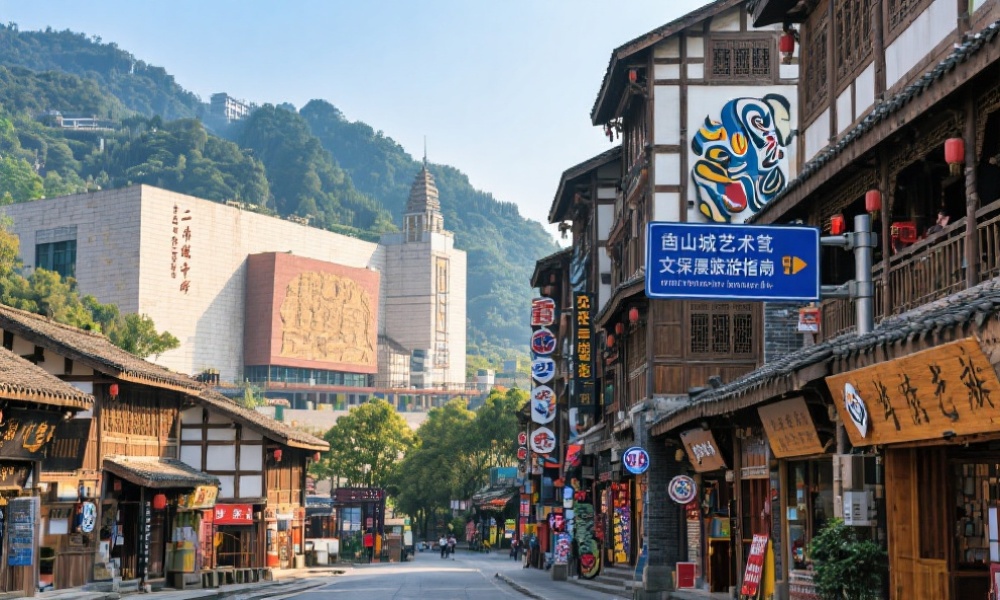
Chongqing, a mountain city renowned for its magical topography, possesses a charm that extends far beyond its cyberpunk-esque urban landscape. Nestled among towering peaks and the confluence of rivers lies a rich and diverse cultural and artistic heritage. From the ancient Ba-Yu civilization to the turbulent years of modern warfare, and to today's artistic innovation, every inch of Chongqing's land writes a unique chapter. This column will guide you on an in-depth cultural and artistic journey, avoiding superficial appearances and delving into the very soul of the city.
First stop: Tracing the origins of the Bashu region and exploring the epic of the Three Gorges – Chongqing China Three Gorges Museum
Embarking on a cultural journey through Chongqing, the Chongqing China Three Gorges Museum is an indispensable starting point. As a national first-class museum, it is not only a specialized museum dedicated to the construction of the Three Gorges Project, but also a comprehensive hall showcasing the culture of the Bayu region, the culture of the War of Resistance against Japan, and the culture of the Three Gorges. The museum's permanent exhibition halls, such as "Magnificent Three Gorges," "Ancient Ba-Yu," "Years of Resistance," and "The Road of the City," systematically trace the evolution of Chongqing from prehistoric civilization to modern metropolis.
In the "Ancient Ba-Yu" exhibition hall, visitors can closely observe bronzes and pottery unearthed from the Ba people's ruins, understanding the Ba people's "martial spirit and love of song" and their unique cultural system formed in the upper reaches of the Yangtze River. These artifacts are not only historical evidence but also carriers of the Ba-Yu cultural genes. Through the reconstruction of ancient farming, fishing, hunting, and handicraft scenes, as well as the interpretation of Ba people's sacrificial and funeral customs, visitors can directly experience the vitality of the ancient civilization on this land. Meanwhile, the "Magnificent Three Gorges" exhibition hall presents a grand narrative, showcasing the unique natural landscape, local customs, and the monumental achievement of the Three Gorges Project in the Three Gorges region. Through numerous artifacts, pictures, and multimedia presentations, it profoundly interprets the dialogue between humanity and nature, history and modernity.
Second stop: Wartime memories and urban transformation – Jiefangbei and surrounding historical districts
Starting from the Three Gorges Museum, we head towards the heart of the Yuzhong Peninsula—Jiefangbei (Liberation Monument). Jiefangbei, officially the "People's Liberation Monument," was originally intended as a "spiritual fortress" and symbolizes the indomitable spirit of the Chinese people during the War of Resistance Against Japan. It is not only a historical witness to Chongqing's role as the wartime capital but also a symbol of the city's phoenix-like rebirth and modernization.
Surrounding Jiefangbei lies Chongqing's most bustling commercial center, yet scattered throughout are numerous historical sites. For example, the nearby Luohan Temple, a thousand-year-old temple, boasts cliff carvings and Buddhist statues that embody profound religious and artistic value, creating a striking contrast with the surrounding modern urban landscape and presenting a unique sense of temporal and spatial interplay. Strolling here allows one not only to feel the modern pulse of Chongqing but also to touch its rich historical heritage, understanding how this city has continuously renewed and developed itself amidst the torrents of history.
Third stop: Ancient town with a thousand-year history and intangible cultural heritage – Ciqikou Ancient Town
Leaving the city center, head to Ciqikou Ancient Town on the banks of the Jialing River. Founded in the Song Dynasty, this town was once an important water and land port and a porcelain production center, earning it the nickname "Little Chongqing." Unlike other overly commercialized ancient towns, Ciqikou preserves its historical character while also dedicating itself to the preservation of intangible cultural heritage.
In Ciqikou, visitors can immerse themselves in traditional handicrafts. For example, they can watch performances of Sichuan opera face-changing and fire-breathing, experiencing the unique charm of this national intangible cultural heritage. The essence of face-changing lies in the actor's ability to instantly change masks, showcasing the dramatic emotional shifts of a character; behind this lies profound theatrical skill and cultural depth. In addition, the ancient town also features workshops for traditional handicrafts such as sugar painting, clay figurine making, and Shu embroidery, where visitors can try their hand at these crafts and feel the warmth of the artisan spirit. Tasting local snacks like Chen Mahua (a type of fried dough twist) and Mao Xue Wang (a spicy Sichuan dish) is also an important part of experiencing its local culture and culinary intangible cultural heritage. Ciqikou is not just a tourist destination, but a living cultural museum, allowing visitors to slowly feel the warmth of history and the vitality of traditional culture.
Fourth stop: Cradle of Art and Creative Expression – Sichuan Fine Arts Institute (Huangjueping Campus)
In the afternoon, the itinerary shifted to Chongqing's art capital – the Huangjueping Campus of the Sichuan Fine Arts Institute. This is not only an important art institution in Southwest China, but also a vibrant and creative art community. The graffiti street within the campus is its iconic landmark; the entire street's building facades are covered in colorful graffiti, each piece embodying the imaginative ideas of students and artists, a vivid example of urban public art.
Besides the graffiti street, the art museum and sculpture park on campus are also worth exploring. The art museum regularly hosts various art exhibitions, covering a variety of art forms including oil painting, traditional Chinese painting, sculpture, and printmaking, showcasing the creative achievements of Sichuan Fine Arts Institute faculty and students and the latest trends in contemporary art. Here, visitors can experience the atmosphere of art education and understand how art can intervene in life and express the spirit of the times. Strolling through the campus, you might unexpectedly encounter artworks and experience a feast for the eyes and the mind.
Fifth stop: Stilted buildings and riverside night view – Hongyadong Folk Custom Area
As night falls, the Hongyadong Folk Custom Area becomes the ideal place to conclude cultural and artistic activities. Hongyadong is not a traditional historical site, but rather a multi-functional commercial district built along the mountainside, based on Chongqing's unique "stilted building" architectural style. It cleverly blends traditional Bayu architectural art with modern commercial functions, becoming a calling card showcasing Chongqing's unique mountain and river city characteristics.
"Stilted buildings" are a unique traditional residential form in the Chongqing region. They are characterized by utilizing sloping terrain, supported by wooden piles or stone pillars, with the upper floor for living and the lower floor elevated or used for storage. The Hongyadong architectural complex is a modern interpretation of this ancient architectural wisdom. At night, when the lights come on, the tiered stilted buildings built along the cliff face, reflected in the Jialing River, create a dreamlike and enchanting scene. Here, visitors can not only appreciate the unique architectural aesthetics but also experience Chongqing's local culture and artistic atmosphere through folk performances, handicraft shops, and distinctive restaurants, feeling the city's unique charm in finding a balance between tradition and modernity.
This Chongqing cultural and artistic tour aims to guide visitors beyond the surface, delving into the city's historical heritage, artistic vitality, and humanistic spirit. Through the narratives of museums, the evolution of historical districts, the preservation of intangible cultural heritage, the innovation of art academies, and the wisdom of architecture, you will experience a comprehensive, vibrant, and story-filled Chongqing.