
What will you miss if you follow a travel guide to eat Chongqing food? Locals shake their heads.
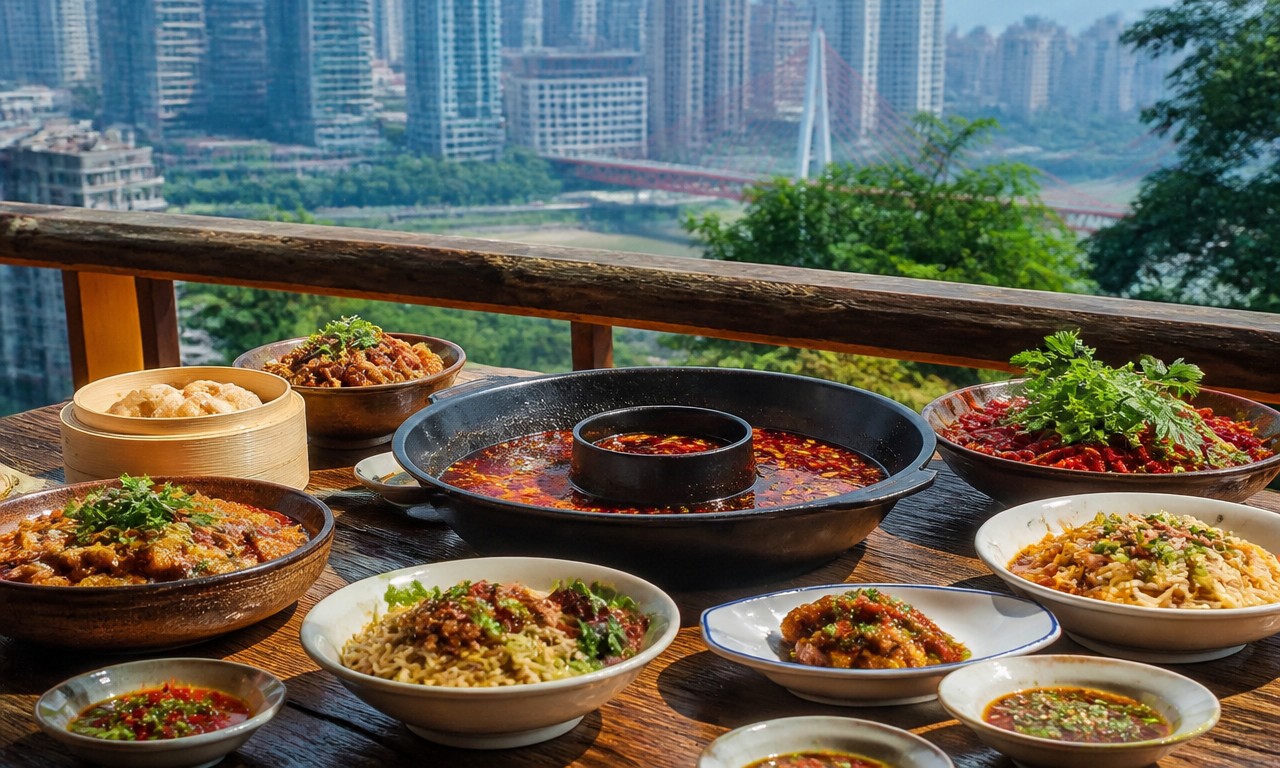
Before coming to Chongqing, you've probably saved the same list of restaurant names, but once you arrive, you'll often hear taxi drivers saying, "We don't eat there." This article aims to answer a straightforward question: what's the difference between the Chongqing specialties listed in online guides and what locals actually eat? Which recommendations should you follow, which should you eat according to local customs, and when is both correct? Explaining this clearly is more helpful than listing ten more restaurants.
Group 1: Chongqing noodles, what's the difference between the "must-eat old brand" and "the one downstairs"?
Most travel guides will tell you that certain noodle shops with names containing "glasses," "bench," or "old lady" are must-try restaurants, citing reasons such as being featured on TV shows, long queues, and fragrant chili oil. In reality, locals rarely travel across districts specifically to eat at a particular noodle shop; the vast majority eat at noodle stalls near their neighborhood, workplaces, or markets. The criteria for judging a good noodle shop aren't its reputation, but whether the owner makes the chili oil fresh daily, whether the noodles are alkaline yellow noodles, and whether the toppings are made fresh in the early morning. Truly good noodle shops share one thing in common: they only serve breakfast and lunch, closing around 2 PM when they've sold out.
This guide also applies in certain situations: If it's your first time here and you want to experience the "most intense bowl," going to those established restaurants is fine. Waiting in line and experiencing the atmosphere of treating noodles like a ritual is worthwhile. However, if you live in Yubei or Jiulongpo districts and are considering crossing two or three rivers just for a bowl of noodles, locals will advise against it. Just find a noodle stall nearby with plenty of office workers sitting outside; the taste is unlikely to be bad.
Group Two: Hot Pot - How to Choose Between a Trendy Riverside Restaurant and a Shop at the Bottom of an Old Residential Building?
Most travel guides will tell you to go to the riverside, Nanshan, or stylish restaurants in Chongqing for hot pot, enjoying the night view while dipping tripe. In reality, locals often treat guests to hot pot in older neighborhood shops, air-raid shelters, or even shops that have been open for over a decade with faded signs. The difference lies in the broth: older restaurants typically use freshly prepared broth made with raw beef tallow, which doesn't become bitter even after prolonged cooking and has a milder, less overpowering flavor; many large restaurants frequented by tourists use pre-made broth packets from factories for faster service and consistent taste, resulting in a fragrant initial taste that becomes saltier and bitter as it cooks.
The method for judging is simple: see if the restaurant has the confidence to "use recycled oil," meaning they openly admit the broth is homemade and are willing to let you see the large iron pot in the kitchen. Then look at the menu; if the main focus is on "shrimp paste" and "beef rolls" instead of "fresh tripe," "eel," and "fresh duck intestines," it indicates a greater focus on tourists. Riverside locations are suitable for taking photos and inviting out-of-town friends to experience the atmosphere; for a truly authentic hot pot experience, go to an older residential area.
Group 3: Ciqikou Chen Mahua (a type of fried dough twist), are "the one with the queue" and "the one sold loose at the market" the same thing?
Most travel guides will tell you that you must buy Chen's Fried Dough Twists in Ciqikou, preferably from the stall with the longest queue. In reality, locals rarely queue in Ciqikou; they more often buy loose fried dough twists from the markets or old neighborhood grocery stores. These are sold by weight, freshly fried that day, less sweet, crispier, and stay crisp even after two days. While the fried dough twists from the stalls in Ciqikou aren't bad, many of the ones you buy in queues are pre-packaged, and some of the oil flavor has already evaporated.
If you're just going to Ciqikou for fun and want to pick up some fried dough twists, buying from the shop with the queue is perfectly fine. But if you're making a special trip just for "the best fried dough twists in Chongqing," locals will say it's unnecessary. The truly delicious fried dough twists are found next to breakfast stalls, at market days, and even in the pushcarts outside some old teahouses.
Group 4: Nanshan Spring Water Chicken – Which is more authentic, the "Big Shop on the Mountain" or the "Small Shop on the Mountainside"?
Most travel guides will tell you that to eat spring water chicken, you have to go to Nanshan, to those big restaurants with viewing platforms, where the chicken is slaughtered and cooked on the spot. In reality, locals in Nanshan often prefer to go to small family-run workshops halfway up the mountain. The environment is ordinary, the chicken is also slaughtered on the spot, but the cooking method is more home-style. The "spring water" in spring water chicken means that it is stewed with local mountain spring water, not just for the sake of a scenic view.
There are two main differences. First, to maximize table turnover, larger restaurants often slaughter chickens in advance, resulting in less tender and juicy meat compared to freshly slaughtered chickens. Second, in terms of seasoning, larger restaurants tend to emphasize spiciness and oil, making them more suitable for tourists to take photos and check in, while smaller restaurants focus more on the natural flavor of the chicken itself. Both versions are true: if you want to enjoy the night view while eating chicken, go to the larger restaurants; if you want to eat the chicken itself, head towards the hillside and find the small courtyards with local cars parked outside.
Group 5: Food Street Snacks - Which is more worthwhile to visit: "August 1st Food Street" or "Backstreet Side Streets"?
Most travel guides will tell you that the Bayi Food Street near Jiefangbei is the first stop to sample all of Chongqing's snacks. However, locals rarely eat there because most of the food has been modified to appeal to tourists: less spiciness, more sweetness, smaller portions, and higher prices. The same snacks are often a third cheaper at stalls in back alleys or near old neighborhoods, and the taste is closer to the original.
However, this doesn't mean that the Bayi Food Street is worthless. If it's your first time in Chongqing, you're staying near Jiefangbei, and you're short on time but want to try a variety of local specialties like hot and sour noodles, cold rice cakes, Chongqing-style glutinous rice balls, and roasted pig brains in a short period, the food street is the most efficient option. It's recommended to treat it as a "snack exhibition hall" rather than a "snack destination." Take a stroll around to see what's available, and then head to a small shop in a residential area that specializes in a particular dish to enjoy properly.
Group 6: What Chongqing specialties should you bring back? There's a big difference between "gift boxes" and "freshly cooked at the market".
Most travel guides will tell you to buy a gift box of a certain brand of hot pot base, a gift box of a certain brand of fried dough twists, or a gift box of a certain brand of rice candy when bringing back Chongqing specialties. In reality, locals often buy freshly prepared hot pot base from farmers' markets or time-honored stores as gifts for friends from other places. It's sold by weight, and the owner prepares it in front of you, lets it cool, cuts it into pieces, and wraps it in brown paper before you take it away. This kind of base is more fragrant than supermarket gift boxes because it hasn't undergone long-term storage and preservation treatment, and the aroma of beef tallow is fresh.
You can separate gift-giving from personal consumption: When giving gifts, choose branded gift boxes—the packaging is presentable, less likely to be a mistake, and the recipient will recognize it; for personal consumption or as a gift for close friends, buying freshly prepared base ingredients from the local market is the most reliable option. Before buying, you can ask, "Is this something you made yourself?" If the vendor is willing to let you smell and taste it, it's generally safe to say it's good. Another local specialty that people often bring back is "Ganshui dried radish" and "Yongchuan fermented black beans," which are more durable and practical than many trendy snacks.