
Twelve Hours of Dining in Chongqing: 8 Local Street Foods from Morning to Night
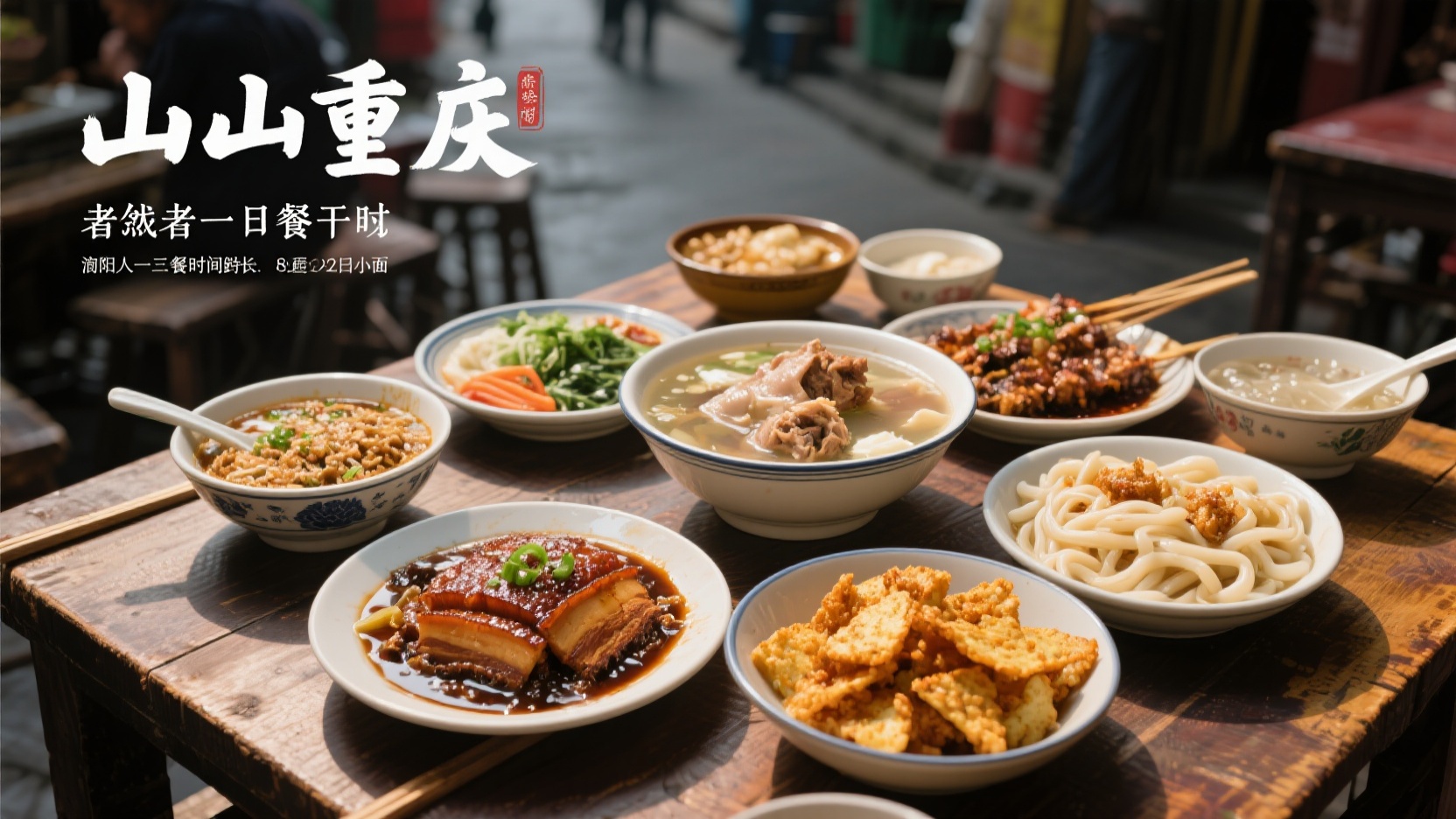
The everyday food scene in Chongqing isn't found under the neon signs of tourist food streets, but rather in the small noodle stalls at the foot of residential buildings, the tofu pudding shops along the steps, and the late-night food stalls basking in the river breeze. This article records eight frequently seen dishes on the city's tables, following the daily timeline of a local's day.
Morning: Noodles and Oil Tea
Chongqing noodles are the foundation of Chongqing's breakfast. Alkaline noodles are cooked in boiling water until just done, then placed in a bowl with chili oil, Sichuan peppercorn powder, ginger and garlic water, pickled mustard greens, crushed peanuts, and chopped scallions. They can be served as soup noodles with broth or as a dry noodle dish. The chili oil is made by pouring rapeseed oil over dried chilies, and the Sichuan peppercorn powder is sourced from Maowen, with an aroma that outweighs the spiciness. The noodles have a distinct alkaline flavor upon first bite, followed by a strong numbing and spicy kick, and then a savory finish with the pickled mustard greens and peanuts. For locals, Chongqing noodles aren't "fast food," but rather a waking-up treat for the morning.
Oil tea, on the other hand, is more mellow and gentle. The rice flour paste is made from ground rice and cooked into a thick porridge, then poured into a bowl and topped with golden-fried fried dough twists, chili oil, pickled mustard greens, and cilantro. When eating, the fried dough twists are pressed into the rice porridge, offering a delightful combination of crispness and smoothness in a single spoonful. While oil tea is less common than Chongqing noodles these days, it still enjoys a loyal following at breakfast stalls in older neighborhoods, representing a preserved, delicate aspect of Chongqing's breakfast culture.
Lunch: Tofu rice and braised pork belly
During lunchtime, one of the most popular combinations at local eateries is a bowl of tofu pudding with rice. The tofu pudding, made with bile, is softer than regular tofu but firmer than tofu pudding. It's served in a bowl with a side of chili oil dipping sauce. The dipping sauce is made with chili oil, minced garlic, Sichuan peppercorn powder, salt, and a little ginger oil; some vendors add a spoonful of fermented bean paste. The way to eat it is to dip the tofu pudding in the dipping sauce and then eat it with rice. The tofu pudding melts in your mouth, the dipping sauce is salty, spicy, fragrant, and numbing, and the rice balances the flavor. For manual laborers and office workers, this meal is inexpensive, filling, and provides protein—a highly effective way to replenish nutrients during the midday hours in this mountain city.
Often served alongside tofu rice is braised pork belly. Chongqing-style braised pork belly comes in savory and sweet varieties, with the savory version being more common for everyday lunches. The pork belly, with skin on, is boiled until half-cooked, then coated with soy sauce for color, deep-fried until wrinkled, sliced, and arranged in an earthenware bowl with Yibin preserved mustard greens. It is then steamed until the meat is tender. The finished dish features reddish-brown slices of meat, with the fatty parts melting in the mouth, the lean meat tender, and the preserved mustard greens absorbing the meat juices, resulting in a savory and sweet flavor. Braised pork belly symbolizes a "treat," and in the past, it was only eaten during festivals or when entertaining guests; now it's a regular feature of weekday lunches.
Afternoon tea: Iced jelly with shrimp and crispy potato.
Afternoon tea in Chongqing doesn't have a fixed time, but it usually starts around 3 or 4 pm, when two kinds of refreshing snacks appear at roadside stalls and carts. Bingfen (iced jelly) is made by kneading false sour seeds to extract a paste, adding lime water to solidify it, and then cutting it into transparent pieces; Liangxia (cold shrimp) is a rice product shaped like small shrimp, formed by dripping rice paste through a sieve into cold water. Both are usually served together in a bowl, drizzled with brown sugar syrup, and sprinkled with chopped hawthorn, raisins, and peanuts. It's cool and smooth to the taste, the brown sugar is sweet but not cloying, and the Liangxia has a hint of rice aroma—a physical way to cool down in the sweltering heat.
Another option is crispy potato. Small potatoes are boiled with the skin on, flattened, and then pan-fried on a griddle until crispy on both sides. They are then stir-fried with cumin, chili powder, Sichuan peppercorn powder, salt, and chopped green onions. The potato skin is crispy, while the inside is soft and fluffy, with a spicy and numbing cumin aroma clinging to the crispy potato. Vendors usually eat it on bamboo skewers while walking, making it a "transitional food" for students and office workers between mealtimes.
Late at night: Roasted pig brain and pig's trotter soup
As night falls, the lights of barbecue stalls illuminate the entrances to air-raid shelters or under residential buildings. Grilled pig brains are an implicit standard for judging the quality of a barbecue stall. Fresh pig brains are defasciated, placed in a foil bowl, and seasoned with pickled peppers, minced garlic, Sichuan peppercorn powder, cumin, and a small amount of rapeseed oil. They are then grilled directly over charcoal until the surface blisters and the broth boils. The brains have a texture like soft tofu, absorbing the sour and spicy flavors of the pickled peppers and the aroma of garlic. The first bite is intensely hot, followed by a smooth and creamy texture. It's not about filling the stomach, but rather a social food for late-night gatherings, a way to release emotions throughout the day with a single spoonful shared.
At the other end of the late-night diner is pig's trotter soup. The pig's foretrotters are singed and then simmered for hours with kidney beans and ginger, resulting in a milky white broth. The trotters are tender and fall off the bone, served with a side of chili oil dipping sauce. Those drinking pig's trotter soup late at night aren't all just off their night shifts; some are diners needing a "refreshing" moment after a drinking party. The soup has a gelatinous texture, the kidney beans are soft, and the spiciness of the dipping sauce simultaneously combats drowsiness and tipsiness.
From a bowl of noodles in the early morning to a pot of pig's trotter soup late at night, a Chongqing resident's day is clearly divided into segments by these everyday street foods. They may not be fancy, but they are authentic enough; from the main streets to the back alleys, you can understand this city through its food in a day.