
Chongqing's Arts and Culture Hidden Corners: 7 Spiritual Corners from Old Factory Bookstores to Community Cafes
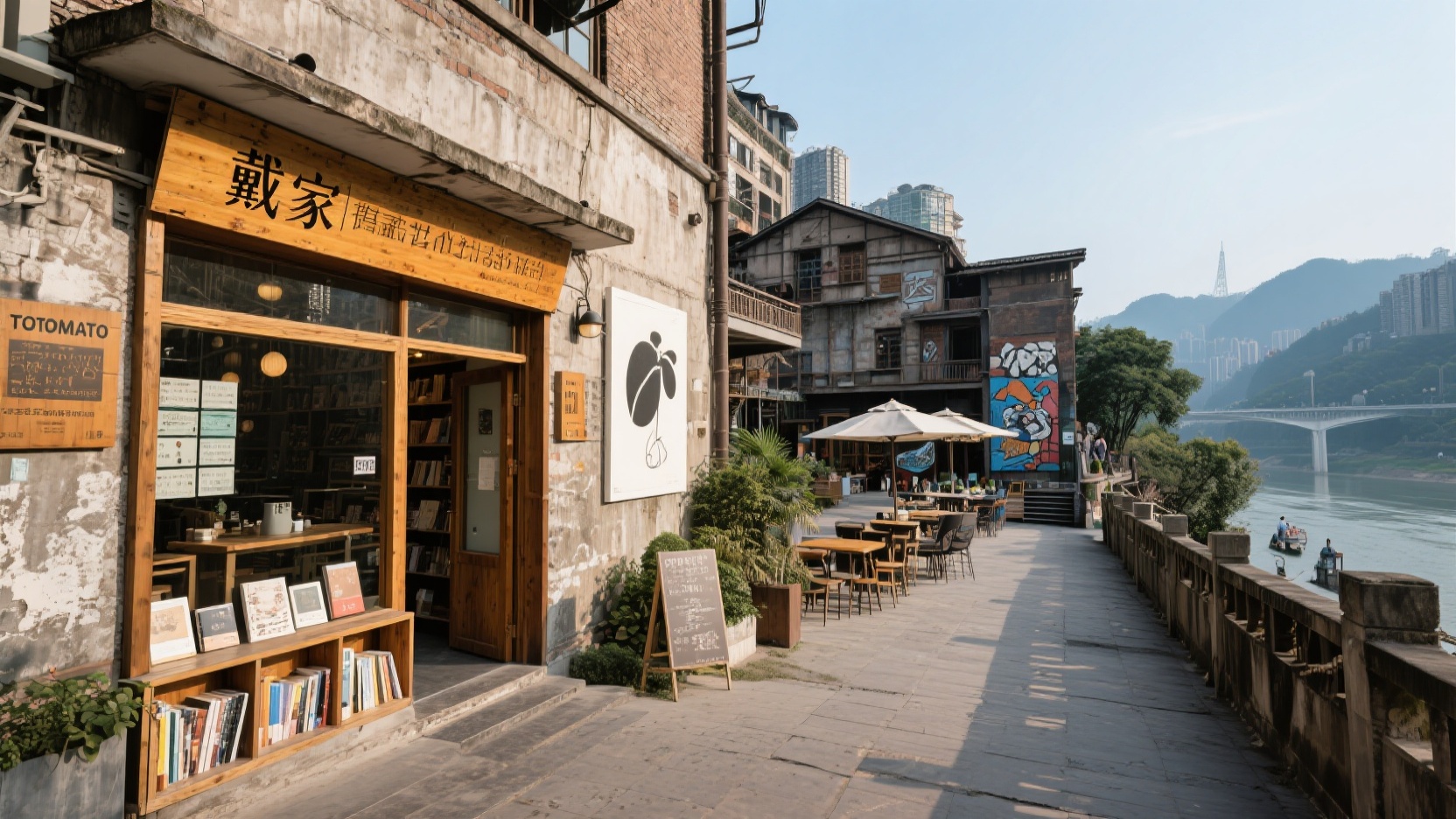
Chongqing's culture and art are not found in the lights of Hongyadong, but in the old factories, shops on the ground floor of residential buildings, and old warehouses along the riverbank that have survived urban renewal. The following 7 locations are linked together by the "City Niche Culture Map," connecting independent bookstores, private art galleries, flea markets, community cafes, and independent galleries, and are suitable for a half-day to a full day of walking.
Anonymous Bookstore: A Book Selection Living Room in a Residential Building
Located in a residential building in Daijia Lane, Yuzhong District, the space is accessed via a cliffside walkway. Converted from an old house, it's small but features a selection of books primarily in the humanities and social sciences, as well as local Chongqing history. The owner provides handwritten recommendations. The atmosphere is quiet and restrained, more like a private study. Highlights include the "city-themed bookshelves" and the old wooden table by the window. Photography tip: Use the afternoon light to capture the ambiance of the reading area and the view across the Jialing River. To avoid disturbing other readers, please silence your phone.
TOTOMATO: A neighborhood café perched on a cliffside
Also tucked away in Daijia Lane, the storefront is understated, and the interior retains the terrazzo flooring and steel windows of the old residential building. It specializes in light-roasted hand-drip coffee and community blends, and regulars often sit behind the bar. With a relaxed atmosphere, it's a popular "downstairs living room" for local young people. Highlights: The cliffside terrace offers views of the Qianximen Bridge and the river; the best light is in the early morning and evening. Photography tips: Use the terrace railing as a foreground to photograph the coffee cups and river view, or use the mosaic brick wall at the entrance as a backdrop.
Beicang Cultural and Creative District: Old Items and Reading in a Textile Warehouse
Formerly a textile warehouse in Jiangbei, the area has been renovated without excessive commercialization, preserving its sloping roofs, red brick walls, and old warehouse structure. The neighborhood features a small library, a vintage goods display area, and independent design studios. Its gentle atmosphere makes it perfect for a leisurely afternoon stroll. Highlights: Old wooden bookshelves under the warehouse skylights, and installations made from repurposed Chongqing industrial parts. Photography tips: Stand in the atrium and look up at the sloping roofs and skylights, or use the red brick walls and black steel stairs to create geometric compositions.
Jinshan E-Cool: A cluster of factory buildings in the export processing zone
Converted from old factory buildings in the Yubei Export Processing Zone, this park is larger than typical cultural and creative parks, housing design companies, home furnishing showrooms, a small theater, and independent galleries. The atmosphere is calm and professional, with relatively few visitors. Highlights: The permanent exhibition at the ADC Art and Design Center, vintage furniture from Yiji Home Furnishings, and large-scale installations throughout the park. Photography tips: Capture the depth of the space in the long corridors, and use the reflections from the glass curtain walls to create symmetrical shots.
Haus Space: An Independent Art Scene in Huangjueping
Located in Huangjueping, Jiulongpo District, near the Sichuan Fine Arts Institute, this is a non-profit, independent art space that regularly hosts international artist residencies and experimental exhibitions. Its atmosphere is raw and avant-garde, emphasizing process and local context in its exhibitions. Highlights: Open studios for resident artists and white-box exhibition halls in the style of an old factory building. Photography tips: No flash photography is allowed. Capture the contrast between the artworks and exposed pipes and concrete floors; documenting the setup process is more valuable than just taking a standard photo.
Yuelai Art Museum: A futuristic exhibition hall on a cliff face
Located in Yuelai, Yubei District, the building is embedded in the mountainside, featuring exposed concrete and prominent geometric lines. The museum primarily hosts exhibitions of contemporary art, architecture, and design, offering a quiet and uncrowded atmosphere. The ambiance leans towards academic and contemplative. Highlights: the gentle slope at the entrance and the circular atrium; the relationship between the building itself and the view of the Jialing River. Photography tips: utilize the building's gray spaces to capture the interplay of light and shadow; the most layered scenes are achieved when sunlight streams in through the top opening at midday.
Yuan Art Museum: Contemporary Exhibitions in a Spherical Building on the Riverbank
Located on Nanbin Road in the south of the river, its spherical exterior makes it an anomaly on the waterfront. The exhibitions inside focus on contemporary art and urban themes; the space is small but the flow is interesting. It has a light and airy feel with a strong urban vibe. Highlights: The circular exhibition line formed by the spiral staircase and the spherical interior walls; the interplay between the exhibitions and the ships sailing on the river. Photography tips: Capture the reflection of the spherical exterior at dusk when the sky is blue; use a wide-angle lens to accentuate the curves of the interior staircase.
These seven locations are scattered across Yuzhong, Jiangbei, Yubei, Jiulongpo, and Nan'an districts, connected by rail transit and on foot. There's no need to rush; instead, you can witness the interplay between old communities and new spaces as you move between them. Explore the city's spiritual corners on foot.