
The Flavors of Changsha in the Market | From Nanmenkou to Hehuachi, 10 Local Delicacies That Locals Have Grown Up With
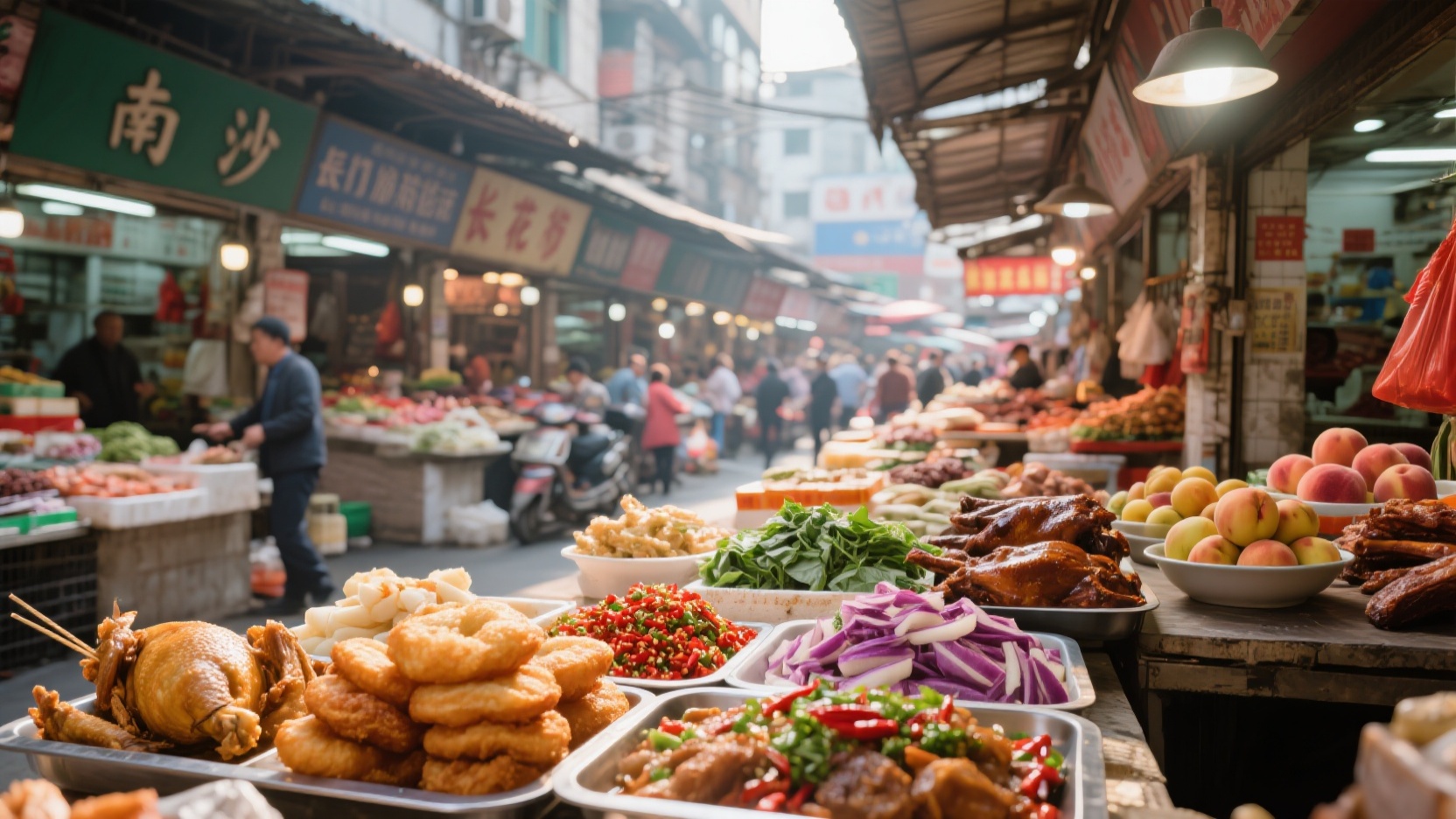
In Changsha, to judge whether someone is a true foodie, don't ask how many trendy restaurants they've queued for; ask if they've ever waited at 7 a.m. at the Nanmenkou Market for a braised food stall, or fought with elderly folks at the Hehuachi Market for the last pound of winter bamboo shoots and cured pork. The market is the origin of Changsha's flavor: there are no fancy plating filters here, only the everyday experience of voting with your taste buds.
Nanmenkou Market: A Morning Battleground for Cooked Food Stalls and Snack Vendors
The vibrant atmosphere of the Nanmenkou vegetable market lies in its freshly prepared and served dishes. Bundled chicken is a unique Changsha specialty, made by rolling chicken into a tight cylinder with bean curd skin. It's first braised, then smoked, and the vendor slices it thinly with a deft knife, then tossing it with minced garlic, cilantro, crushed peanuts, and chili oil. When choosing chicken, check if the cut surface is firm and without holes; too dark a color may indicate over-smoking, while too light a color suggests insufficient braising flavor. Half a pound is perfect for breakfast or as a snack with drinks. It's recommended to ask the vendor for extra chili oil. Served with a bowl of rice noodles or plain noodles, it's the quintessential Changsha way to eat it.
The stalls selling freshly fried foods in the market are a paradise for carb lovers. For sugar-coated glutinous rice cakes, buy the ones that are fresh out of the fryer and still coated in sugar – the outer layer is crispy and chewy, while the inside is soft, sticky, and stretchy. For scallion-fried glutinous rice cakes, choose those with charred edges and a vibrant green scallion center; they'll make a satisfying "crunch" when you bite into them while they're hot. Both can be bought individually, one of each to enjoy on the go – the most sensible breakfast option at the market.
As the weather warms up, the stall selling cold mung bean jelly appears on time. The jelly, made from mung bean starch, is inverted onto a wooden board, and the vendor uses a perforated metal scraper to scramble thin strips, then tops it with fermented bean curd sauce, garlic water, balsamic vinegar, and diced dried radish. To judge its quality, firstly, check if the scraped strips are of uniform thickness, and secondly, check if the sauce has the grainy texture of fermented bean curd. It tastes even better chilled, but since it's usually at room temperature in the market, it's recommended to eat it within ten minutes of buying it.
In the Nanmenkou area, there's a hidden gem in summer—perilla peach ginger. Fresh, crisp peaches are sliced and marinated with perilla leaves, young ginger, and rock sugar until the peach flesh absorbs the aroma of perilla and a slight pinkish juice seeps out. Choose peach slices with slightly crisp edges and perilla leaves that haven't turned black. Chill it and eat the peach and juice together—it's refreshing and helps cool you down. Most vendors in the market sell this in transparent jars, so you can see the thickness of the peach slices; evenly sliced peaches are marinated more thoroughly.
Lotus Pond Market: A treasure trove of flavors from pickled vegetables and handmade pastries
Lotus Pond Market is a major market for pickled and preserved vegetables in Changsha. Chopped chili peppers and chili-fried radishes are two must-buy items. For chopped chili peppers, choose those that are bright red and translucent, with plump seeds and clear broth, and smell fermented and sour rather than raw and pungent. For chili-fried radishes, choose radish strips that are semi-dried and coated with chili peppers, offering a crunchy texture when you bite into them. These two items are staples in Changsha households' refrigerators, essential for steaming fish heads, stir-frying cured meat, and mixing with noodles. When buying, ask the vendor for a sample; good chopped chili peppers have a moderate saltiness and won't be too cloying even when eaten alone.
The cured meat section follows the principle of "winter curing, summer storage." For cured pork, choose pieces with distinct layers of fat and lean meat, a slightly yellow skin with smoky marks, and when cut open, the fat should resemble amber while the lean meat is rose-red. For cured fish, grass carp or silver carp are preferred, as their bodies should be dry and not sticky. After washing the cured pork with warm water, slice it and stir-fry it with winter bamboo shoots or water chestnut shoots. The cured meat's oil will seep into the dish, making it a staple for entertaining guests in Changsha. If you encounter cured pork with white mold, don't worry; simply scrape it off. This is a sign of natural fermentation. However, if the mold spots are green or black, discard it immediately.
Sweet rice wine and braised duck are the hidden gems of Hehuachi. For sweet rice wine, choose freshly made by hand; the rice grains should be intact, the liquid clear and slightly yellow, with a subtle aroma. It's better for cooking eggs or making glutinous rice balls at home, offering a chewier texture compared to supermarket brands. For braised duck, select ducks with firm skin and a glossy, deep reddish-brown color. The meat should be shredded and become increasingly flavorful with each chew, making it perfect as a snack or with drinks. Both are available in vacuum-packed form, but they taste best when eaten fresh.
Seasonal Fruits: A hidden menu that changes with the seasons
The fruit stalls at the farmers' market are never short of surprises, but you have to choose the right season. Around June, Jingzhou bayberries are the star; choose those that are deep purple to black, with firm flesh and green stems. Soak them in salt water for twenty minutes before eating for a burst of sweet and sour juice. From late autumn to winter, Liuyang kumquats and Jiangyong pomelos take over. Choose kumquats with smooth peels that feel springy to the touch; they're even more fragrant when eaten with the peel on. For pomelos, choose those that are heavy and have tiny oil spots on the peel; let them sit for a few days to allow the sugar to seep back in, and the flavor will be even richer. These local specialties don't go in high-end supermarkets; they only appear in the farmers' market seasonally. If you miss them, you'll have to wait another year.
Visiting the local market is the best way to experience a city. Travel guides might highlight Changsha's famous restaurants like Huogongdian, Wenheyou, and Chayan Yuese, but the Changsha of the market is filled with the sounds of chopping boards, the aroma of chili peppers, and the familiar greeting, "Hey girl, wanna try some?" Only when you stand before a stall and accept a pair of chopsticks have you truly entered the heart of this city.