
Changchun Intangible Cultural Heritage Slow Travel: Half-Day Handicrafts at the Confucian Temple, Manchu Paper Cutting, and Huanglong Opera
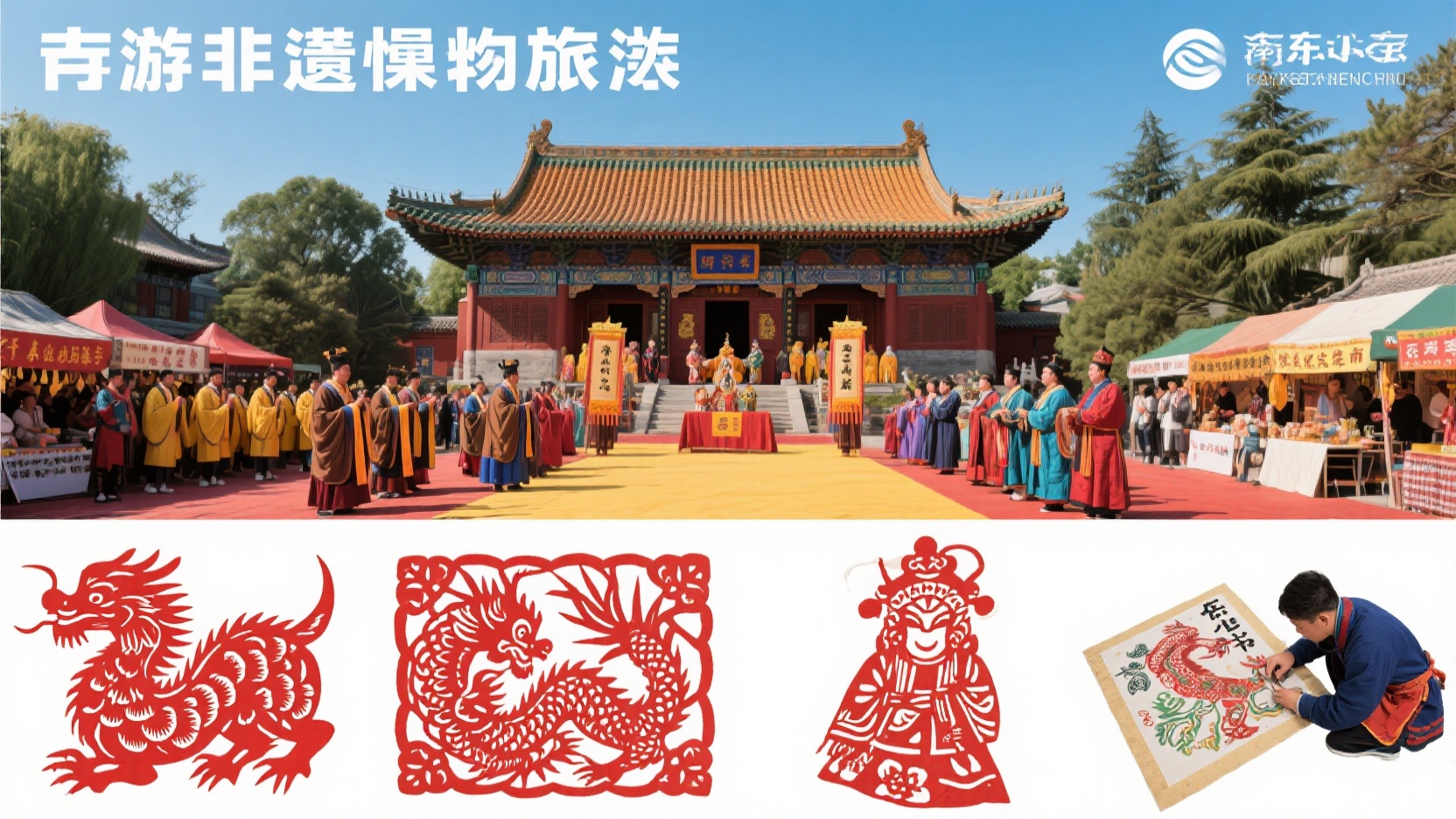
Changchun's cultural activities extend far beyond the Puppet Emperor's Palace and film studios. What truly captivates visitors, holding their attention for half a day, are three intangible cultural heritage sites imbued with a strong sense of time: the Confucius Temple sacrificial ceremony, Jiutai Manchu paper-cutting, and Nong'an Huanglong Opera, plus a mobile Northeast China handicraft market. Together, they form a clearly seasonal tapestry of local cultural life, perfect for incorporating into a two- to three-day Changchun trip.
The Confucius Temple Ceremony: The Ancient Ritual Held Every Autumn Equinox
The Confucius worship ceremony at the Changchun Confucian Temple is held around September 28th each year, the birthday of Confucius, and is sometimes combined with the "Changchun Confucius Cultural Festival". The ceremony begins in the early morning. The Lingxing Gate slowly opens, and participants dressed in traditional robes enter in a line. The chief officiant performs the three offerings, accompanied by elegant music, without the use of loudspeakers, creating a solemn and quiet atmosphere. Ordinary tourists can obtain a viewing card at the entrance of the Confucian Temple in advance and watch from the platforms on both sides of the Dacheng Hall. After the ceremony, visitors can participate in the "Classic Recitation" session, receiving a sheet of Xuan paper in front of the east and west wing rooms to trace the character "仁" (ren, benevolence) or "礼" (li, propriety) in red ink, before entering the exhibition hall to see the "Illustrations of Confucius' Sacred Sites". The Changchun Confucian Temple was first built in 1872 (the eleventh year of the Tongzhi reign of the Qing Dynasty) and is one of the best-preserved Confucian temples in Northeast China. It used to also serve as the Changchun County School. The ancient Confucius worship ceremony was interrupted but was restored in 2002, retaining the simplified procedures of the "Shidian Ceremony". If you visit outside of Confucius's memorial day, the Confucius Temple also holds small ceremonies such as the Initiation Ceremony and Coming-of-Age Ceremony on weekdays. You can check the monthly schedule in advance.
Jiutai Manchu Paper-cutting: The Granny on the Kang (heated brick bed) and Hanging Sign
The peak season for Manchu paper-cutting in Jiutai is from the winter solstice to around the Spring Festival, but some Manchu paper-cutting workshops in Jiutai District offer regular weekend workshops. Upon entering, participants choose either red or white paper, and experienced artisans demonstrate four techniques: folding, cutting, hollowing, and tearing, cutting directly without a draft. The first piece is usually a "Momo figure"—standing upright with arms hanging down, the facial features only showing a few holes, with bold and rustic lines. The second piece is a "hanging sign," pasted on the lintel during the Spring Festival, often featuring deer, fish, and coins, emphasizing "one continuous piece of paper." Participants typically complete a simple window decoration in two hours and take it framed home. Manchu paper-cutting originally relied on shamanistic rituals; the Momo figure represented ancestral gods or guardian spirits, pasted on the west wall of the house next to the shrine, and not to be given away casually. The Jiutai area also retains the "tearing paper" technique, using hands to tear the paper to create rough edges without scissors, more closely resembling the early Manchu life in the mountains. During the winter experience, the indoor heated kang (a traditional heated brick bed) is so warm that you need to remove some clothing if you sit for a long time—a unique detail of Northeast China's handicrafts.
Huanglong Opera of Nong'an: Local Dialect from the Ancient City of Liao and Jin Dynasties
The peak performance period for Huanglong Opera in Nong'an County is around the Huanglongfu Cultural Festival in June and the temple fair on the 18th day of the fourth lunar month. The Huanglong Opera Troupe of Nong'an County will perform excerpts at the Liaota Square or the Cultural Theater. Before watching the performance, it is recommended to listen to a brief explanation at the Liaota Pagoda in Nong'an to learn about the historical background of Huanglongfu as an important town during the Liao and Jin dynasties. During the formal performance, Huanglong Opera uses various rhythmic patterns such as "Da Bei Diao" and "Xiao Bei Diao," with the accompaniment mainly consisting of the banhu (a two-stringed bowed instrument). The actors' movements are large, and they often use props such as whips and broadswords. The stage language has a distinct Northeastern dialect ending. After the performance, the troupe usually offers a half-hour "singing experience," teaching the aria "The warhorses neigh before Huanglongfu," and allowing performers to try on modified costumes and take photos. Huanglong Opera was officially named in 1959 because Nong'an was formerly known as Huanglongfu. Its singing style incorporates elements of Northeastern folk songs, Errenzhuan (a type of folk opera), and shadow puppetry. The repertoire mainly tells stories from the Liao and Jin dynasties. In 2014, it was included in the national intangible cultural heritage extension project. When watching a play, you don't need to understand every single word of the lyrics. The key is to observe the differences between it and Errenzhuan: Huanglong Opera places more emphasis on historical narrative, has fewer scenes with clowns, and has a more "organized" overall rhythm.
Kanto Market: Mobile Handmade Stalls from Sugar Painting to Clay Figurines
The Guandong Market in Changchun is mostly concentrated during the Winter Agricultural Expo and Summer Art Festival, with some permanently located at the Guandong Cultural Park weekend market. The stalls are small, yet offer a one-stop experience of three crafts: Guandong clay figurines, sugar painting, and straw weaving. Clay figurine makers sculpt Guandong figures using yellow clay and cotton fibers, sugar painting artists use copper spoons to outline butterflies or dragons on stone slabs, and straw weaving stalls teach how to weave a grasshopper. Experiences are mostly "make one to take home," typically completed within half an hour, making it suitable for interspersed throughout the day. The Guandong Market continues the old tradition of "going to the market" for exchanging goods. Changchun, located in central Northeast China, is home to many ethnic groups, resulting in handicrafts that blend sugar painting brought by immigrants from within the Great Wall, as well as Manchu and Korean weaving techniques, creating a diverse yet stable market aesthetic. When browsing the market, it's recommended to watch the craftsman complete a piece before trying it yourself. The most difficult aspect of sugar painting is controlling the sugar temperature, clay figurines are challenging due to the proportions, and straw weaving requires patience.
By combining the Confucius Temple ceremony, Jiutai Manchu paper-cutting, Nong'an Huanglong Opera, and the Guandong Market into a single itinerary, you can spend the morning at the Confucius Temple or a paper-cutting workshop, the afternoon watching the opera in Nong'an, and the evening exploring the market in Changchun city. This creates a perfect day of "sitting down and experiencing life as a local." Note that there are significant temperature differences between day and night in spring and autumn, and those visiting the paper-cutting and market in winter should dress warmly. The specific dates for the Confucius Temple ceremony and Huanglong Opera are subject to official announcements each year; it is recommended to check the dates before your trip to ensure you not only "see" but also "participate."