
These 8 must-try spots in Yinchuan | A blogger's personal review of seasonal dishes for spring, summer, autumn, and winter; only locals can guide you to these great places.
From Qingming to Guyu: The newly sprouted spring delicacies in the fields will only be tender for twenty days.
Spring arrives late in Yinchuan, but it comes fiercely. Around the Qingming Festival, on the Gobi Desert at the eastern foot of the Helan Mountains, sand onions are the first wild delicacy. They look like thin chives, but are crisper and sweeter, with a unique pungent aroma of the sandy land. They are most tender before Grain Rain, and after the Beginning of Summer, the fibers become coarser, chewing like grass. Locals eat them simply: wash them and serve them cold, just drizzled with hot sesame oil, sprinkled with salt and minced garlic—one bite and you get the taste of the Gobi Desert.
At the same time of year, bitter lettuce is also a "limited-time surprise." It needs to be dug up between Qingming and Guyu (around April 5th and 20th of the lunar calendar), and only those with a little red root are fragrant. After blanching, the bitterness disappears. Local aunties will serve it with a bowl of millet porridge, saying, "Eating bitter lettuce in spring will keep you healthy." Both of these can only be found in the morning market in Yinchuan's old town; by midday, they're usually sold out.
Summer Solstice to Great Heat: Selenium-rich watermelons growing in rock crevices and fresh goji berries on trees
Once the summer solstice has passed, Ningxia's most extravagant summer treat arrives: selenium-rich watermelon and fresh goji berries. The selenium-rich watermelon grows in the crevices of rocks in the Gobi Desert around Zhongwei, but people in Yinchuan start bringing it home in sacks as early as the summer solstice. Due to the large temperature difference between day and night, its central sugar content is significantly higher than that of ordinary watermelons, resulting in a "sandy" sweetness rather than a watery one. Locals eat it without adding sugar or juicing it; they simply chill it, grind it in their teeth, and then squat at the entrance of their residential area, spitting out the seeds and all.
Fresh goji berries are a "local perk" available only from late June to August. Fresh goji berries resemble small red berries, with thin skin, juicy flesh, and a slightly sweet taste with a hint of bitterness. They soften within a day of being picked and are difficult to obtain outside of Ningxia. When I first tasted them, I realized that the dried goji berries I'd previously consumed didn't even capture a third of their freshness. Locals advise: only grab a small handful at a time, as too many can cause internal heat.
From White Dew to Frost's Descent: Lingwu jujubes and rice paddy crabs, the whole year's wait is just these thirty days.
As soon as September arrives, people in Yinchuan start eyeing two things: Lingwu long dates and rice paddy crabs from the Helan Mountains. Lingwu long dates aren't crisp year-round; they color after the White Dew solar term, and are at their crispest and sweetest between the Autumn Equinox and the Frost's Descent. They have thin skins and small pits, making a "crunch" sound when you bite into them. After the Frost's Descent, the date flesh becomes soft, and locals use them to make wine dates or dry them. In the orchards, everyone has a basket, picking and eating as they go, no one washing their hands because they've just been wiped clean by the dew.
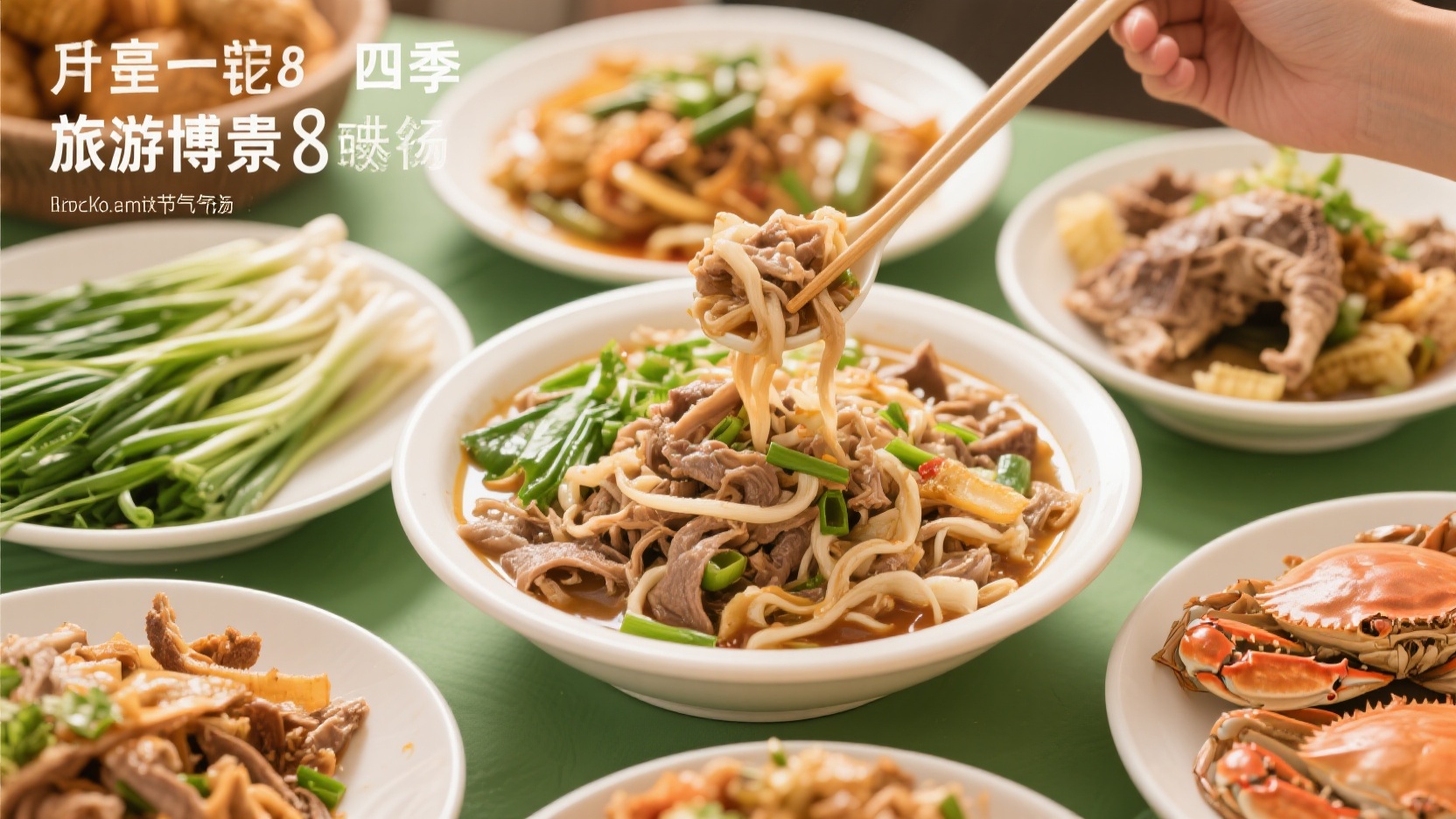
At the same time, the rice paddy crabs in Helan and Yongning also reach their fattest point. Around the Mid-Autumn Festival, farmers who raise crabs in rice paddies begin harvesting them, the crab roe overflowing to the top of their shells. Locals eat them simply: steamed, without too many seasonings, at most with a little ginger and vinegar. The crab meat has its own fragrance of rice blossoms and a subtle sweetness; adding too much flavor would be a waste. This is a hidden gem from the Autumn Equinox to the Frost's Descent; after this period, the roe is gone.
From the Beginning of Winter to the Great Cold: Lamb offal soup and lamb noodle soup are the "heating logic" of winter.
After the start of winter, there's only one main flavor in the mornings of Yinchuan: mutton offal soup. You can order it in summer too, but locals say, "Eating it in summer is just for the taste, eating it in winter is for survival." The broth for Northwest mutton offal soup is made by simmering mutton bones and spices until it turns white, then adding lamb lungs, tripe, and lamb head meat. You add your own chili oil, which settles at the bottom, making it increasingly warming the more you drink. A classic Yinchuan tradition is to pair it with a fennel-flavored flatbread, breaking it open and soaking it in the soup. After eating, your nose will clear and your back will sweat.
Around the winter solstice, mutton noodles with minced meat sauce begin to take over dinner. At this time, the mutton is thick with fat; it's diced, rendered, and then simmered with potatoes, tofu, and diced radish to make a rich sauce, which is poured over chewy, thin noodles. Locals emphasize "one chopstickful of noodles, half a spoonful of soup," meaning the noodles should be thin and continuous, and the soup should cling to the rim of the bowl. Even when it's below -10 degrees Celsius outside, a bowl of this inside feels more satisfying than central heating.
The blogger summarizes: Yinchuan's delicious food follows a timetable. Spring brings wild delicacies, summer brings fresh produce, autumn brings sweet treats, and winter brings warming foods—each dish is a product of its season. Simply following trending lists often results in eating out-of-season or out-of-town versions. Practical tips: Check the year's solar terms before you go. In spring, head to the early morning markets; in summer, to the melon fields; in autumn, to the fruit orchards; and in winter, to the early morning lamb offal hot pot. Many seasonal dishes don't have fixed menus; asking "What's freshly caught today?" upon entering is more reliable than ordering via QR code. A substantial meal can be had for tens to hundreds of yuan per person; there's no need to chase after high-end restaurants. Eating according to the seasons is the right way to experience a city.