
Eating in Wuhan according to the solar terms | Blogger's personal review of 8 seasonal dishes (miss it and you'll have to wait another year)
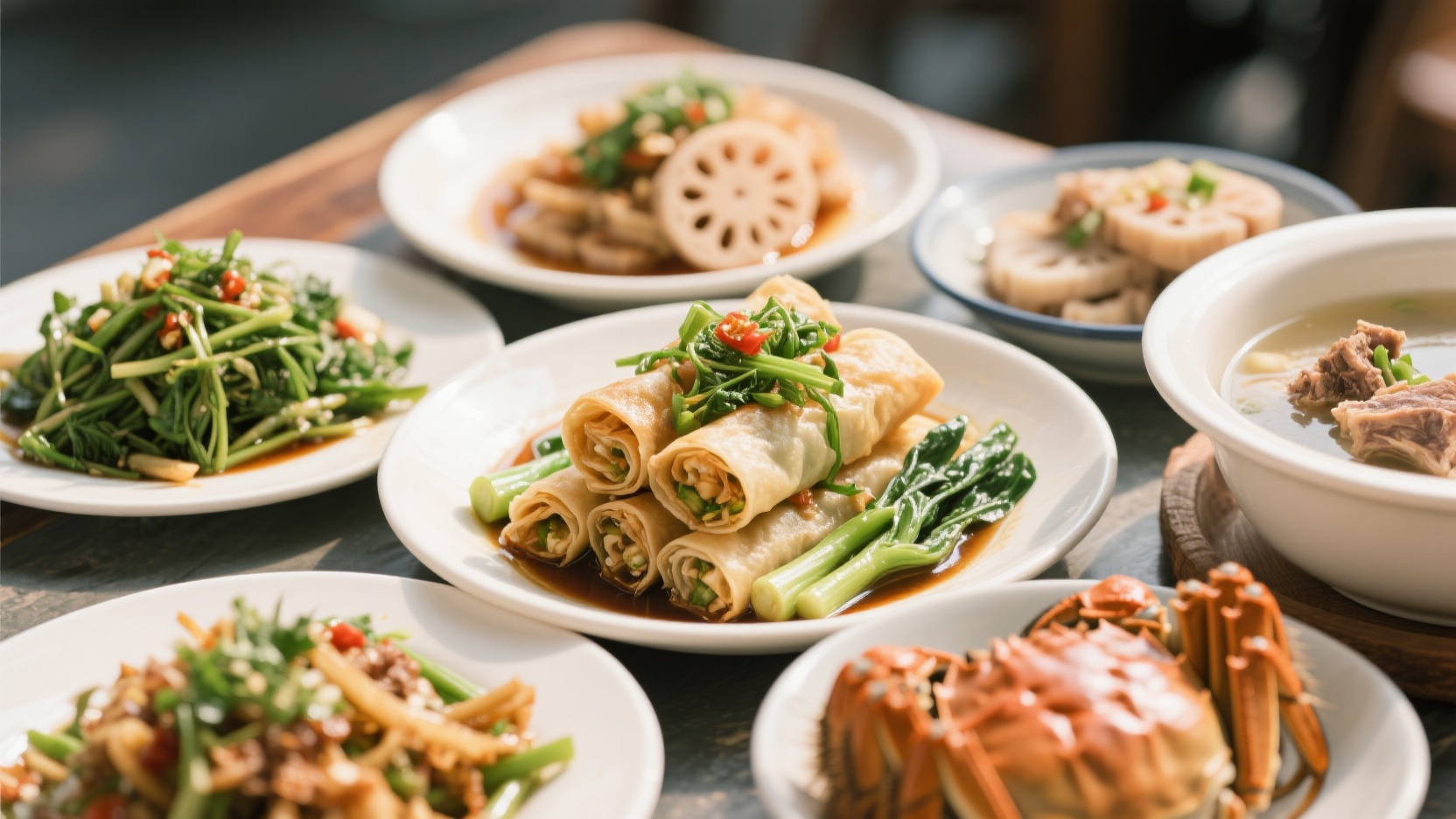
Having explored Wuhan through all twelve solar terms and navigated the pitfalls of "seasonally identical menus," I'm increasingly convinced of one thing: the city's culinary sensibilities are dictated by the seasons. Those "must-try" dishes displayed year-round aren't necessarily bad, but they lack the urgency of "only truly delicious these days." Below are eight seasonal specials, compiled based on local accents and the rhythm of the local markets—missing them isn't a regret, it's a wasted trip.
Springtime: Spring rolls with shepherd's purse and stir-fried cured pork with artemisia, the wild charm of Jiangzhou that only lasts this season.
Around the third day of the third lunar month, shepherd's purse in Wuhan's vegetable markets would suddenly sell out. Shepherd's purse is actually called "dicai" (地菜), but Wuhan people prefer the name, and there's a saying: "On the third day of the third lunar month, boil eggs with shepherd's purse flowers." Tender shepherd's purse is chopped, mixed into minced meat, wrapped into spring rolls, and fried until crispy. Biting into them releases a wild, slightly bitter, and sweet aroma—this is the first signal that spring brings to Wuhan. After Qingming Festival, shepherd's purse bolts and flowers, its fibers become coarser, and when used to wrap spring rolls, it's just grassy. This was the most direct lesson I learned the first year I went too late.
Wild artemisia, harvested around the same time, is even more demanding. In Wuhan, people only use the tender stems, stir-frying them quickly with cured pork over high heat. Wild artemisia has a pungent, aromatic scent, like bringing the river breeze to the table. Locals say, "Stir-fried artemisia with cured pork, rice will be ruined," but the cured pork should only enhance the flavor, not overpower it; the artemisia must be cooked until just tender, otherwise it will become mushy and lose half its aroma. In the market, wild artemisia with mud still attached and cultivated artemisia after washing are worlds apart in price and aroma.
My personal conclusion from testing these two dishes is: if you see muddy water chestnuts piled up in front of an old lady's stall at the market, don't hesitate, eat them that day. Keeping spring vegetables fresh is a fundamental respect for the season among Wuhan people.
Summer: Lotus root shoots and lotus seeds, the countdown to the crisp and tender season from Lesser Fullness to Greater Heat.
Once the start of summer arrives, lotus root shoots begin to make their presence felt on Wuhan residents' tables. These are the tender rhizomes of the lotus root, oxidizing extremely quickly when out of water, resulting in a crisp, crunchy texture. Locals buy lotus root shoots only at the early morning market, selecting straight ones with tightly closed tips. They then slice them diagonally at home and stir-fry them with white vinegar and dried chili peppers. This "spicy and sour lotus root shoot" dish holds a similar status in Wuhan as braised bamboo shoots in the Jiangnan region—it's a dish that only lasts for about twenty days in early summer. I tried buying them in the afternoon; the shoots had already turned grayish and turned mushy after stir-frying—it was beyond saving.
Around the time of the Great Heat (a solar term in China), the lotus root shoots mature, and the lotus seeds take over. In Wuhan, lotus seeds aren't dried; they're freshly peeled from the lotus pod. Biting into the green skin reveals a sweet taste with a hint of coolness from the aquatic plant. Locals prefer them "raw for their tenderness and stir-fried for their crispness." Tender lotus seeds are eaten directly as fruit, while slightly older ones are peeled, cored, and stir-fried with water chestnuts and diced lotus root—a perfect vegetarian dish to accompany rice during the hottest days of summer. Buying whole lotus pods from the market and peeling them yourself ensures freshness compared to buying pre-peeled lotus seeds, many of which have been soaked in water.
Don't try to find these two things in winter. Frozen lotus root is like rubber, and vacuum-packed lotus seeds have a watery taste. Seasonal dishes are just the same name once they leave their season, so I never order off-season dishes.
Autumn: Liangzi Lake hairy crabs and osmanthus-flavored rice wine are enjoyed around the time of Cold Dew and Frost's Descent.
In Wuhan, people don't say "eat crabs" in autumn; they say "eat Liangzi Lake crabs." The two weeks from Cold Dew to Frost's Descent are the fattest time for Liangzi Lake hairy crabs—female crabs are full of roe, and male crabs are rich and creamy. Locals don't use complicated seasonings; they simply steam the crabs and serve them with ginger and vinegar. First, they peel off the shell to eat the roe, then they remove the legs and dip them in the sauce. If the crab roe tastes bitter, it means it's not the right time yet—a method the market vendor taught me. Also, the saying "females in September, males in October" applies to Liangzi Lake as well; eat female crabs in the ninth lunar month and male crabs in the tenth. Don't get it backwards!
The perfect accompaniment to crab is a bowl of sweet osmanthus rice wine. Wuhan's sweet osmanthus rice wine isn't ordinary rice wine; it's made with lotus root starch to create a translucent paste, then sprinkled with osmanthus sugar and glutinous rice balls. A hot bowl of this perfectly counteracts the crab's cooling properties. Many stalls only make it fresh in September and October because fresh osmanthus flowers, once out of season, have to be candied, which diminishes their aroma. I usually look for the kind of sweet osmanthus rice wine that's freshly stirred in a copper pot after eating crab; its strong lotus root starch flavor and low sweetness are a perfect match for the crab's freshness.
Winter: Hongshan rapeseed and pork rib lotus root soup, the soul of winter after the first frost.
Hongshan rapeseed is considered a "vegetable aristocrat" in Wuhan's winter, but locals only recognize those harvested after the first frost. Before the first frost, the rapeseed is bitter; after the first frost, the starch turns to sugar, resulting in plump, sweet stems. Authentic Hongshan rapeseed has purplish-red stems and golden-yellow flowers, and breaks easily with a pinch. The preparation is extremely simple: stir-fried with lard or stir-fried with cured pork. The key is to "break by hand, not cut with a knife," as it's said that cutting with a knife leaves a metallic taste, and broken segments hold the sauce better. Many rapeseed varieties from surrounding areas are sold as Hongshan rapeseed in the market; locals judge authenticity by the thickness and color of the stems—those that are too thin and too green are generally not genuine.
After the winter solstice, the pots and pans for simmering soup in Wuhan never stop. Pork rib and lotus root soup must use starchy lotus root—the kind that stretches when cut and becomes soft and powdery after simmering, the nine-hole variety. Locals emphasize "putting the bones in cold water, bringing it to a boil over high heat, then simmering over low heat," simmering it the night before and reheating it thoroughly the next morning, resulting in even more starchy lotus root and a richer broth. A bowl of soup sprinkled with white pepper and served with freshly fried lotus root slices is considered the most hearty way to enjoy a Wuhan winter. I tried using crisp lotus root for soup, but the lotus root pieces were like unyielding wood, and the soup was bland; from then on, I only bought starchy lotus root.
None of these eight seasonal dishes are "always at their best." People in Wuhan rarely chase after trendy restaurants, but they definitely follow the seasons. Because if the season isn't right, the ingredients won't be right; and if the ingredients aren't right, no matter how skillful the cooking, it's all for naught. Eating according to the seasons is the right way to experience a city.
Practical Tip 1: For spring rolls made with wild shepherd's purse and stir-fried cured pork with artemisia, it's recommended to find them in the early morning near the farmers' market in an old residential area. Avoid buying them from large supermarkets, as the aroma of wild artemisia differs greatly from that of cultivated artemisia. It's best to buy tender plants of wild shepherd's purse that haven't yet flowered.
Practical Tip 2: Lotus root shoots and lotus seeds keep well in summer, so it's best to buy and eat them on the same day. Choose long, thin lotus root shoots with firm tips, and choose lotus seeds from heavy lotus pods. For spicy and sour lotus root shoots, always use white vinegar; aged vinegar will mask their natural sweetness.
Practical Tip 3: When eating crabs in autumn, choose the period from Cold Dew to Frost's Descent, with female crabs being the preferred choice; for Osmanthus Rice Wine, look for stalls that are making lotus root starch on-site, as those with a very clear thickening agent may just be sugar water.
Practical Tip 4: In winter, buy short, thick purple-stemmed rapeseed from Hongshan, preferably with flowers on; pork rib and lotus root soup is best when simmered in a large pot, and many soup restaurants near residential areas offer pre-orders, but be sure to ask if they use starchy lotus root.