
Wenzhou Night Tour Route | A Guide to Avoiding Pitfalls in the Hometown of Southern Opera (with Camera Locations) – Compiled After Three Nights of Research
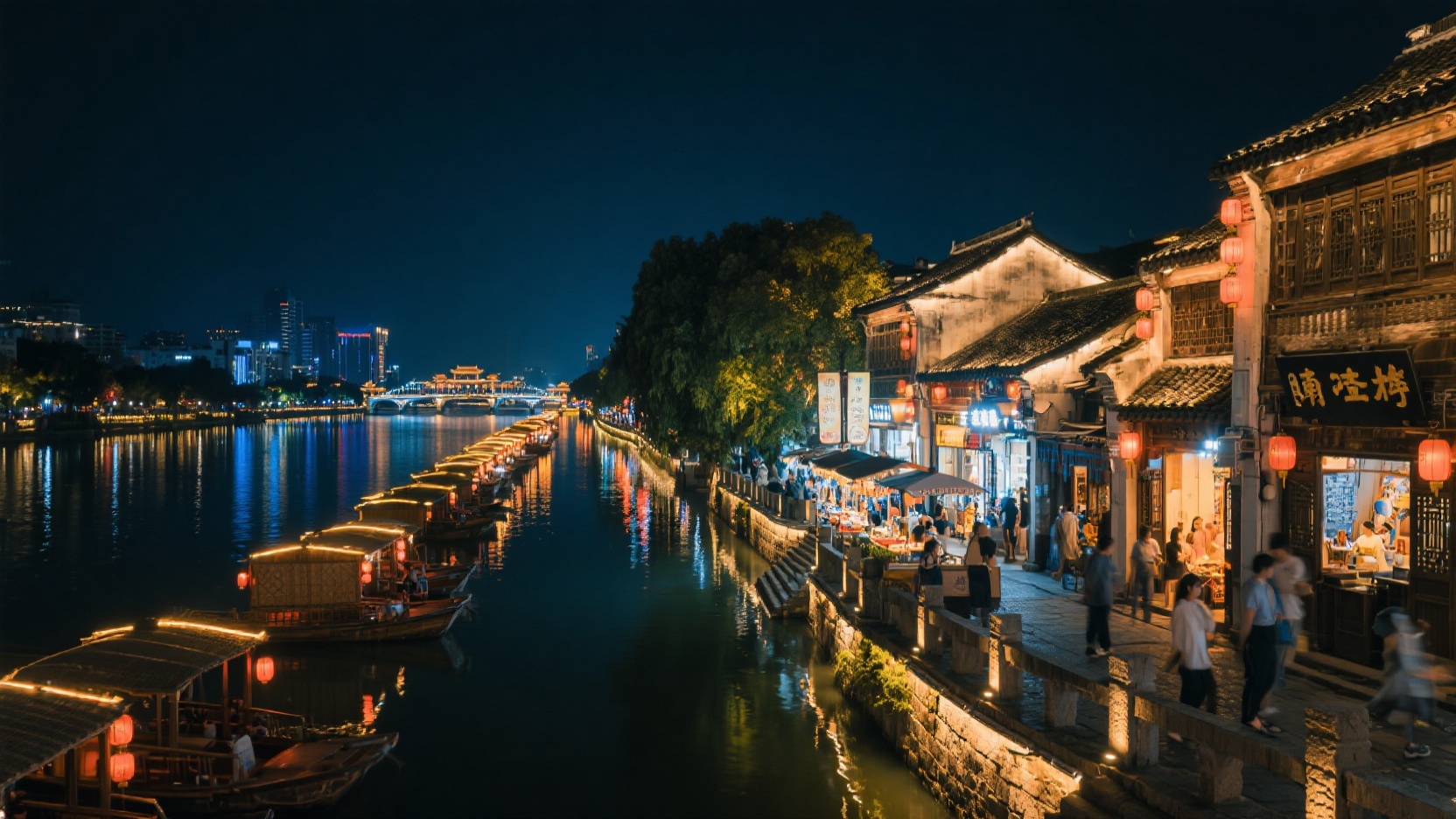
To find this nighttime tour route that doesn't require leaving the city, I spent three nights cycling between Oujiang Road and Wuma Street using shared bikes. I navigated the crowded City Balcony on weekends and the pitfalls of some teahouses on Nantang Street only catering to group tours. Finally, I selected this Wenzhou cultural and artistic nighttime tour route that runs continuously from 6:00 PM to 11:30 PM. It's not a typical tourist attraction, but a slow-paced route that connects the riverside lights, local nighttime food, and the birthplace of Southern Opera. It's suitable for photography enthusiasts, couples, and independent travelers who don't want to walk around during the day.
I tried making Jiangxin Island my first stop, but the ferry queues and walking around the island meant that by the time I got back to the city center, the night market was almost closing up. I also tried visiting Wuma Street first and then going to the riverside, but after 9 pm, the Shengmeijian light show only had a few lights left. So this route must start from the riverside and head towards Nantang River, following the timeline of the night economy, to avoid missing out on the most exciting parts of Wenzhou at night.
18:00-19:10 Oujiang Road City Balcony: Riverside Lights Opening Ceremony
At 6 PM, don't rush to queue at Jiangxin Island. Instead, ride a shared bike to the City Balcony on Oujiang Road. The view from there is more expansive than from the cruise ship. The second-floor glass observation deck faces the illuminated Shengmeijian Mountain, and after dark, the entire mountain lights up with the Oujiang River tide. I arrived too early the first night and waited for half an hour; later I discovered that it wasn't until around 6:40 PM that the sky truly darkened, and reflections began to appear on the river.
Walking about 500 meters west from the City Balcony, you'll find the old site of the Wangjiang Road Wharf. A few old-fashioned streetlights and a small ferry terminal are perfect for capturing pictures of local life at night. This stretch of riverbank is wide, and the dampness of the Oujiang River estuary adds a coastal feel to the lights, making it more appealing than a purely inland river night view. Leaving before 7:10 PM avoids the peak time for cruise ship departures.
The city balcony gets very crowded on weekends. If you want to take photos of empty views, try a weekday evening or wait until 7:40 PM when the crowds have thinned out a bit, but the light show will still be on then. I recommend using a wide-angle lens close to the glass and not using a tripod; security guards will remind you otherwise. After taking your photos, don't rush to return the bike. Ride west along the river; the next stop is the old town night market.
19:20-21:00 Wuma Street-Shamaohe: Local Night Food Spots Away from the Main Street
It's about three kilometers from Wangjiang Road to the intersection of Wuma Street by shared bike, and fifteen minutes is enough in the evening if there's no traffic. The lines for the popular snacks on the main street of Wuma Street are very long. On my first night, I joined the queue for twenty minutes for "Dengzhan Gao" (a type of steamed rice cake), only to find that the truly delicious ones were in the alleys of Sha Mao He and the First Bridge. This is where locals go after get off work to enjoy the street food; the pig offal noodles, almond tofu, and fish ball soup are all decades-old flavors.
I recommend parking your car on the outskirts of Wuma Street and walking through the Shamaohe Women's Street. The lantern cakes at the alley entrance are freshly fried, crispy on the outside and chewy on the inside; almond jelly with mint water is refreshing and helps cut through the richness. Don't buy the pre-packaged "Wenzhou specialties" on the main street; head towards the First Bridge and look for small shops with coal stoves at the entrance and only a few low tables inside—you're unlikely to be disappointed. It's perfect to eat on this food street until 9 pm.
After your meal, you can conveniently pick up a bag of freshly made dwarf rice cakes or a jar of local shrimp paste at Sha Mao He, but avoid buying freshly cut fruit salad on the main street of Wu Ma Street, as the portions are small and the prices are high. You can eat your fill for just a few dozen yuan per person, without needing to specifically queue at the mall's food court.
21:10-22:10 Nantang Riverbank: Opera Teahouse in the Hometown of Southern Opera
From the First Bridge, a shared bike ride along the Wenrui Tanghe Greenway to Nantang Street is about 2.5 kilometers and takes about 20 minutes. Wenzhou is the birthplace of Southern Opera, and the place you shouldn't miss at night isn't the bars, but the opera teahouses along the Nantanghe River. I chose a small teahouse on the second floor that only served local tea, ordered a pot of Wuniuzao tea, and listened to a piece of Wenzhou drum ballad or an excerpt from Ouju opera. The actors on stage didn't use microphones; they relied on the old stage to amplify the sound.
These teahouses are mostly located on the eastern section of Nantang Street, with red lanterns hanging at the entrance. They offer performances before 10 PM. Avoid the trendy seats in the first row facing the river, as the noise from the tour boats will be too loud to hear. Walk two or three steps further in and choose a seat near the courtyard, where you can enjoy both the performance and the moonlight. Even if you don't understand Wenzhou dialect, the rhythm of the drum ballads and the sound of the erhu will keep you entertained.
If you're not interested in traditional opera, you can change the third stop on this itinerary to a livehouse by the Nantang River, but I highly recommend teahouses. The most unique aspect of Wenzhou's nightlife is its Southern Opera, not a copy of other cities. Listening to a piece of folk ballad singing feels more like experiencing Wenzhou than going to any chain bar.
22:20-23:30 Tanghe Trail Closing Ceremony: Night Scene Photography and Slow Walk
After the performance, don't rush to hail a taxi. The lights along the Nantang River are still on until 11 pm. Walk north along the river from the opera teahouse, passing two stone arch bridges. The reflections on the water are even more layered than during the day. I took my favorite photo of the whole night here: a small boat slowly glides under the bridge, its lanterns overlapping with the warm light from the cafes on the shore.
The last half hour involves returning along the riverside walkway, then riding a shared bike back to the hotel or taking a taxi from the west entrance of Nantang Street. The Tanghe River walkway is adjacent to the water, and the stone slabs are slippery after rain, so be sure to stand firmly before pressing the shutter when taking photos at night. The entire route is about six kilometers of walking and cycling, which is not a rush and falls right at the busiest points of the night economy.
Blogger's summary: 5 camera angles and 4 safety tips for night photography
Five shooting positions for night photography: 1. The second floor of the City Balcony, facing the river, where long exposure can capture the mountain lights and their reflections on the river in the same frame; 2. The old site of the Wangjiang Road wharf, where you can shoot the silhouettes of old streetlights and ferries; 3. The entrance to Sha Mao He Lane, where you can use the steam from a snack stall as a foreground, and the warm light from the lanterns will make for great shots; 4. The arched bridge over the Nantang River, where you can shoot the reflections on the water and the lights of the cruise ships; 5. The side screen of the opera stage in a teahouse, where the warm yellow lanterns and the silhouettes of the eaves are suitable for close-ups of people and events.
Four safety tips: First, when riding at night on Oujiang Road, be aware that the non-motorized vehicle lane is narrow, give way to motorized vehicles, and wear light-colored clothing; Second, Wuma Street and Shamaohe are crowded, wear your bag in front, and do not put your phone in your back pocket; Third, some stone slabs on the Nantanghe walkway are loose and slippery after rain, so do not walk and take pictures at the same time; Fourth, when returning shared bicycles at night, pay attention to the service area boundaries, and some areas on Nantang Street are no-parking zones, so check in advance on the app.
This route is suitable for photography enthusiasts, couples, and independent travelers who don't want to get up early but still want to experience local culture. The entire route is 6 kilometers of walking and cycling, which is not tiring and the cost is manageable. The only thing to note is that some teahouses are closed on Mondays, so check the evening sessions in advance to avoid making a wasted trip.