
Avoid Liuxiang Accommodation in Taiyuan | Local Testimonials' Guide to Avoiding Pitfalls: Don't Be Fooled by Travel Guides Anymore
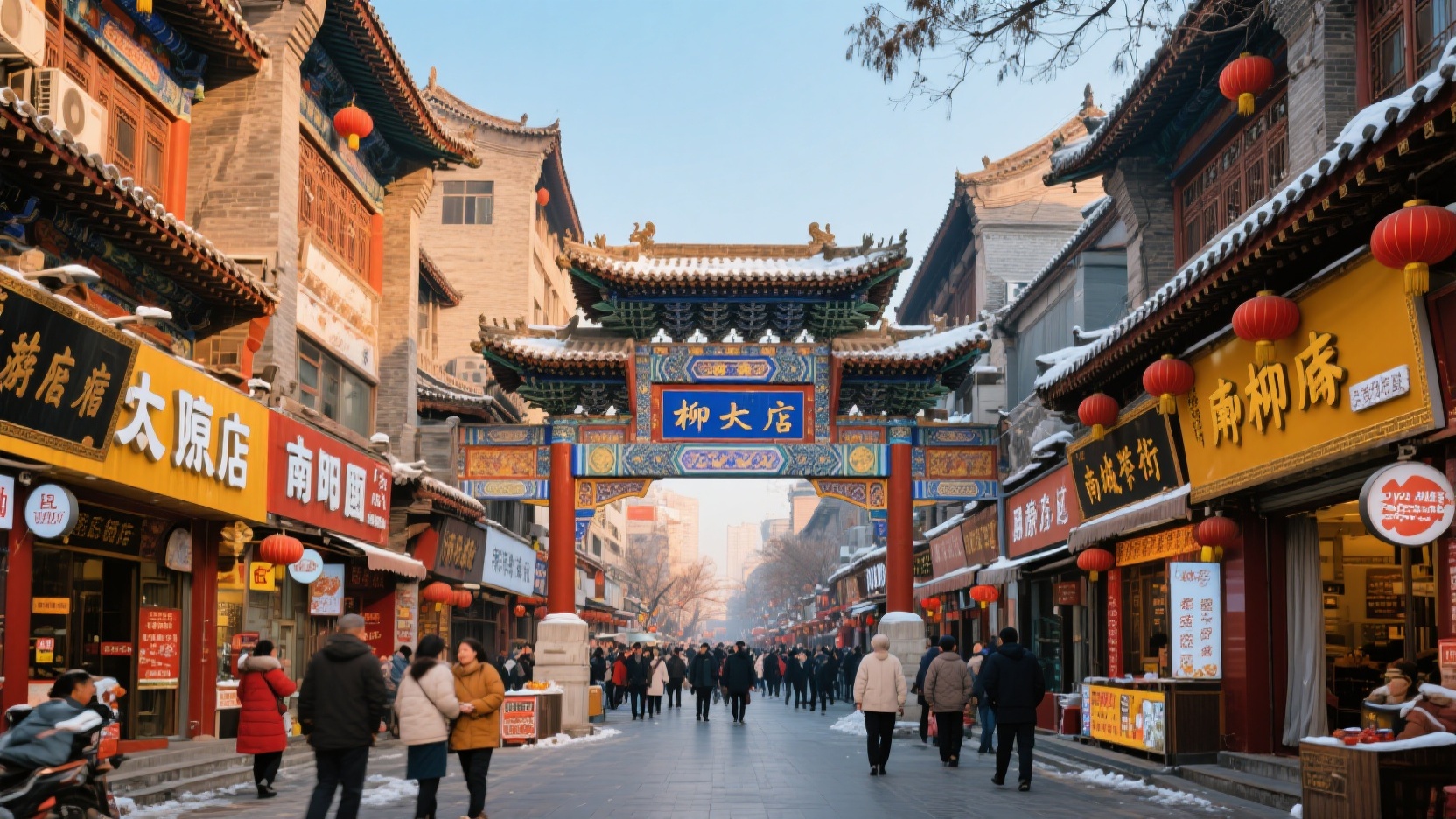
Having lived in Taiyuan for eight years, I want to say something counterintuitive to friends visiting for the first time: the travel guides that tell you to "stay near Liuxiang, stay at the train station, stay at the entrance of Jinci" are precisely the places locals would never choose to stay overnight.
It's not that those places are bad for shopping or taking photos; it's that "suitable for fun" and "suitable for staying" are two completely different things. You might be woken up in the middle of the night by the noise of a night market, surrounded by touts around the train station, or find yourself trapped in complete darkness after the Jinci Scenic Area closes. This list doesn't list hotel names; it simply tells you which areas are safe to stay in and which to avoid.
Avoidance #1: Liuxiang Zhonglou Street – Don't be fooled by the claim that "the tourist attraction is right downstairs."
Liuxiang, Zhonglou Street, and the Food Street are indeed must-visit spots for tourists, but travel guides won't mention that this area is densely packed with old hotels and apartment buildings. After 10 pm, loudspeakers and low-volume bars still blare from downstairs, making it impossible to get to sleep early in rooms facing the pedestrian street. Locals from Taiyuan might come here to shop and eat, but they wouldn't use it as a sleeping spot.
More practically, there's the issue of transportation. The core area of Liuxiang has many one-way streets, and taxis often get stuck at the intersection of Kaihua Temple Street and Bell Tower Street, giving drivers a headache just looking at their destination. You might think it's "close to attractions," but actually, getting to the Shanxi Museum and Jinci Temple still requires crossing the city, and getting a taxi during rush hour can be incredibly frustrating. Parking is even more difficult; many hotels don't have dedicated parking spaces, forcing tourists with their cars to drag their luggage through the alleyways looking for a spot.
Returning to a hotel late at night doesn't necessarily feel safe. A bustling commercial area means a mixed crowd; you might still see drunk people and salespeople at 1 or 2 AM. Single travelers or families with children are advised to avoid this area altogether.
Avoidance #2: Taiyuan Station at Wuyi Square. It's a convenient transportation hub, but only suitable for transfers.
The area around Taiyuan Railway Station is touted as the "first choice for convenient transportation" in countless travel guides, but the consensus among locals is: if you can stay one night, bear with it; if you can avoid it, don't. The old guesthouses in front of the train station have poor sound insulation, and the sounds of trains entering and leaving the station, bus announcements, and taxis soliciting passengers are constant from morning till night.
Although this area isn't far from Liuxiang and Wuyi Square on foot, the route involves crossing several major intersections and underpasses. The lighting at night is poor, and people offering rides and carpooling services suddenly appear, making the experience quite chaotic. You might think you're saving on taxi fare, but actually, dragging your luggage along that stretch of road, you just want to leave as soon as possible.
Parking is even less convenient. Parking spaces are scarce in front of the train station, and many hotels' so-called "free parking" is actually just public roadside parking, available on a first-come, first-served basis. If you're traveling with elderly people or children, or on a road trip, don't make this your base.
Thirdly, avoid guesthouses near Jinci Scenic Area that seem to be muted at night.
"Staying near Jinci Temple and going in early to avoid the crowds" sounds reasonable, but in reality, Jinci Temple is far from the main city of Taiyuan. The surrounding area is just a parking lot for the scenic area, villages, and scattered guesthouses. After 4:30 pm, the tourists have all left, and the restaurants close very early. If you want to find a proper dinner, you have to take a taxi back to the city, which can take more than half an hour each way.
While it seems close to Jinci Temple, all other attractions are now farther away. The Shanxi Museum, Bell Tower Street, and Twin Pagoda Temple are all in the main city area, and the time cost of traveling back and forth far exceeds the time spent getting up an hour earlier. At night, there are few streetlights and many unlicensed taxis, making solo travel unsettling. Parking seems easy, but it's unattended, and spending the night there doesn't feel safe.
Locals themselves wouldn't stay at Jinci Temple, let alone recommend it to friends. If you want to see Jinci Temple, it only takes 30 to 40 minutes by taxi from the city center, so there's no need to sacrifice all the convenience of staying overnight.
Ideal for living: Fudong Street and Wuyi Road old town residential area + Qinxian and Changfeng area
The best accommodations for tourists aren't near the scenic area entrance, but rather within the daily lives of locals. The following four areas, chosen by different groups, are far more reliable than recommendations from online influencers.
The area around Fudong Street and Wuyi Road is perfect for those who enjoy the lively atmosphere of the old town and want to stroll around with their parents. It's close to Bell Tower Street, Food Street, and the Governor's Mansion, all within walking or cycling distance. It's about a 20-minute taxi ride to the Shanxi Museum and about 40 minutes to Jinci Temple. There are many small restaurants and time-honored establishments nearby, offering comfortable meals for just a few dozen yuan per person. The area is quiet late at night, with well-maintained streetlights. Parking is limited in the old town, so driving is not recommended.
The Qinxian-Changfeng area is suitable for couples, business travelers, and those who enjoy shopping mall nightlife. Changfeng Street Station on Metro Line 2 is nearby; it's a few stops to Zhonglou Street, about a 30-minute taxi ride to Jinci Temple, and very convenient to Taiyuan South Railway Station. This is a popular area for locals to eat and socialize, with many mid-range restaurants. It's lively at night but not chaotic, with convenience stores and security guards frequently seen. Parking is good, with ample underground parking spaces in hotels and shopping malls.
Ideal for living: Xiayuan Yifen Street residential area + Xuefu Street South Central Ring University District
The Xiayuan Yifen Street area is suitable for tourists who want to be close to the Shanxi Museum and the Fenhe River Scenic Area. Located on the west bank of the river, it's about a 10-minute taxi ride to the museum and geological museum, a short walk to Fenhe River Park, and about half an hour to Jinci Temple. The area has a high concentration of local restaurants and snack shops, offering affordable food. The streets are crowded with residents late at night, providing a sense of security. Parking is more spacious than in the old city, with marked parking spaces.
Xuefu Street, located in the South Central Ring Road university district, is suitable for students, young people on a budget, and those transferring at Taiyuan South Railway Station. It's directly accessible by Metro Line 2, and not far from Zhonglou Street and Changfeng commercial districts. Jinci Temple is about a 35-minute taxi ride away. There are many food streets around the university, where you can eat very well for just a few dozen yuan per person. In the evenings, there's a steady flow of people and convenience stores near the universities, offering a good sense of safety. Parking depends on the location; parking spaces are relatively easy to find outside the campus and in newly built residential areas.
In conclusion
1. Don't ask the locals if I didn't tell you: safety is more important than liveliness when choosing accommodations in Taiyuan, especially for girls traveling alone. Avoid the train station and Liuxiang area late at night.
Second, the best seasons to visit Taiyuan are spring and autumn, with the peak seasons being before May Day and National Day. If you're coming in winter, prioritize areas with underfloor heating and close to the subway, and avoid the area near Jinci Temple.
Third, when traveling with parents, avoid staying in the commercial center. Instead, choose old residential areas like Fudong Street or Xiayuan. These areas offer cheaper dining options and more convenient transportation, making them much more comfortable than staying near Zhonglou Street.
Fourth, the most worry-free area for self-driving tourists is not Liuxiang or the train station, but Qinxian Changfeng and South Central Ring Road area, where there are ample underground parking spaces and smooth access to and from the city.
5. If the travel guide only tells you to "be close to the attractions," take a closer look at the actual distance on the map and the nighttime traffic. Many areas in Taiyuan that "look close" can turn into nighttime hot spots.