
This walking route in Taiyuan | A hidden gem of a Citywalk route that a local walked five times before daring to compile (best for photos in autumn and winter afternoons, includes 2 side routes to avo
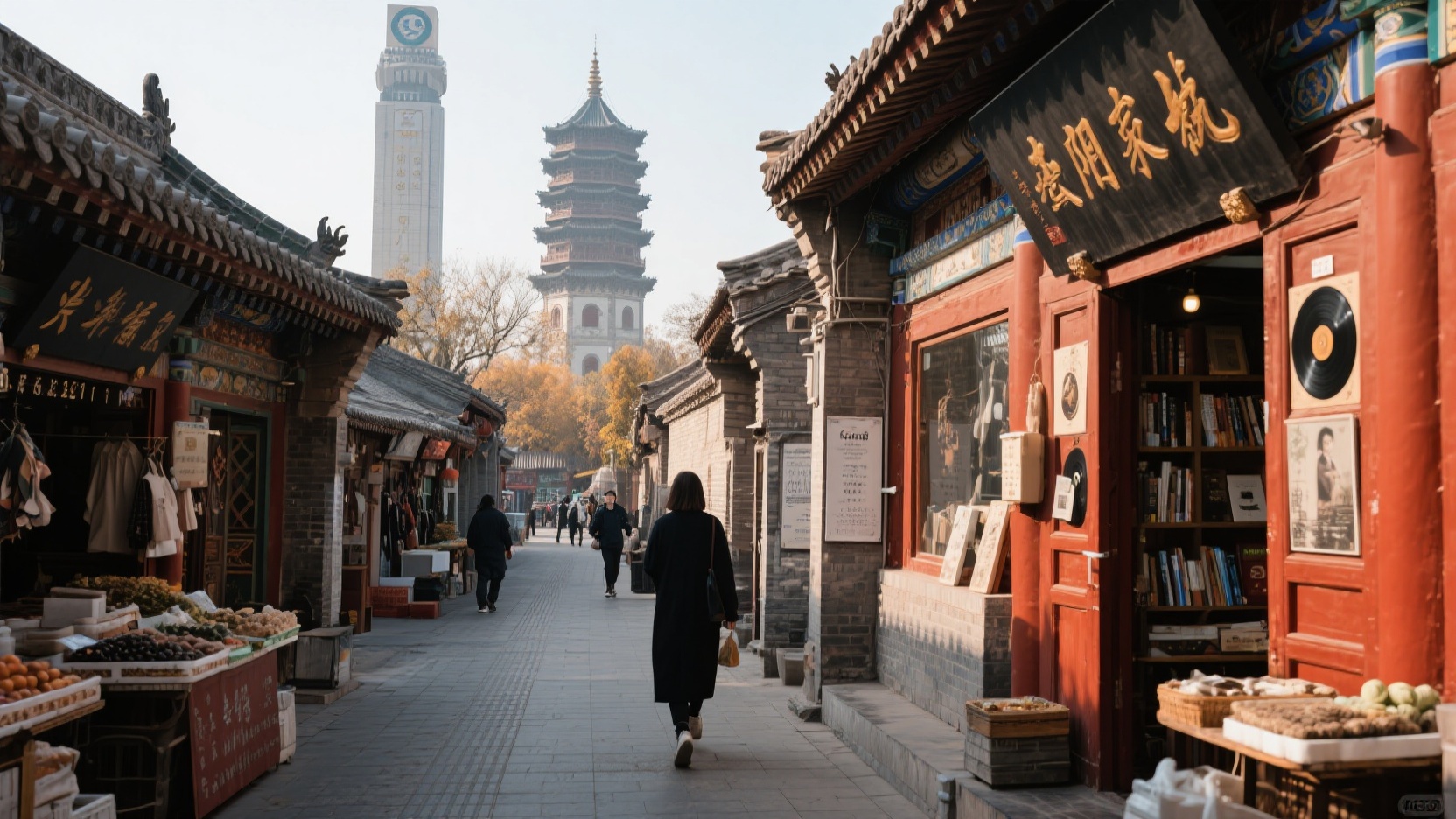
In late November, the wind in Taiyuan was strong, but the 3 pm light was just enough to illuminate the brick carvings in the old alleys of the old city. In order to avoid the usual routes to Jinci Temple and Shanxi Museum, I set off from Wuyi Square for five consecutive afternoons, walking back and forth through Huanghua Hall, Haizi Lake, Wenying Park, Zhonglou Street, Xuexiang Alley and two side streets several times, and finally figured out a cultural and artistic Citywalk main route of less than five kilometers.
The main route is approximately 4.2 kilometers long, taking about 70 minutes on foot. If you plan to visit each worthwhile spot at a five-minute pace, it's recommended to allow two and a half hours. The following route is not recommended for weekend mornings, as you'll likely encounter wholesale electric bikes and delivery trucks in the Liuxiang area. Starting after 2 PM is the most comfortable.
I. From May 1st Square to the outer wall of Chunyang Palace: First, let your eyes get used to the blue of the glass.
The starting point is at the north entrance of Wuyi Square, but don't rush to cross the road. Standing in front of the gray bricks of the Chunyang Palace's outer wall, you'll see the Ming and Qing dynasty glazed tile eaves overlapping behind the reconstructed Shouyi Gate tower. The blogger's camera was positioned on the north sidewalk of Wuyi Square, using a low angle to capture the "Shanxi Ancient Architecture Museum" stone plaque and the peacock blue glazed tile roof in the same frame. Why is it worth stopping for five minutes? On sunny afternoons, this glazed tile area changes from blue-green to gray-blue, especially in the clear autumn and winter when the air is crisp. The color is closer to the original color of Taiyuan's old city than the glazed tiles of Jinci Temple, and you can judge the building density along this route without paying an entrance fee.
From the west side of the square, turn around into Qifeng Street, avoiding the main road and walking close to the wall. This section takes about 8 minutes to walk, and along the way you can see the old government dormitory buildings from the 1980s and the remaining brick-carved lintels. The best spot for taking photos is under the old locust tree at the first corner; wait for someone to pass by and then press the shutter to capture the leaden gray layers of the old electrical wires and walls.
II. From Huanghuaguan to Wenying Park: Taiyuan's Most Underrated Republican-Era Architectural Belt
Turn north onto Qifeng Street and you'll enter Huanghuaguan, a stretch of about 600 meters, a 9-minute walk. Huanghuaguan was the residence of the chief examiner for the Shanxi provincial examinations during the late Qing Dynasty. Two rows of Republican-era buildings still stand on either side of the alley, their gray plasterwork peeling off. Position your camera near the utility pole at the alley entrance, using a telephoto lens to compress the pointed roofs of the two rows of buildings. Why stop for five minutes? The honeysuckle pattern on the lintels and the old engraving of the three characters "Huanghuaguan" reveal a neglected sense of etiquette in a city renowned for its scholarly achievements—a more authentic patina than many reconstructed old streets.
Continuing west is Haizibian Street, about a 6-minute walk. You should definitely pass through here between 4:30 and 5:00 PM. The best spot is between Haizibian Street and the wall of Wenying Park, capturing the shadows of the arcade buildings. Ideally, the shot should include an elderly person playing chess and a primary school student pushing a bicycle. Why stop for five minutes? Within 100 meters, there are secondhand bookstores, tailor shops, and a decades-old noodle shop. The sounds of Taiyuan dialect mingling with the steaming noodle soup create a scene that's closest to everyday life on this route.
Wenying Park is the highlight of this section. Entering from Haizibian Street through the east gate, walking across Zhuangyuan Bridge to the Sun Yat-sen Memorial Hall takes about 10 minutes. The best spot is on the north side of Zhuangyuan Bridge; wait for someone to walk across and take a picture of their reflection. The bridge railings are old, and the lake reflects the Republican-era buildings and modern residential buildings. Why stop for five minutes? This small park offers simultaneous views of the Ming and Qing Dynasty Confucian Temple water system, the Republican-era memorial hall, and the former site of the Provincial First Middle School. The skylines of these three eras switch within 200 meters, making it much more efficient than visiting a single isolated attraction.
III. From Zhonglou Street to Xuexiang Alley: Small Shops Hidden Where Old and New Collide
Exiting from the southwest gate of Wenying Park, turn into Liuxiang and then into Zhonglou Street, about 700 meters, a 12-minute walk. Zhonglou Street has a slightly commercial feel after its renovation, but the real highlight is the long queues of people buying glutinous rice balls in front of the time-honored shops. The camera was positioned in front of the Laoshuku shop, using a wide-angle lens to capture the Republican-era facade of Zhonglou Street alongside its old signboard. Why stop for five minutes? The bags carried by the people in line and the efficient way the shop assistants pack the food are more like the "living culture" of Taiyuan than the buildings themselves.
Hidden in the alleys on both sides of Zhonglou Street are doors only locals dare to open. A vinyl record store on the second floor of a Republican-era building has only four tables; the stairs creak with every step. The photographer, positioned by the window, captures a diagonal shot of the record player and the old locust tree on the street. Another vintage clothing store near Xuexiang Alley has an old military green trench coat hanging at the entrance. There's no large sign; the photographer takes a blurred shot of themselves in front of the fitting room mirror, showing the relationship between themselves and the old coat hanger. Why is it worth stopping for five minutes? These shops aren't just for taking photos; they're tucked away in old buildings. Only by stepping inside and exploring can you truly experience the renewed appreciation for vintage items among Taiyuan's young people.
Boot Alley is the narrowest part of this alley, about 400 meters long, a 6-minute walk. The alley gets its name from the boot-making industry during the Ming and Qing dynasties, and there are still handmade cloth shoe shops at its entrance. Position your camera on the east side of the central alley to photograph the "boot toe" corner of the curved wall, waiting for the old craftsman to bend down to repair shoes before pressing the shutter. Why pause for five minutes? The mortar on that curved wall is at least forty years old; the evening light shining on it creates a very fine grainy texture, perfect for documentary photography.
IV. Two side routes: one to see the red walls of the Confucian Temple, and the other to smell the aroma of vinegar.
Branch Line A exits from the east gate of Wenying Park and enters Dilianggong Street, a round trip of about 1 kilometer, a 15-minute walk. The red wall of the Lingxing Gate of the Confucian Temple is on one side of Dilianggong Street. The best shooting position is on the opposite sidewalk, photographing people riding bicycles in front of the red wall. Why is it worth stopping for five minutes? The peacock blue glazed tiles of the Lingxing Gate are photographed even less often than those of Jinci Temple. In the afternoons of autumn and winter, the side-backlighting will turn the red wall a persimmon red, and elderly people will be sitting in the sun at the base of the wall, creating a scene as quiet as an old woodblock print.
Branch Line B turns into Qiaotou Street from the middle of Zhonglou Street, then walks towards Ninghuafu, a round trip of about 800 meters, a 12-minute walk. Even before reaching the alley entrance, the aroma of vinegar fills the air. Take a low-angle shot from the southeast corner of the alley entrance, filming the tricycles carrying vinegar, with a row of old windows filled with vinegar vats in the background. Why stop for five minutes? This isn't a tourist attraction; it's the daily routine of locals carrying plastic buckets to buy vinegar. The tricycles and vinegar vats form a rustic still life, more honest than any folk art exhibition. Continuing to Causeway Bay Pocket Park, there are only a few ping-pong tables and stone tables. Take a shot from the bleachers steps, filming elderly people playing ping-pong; the Taiyuan dialect phrase "cuo yi xia" (a sound of rubbing or swishing) naturally becomes the background noise.
V. Blogger's Summary and Practical Checklist to Avoid Pitfalls
The core of this route isn't a single building, but rather the temporal layers of the old Taiyuan neighborhood: Ming and Qing dynasty glazed tiles, Republican-era gable walls, 1990s security windows, and modern independent shops, all constantly overlapping within a five-kilometer stretch. For photographers, starting after 3 pm in autumn or winter offers better lighting and clearer air, perfect for a leisurely stroll; for solo wanderers, the route is safe enough, with a clear road network, allowing for easy exits to the main street to hail a taxi.
Practical tips to avoid pitfalls: 1. Don't walk on weekend mornings, as the electric bikes and delivery trucks in Liuxiang and Zhonglou Street will disrupt your pace; 2. If your stamina is average, prioritize branch route B, as the everyday atmosphere of Vinegar Fragrance and Pocket Park is more unique; 3. There are public restrooms in Wenying Park, so it's recommended to use them before entering Zhonglou Street; 4. Don't spend too much time on the main road of Zhonglou Street, as the best parts are in the alleys on both sides and the residential buildings behind it; 5. Wear old shoes, as there is a section of bluestone slabs in Xuexiang and Dilianggong Street that becomes very slippery after rain; 6. A small zoom lens is enough for your camera, there's no need to carry a telephoto lens, as the alleys are narrow and it's difficult to compose shots when you can't back up.