
Nantong Fresh Food Calendar | Make the most of these 6 solar terms to ensure your trip is worthwhile (Blogger's personally tested and trouble-avoiding checklist)
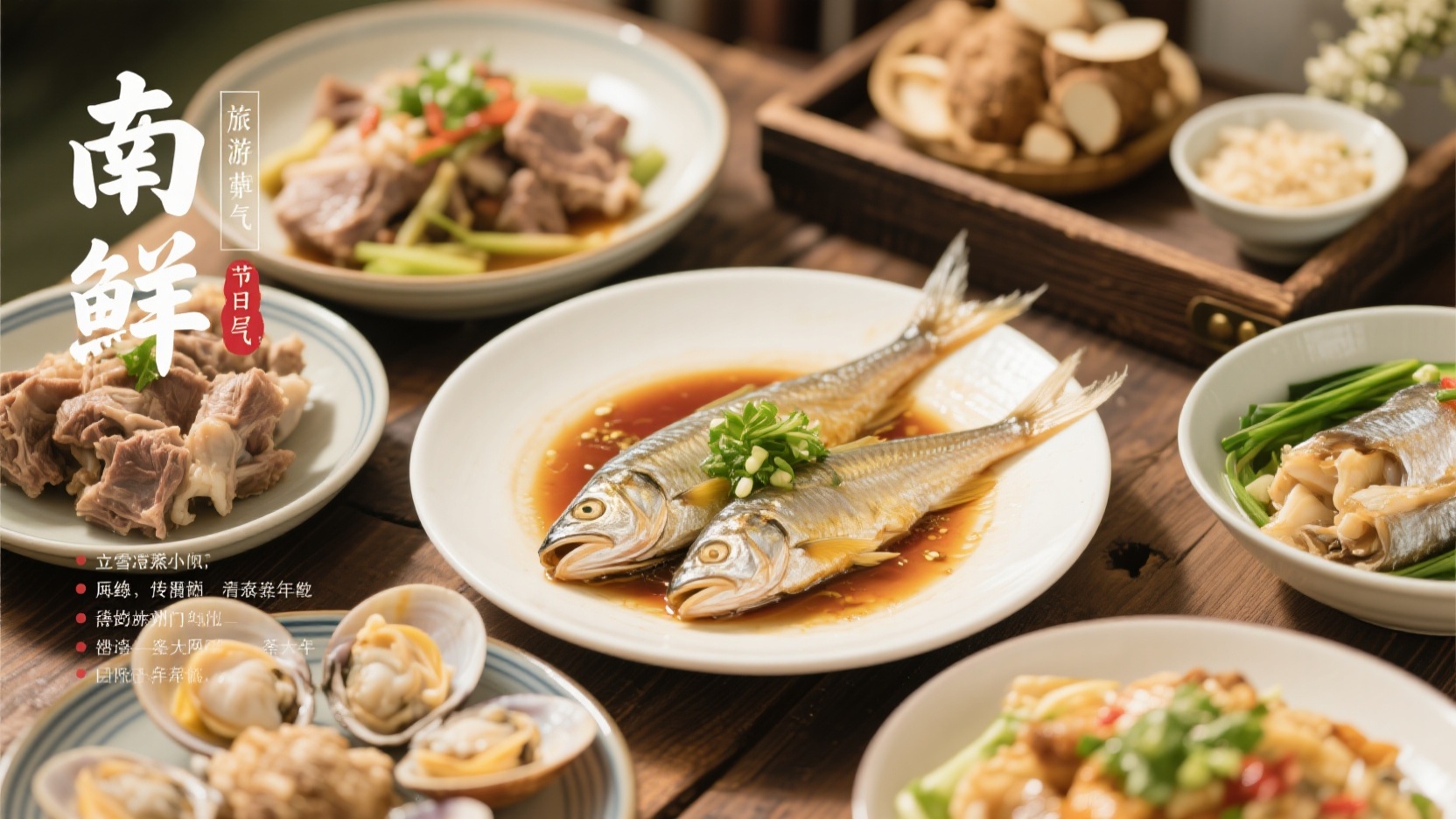
A year ago, in my quest to truly understand the food of Nantong, I made over a dozen trips between Rudong, Hai'an, and Qidong. My first mistake was ordering a knife fish three days after Qingming Festival; the bones were already noticeably hard, and the flavor was diminished. The second was trying to find cold steamed dishes on the afternoon of the Beginning of Summer, only to find them sold out at three different markets. Later, a local friend remarked to me, "The freshness of Nantong follows the seasons; once it's over, it's over." I still remember that. The following eight dishes aren't recommended by online influencers; they are limited-edition items that I found worth making a special trip for after trying them according to the seasons.
Before Qingming Festival: Yangtze River knife fish – a once-in-a-lifetime encounter with bones as soft as cotton.
The knife fish is a typical example of fish whose bones are "soft as cotton before Qingming Festival and hard as needles after Qingming Festival." Before Qingming Festival, the knife fish in the Yangtze River estuary are just before their breeding migration, and their fat content is at its peak. The fine bones soften after steaming. After Qingming Festival, the bones harden and the meat becomes loose, and locals generally no longer eat it. The knife fish from the Nantong section is prized for its brackish water, resulting in firm flesh without any fishy smell.
The local way of eating fish is very restrained. It's usually steamed, with the scales either left unscalded or only lightly scraped, allowing the fish fat to float on the surface of the broth. To eat, first pick up a piece of the fish belly with chopsticks, suck out the tender meat, then scoop a spoonful of fish broth to mix with rice. No one would braise it, as that would be too strong a flavor and ruin the freshness of this river fish. If a restaurant recommends salt and pepper or deep-frying, that's generally not the proper local way of eating it.
Guyu Pufferfish: Swallow the skin in one bite, and eat the meat while it's hot.
Pufferfish are often misunderstood. In fact, the pufferfish farmed along the Yangtze River in Nantong are fattest around the time of Grain Rain (a solar term in the Chinese lunar calendar), when their skin is thick with collagen and their flesh is firm. There is an old saying among the locals: "Pufferfish around Grain Rain are better than ginseng." At this time, the pufferfish meat is the most elastic, and they tend to become thinner after the spawning season.
Locally, pufferfish is prepared in either a white sauce or a red sauce. The white sauce pufferfish soup is milky white; the skin is eaten first, ideally rolled up whole and swallowed in one bite, allowing the gelatinous substance to slide down the throat. The fish meat should be eaten while it's hot, as it becomes fishy when it cools down. Pufferfish cooked with water spinach is a staple in the Nantong area; the water spinach, soaked in broth, is sometimes even more sought after than the fish meat.
Summer Solstice Cold Steamed Buns: Fragrant Green Wheat Available Only for About Ten Days a Year
Cold steaming is the shortest seasonal event in Nantong, bar none. Wheat is harvested when it's almost fully ripe, the green kernels are rubbed out, steamed, and then ground or kneaded into thin, bright green strips. It only appears for about ten days each year around the start of summer, and is often sold covered with damp gauze in the market.
Locals buy it and eat it directly with white sugar, enjoying the fresh aroma and slight sweetness of the green wheat kernels; others stir-fry it with a little vegetable oil and sprinkle with chopped green onions. It can't be stored for long; its color darkens and the flavor diminishes after half a day. Precisely because of its short shelf life, many Nantong natives ask friends in other places to bring some back for them every year, as the taste is like eating the wheat fields of early summer.
Clams during the Lesser Heat period: the peak season for Rudong's "most delicious seafood under heaven".
Rudong clams are available year-round, but their peak season is around the time of the Lesser Heat (Xiaoshu) solar term. As the seawater warms, the clam meat becomes the plumpest and the flavor is most concentrated. Locals call it "the most delicious food in the world," and it's no exaggeration.
The most particular way to eat clams is on a hot iron plate. They're quickly simmered on a hot iron plate over high heat, and removed from the heat as soon as the clam meat opens, locking the juices inside the shell. Another local home-style dish is clam pancakes, made by mixing chopped clam meat with egg and a little flour, then pan-frying until golden brown on both sides and serving with ginger and vinegar. Remember not to overcook them, as clams become rubbery when overcooked. Clear clam broth is even more demanding in terms of ingredients; the broth is almost entirely free of MSG, and you can tell from the first bite whether they're in season.
From White Dew to Frost's Descent: Taro and Crab Roe Soup Dumplings, a Taste of Autumn, Soft and Golden
Rugao Xiangtang taro only becomes truly soft and powdery after the White Dew solar term. This type of taro is small, and after steaming, its flesh is delicate and fragrant, unlike ordinary taro which is very watery. The local way of eating it in Nantong is very simple: steam it with the skin on and dip it in white sugar, or cook it with meat. The taro absorbs the meat juices and is devoured before the meat itself.
With the arrival of the Cold Dew season, local crab roe soup dumplings begin to taste delicious. Unlike those from Jingjiang, Nantong's crab roe soup dumplings don't emphasize the soup as much; instead, they focus on the substantial crab roe and meat. When eating, lift gently, move slowly, and first open a small window in the broth. Serve with shredded ginger and vinegar. The crab roe is made from local river crabs; after Cold Dew, the roe solidifies and becomes more fragrant. After the season, the roe crumbles, and the flavor diminishes.
From Heavy Snow to Winter Solstice: Haimen mutton and Lüsi ribbonfish taste better the colder the wind blows.
Haimen mutton must be eaten after a heavy snowfall. Large chunks of mutton with the skin on are braised, tied with straw, resulting in tender, melt-in-your-mouth meat and a rich, thick broth that clings to the spoon. Locals eat the mutton without cumin or chili, simply with a little garlic leaves and salt, enjoying the pure flavor of the mutton. The colder the weather, the more comforting this pot of mutton becomes.
The peak season for Lüsi ribbonfish is from the winter solstice to the minor cold. During this time, the ribbonfish accumulate fat for winter, resulting in thick flesh suitable for steaming. Locals distinguish local ribbonfish mainly by their small eyes and shiny scales. For ultimate freshness, it's prepared with only ginger slices, cooking wine, and a little salt. The steamed fish has a glossy, oily skin that easily separates from the bone with chopsticks. Braising, on the other hand, would mask the unique richness and tenderness characteristic of cold weather.
Blogger's Summary and Tips for Avoiding Pitfalls
Eating Nantong according to the solar terms is essentially about following the biological clock of the river and sea produce. Many ingredients aren't bad all year round, but their flavor suddenly reaches a peak at certain times. Missing the knife fish before Qingming Festival, the cold steamed fish at the beginning of summer, or the ribbonfish at the winter solstice doesn't mean you can't eat them, but that you won't get that perfect taste.
Tips to avoid pitfalls: When buying cold steamed fish, be sure to go to the market in the morning, as it's only available for a few days around the start of summer; avoid knife fish after Qingming Festival when it's firmer, as the bones are harder and the price is higher; don't overcook clams and ribbonfish, steaming or stir-frying over high heat is the best way to enjoy them; choose white goat meat with the skin on from Haimen, as it's more flavorful when braised; eat crab roe soup dumplings after the Cold Dew solar term, as the crab roe won't solidify if eaten too early.
Eating according to the seasons is the right way to experience a city.