
Don't pretend to see the sea at Zilang Lake | Local's firsthand experience on the unconventional artsy route – don't be fooled by travel guides!
The three most photogenic spots in Nantong's cultural tourism promotions are places I've only visited twice in five years of living here. Every time I passed by, I felt sorry for the people queuing up.
The true art and culture of Nantong isn't found at the entrances of scenic spots, but rather in the old textile factories, the back alleys of the vegetable markets, and the park's gateball court. The following unconventional route is one I often take, bypassing all tour groups, simply to show you the "underground noise" of the locals.
Avoid these spots first: Even locals wouldn't go into these three "photogenic spots" if they were passing by.
The first is the night cruise on the Haohe River. Out-of-town friends always specifically ask for it, and I've accompanied them twice. Each time, it felt like an ordeal: the glass reflections were brighter than the lights, the cabin was so crowded you couldn't even hold your phone up, the commentary sounded like a recitation competition, and you couldn't see the truly beautiful old buildings on both banks. If you want to experience the Haohe River, walk along the path from the North Hao Bridge to the South Park; it's ten times better than taking the boat.
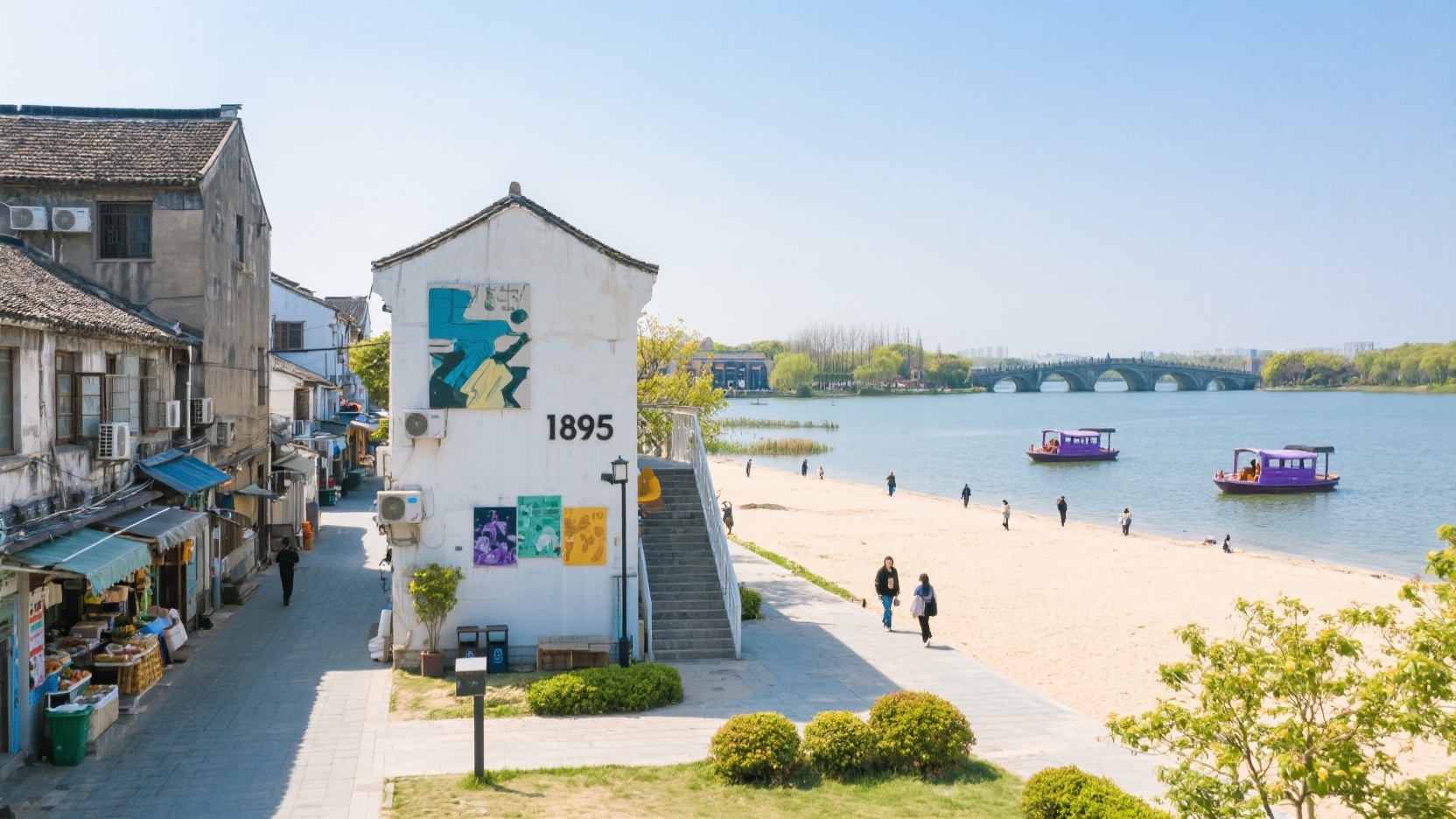
The second is Zilang Lake White Sand Beach. I've never understood why anyone would go to an artificial lake and pretend they're in Sanya. In the summer evenings, the per capita space there is smaller than a vegetable market. The sand is coarse, the water's edge is full of tents and plastic shovels, and at least eight strangers will appear in the background of your photos. Editing the photos later will drive you crazy.
The third is the red lantern tourist area on Tangzha Main Street. Tour groups rush into that street as soon as they get off the bus, where there are long queues for stinky tofu (three skewers for ten yuan) and the national chain "Ancient Town Yogurt." Locals buy straw sandal-shaped pancakes and head straight to West Market Street. Photos taken under the red lanterns, even after editing, still look like a temple fair in a county town.
Unconventional walking route: 5 kilometers from the old alley entrance to the small theater
I walked this route from the west bank of Tangzha River to the east bank. It took about two hours and forty minutes if I wasn't in a rush, and the entire route was just over five kilometers long. The starting point was at the intersection of Xishi Street, and the ending point was the small theater at the Tangzha Workers' Cultural Palace. It connected old alleys, parks, old factories, old bookstores, vegetable markets, and the small theater, and conveniently avoided all tour groups.
You can set off at 3:30 pm, walk to Dasheng Wharf and see the sunset over the canal, then sneak off to the market area in the dark to eat a sesame seed cake, and watch a local opera excerpt in the evening, or just sit at the theater entrance and enjoy the breeze. It's all more comfortable than queuing in long lines at the scenic spot.
Xishi Street Old Alley Entrance and Tangzha Park
West Market Street isn't a place for tourists to take photos. The narrow alleyways are lined with local barber chairs, bamboo ware shops, and quilts drying in the sun outside doorways. The reason to stop for ten minutes is simple: it retains the authentic atmosphere of old Nantong towns, without lanterns or signs saying "I miss you in Nantong." The best spot is at the mid-section bend, a low angle shot of the blue brick walls and the shadows of the plane trees; waiting for an old-fashioned bicycle to pass by will make for a great photo.
Turn into Tangzha Park and head straight to the metasequoia forest and gateball court on the east side. Local elderly people walking their birds, playing gateball, and playing the erhu (a two-stringed bowed instrument) create a more authentic atmosphere than any installation. A good vantage point is on the backlit side of the metasequoia forest; you can capture a misty effect in the early morning or evening. Nearby, eat at the "Gangpanbing" (a type of flatbread) sandwiched with fried dough sticks near the park's back gate; it only costs a few yuan per person, eat it while it's hot.
1895 Creative Park and Dasheng Wharf
The 1895 Cultural and Creative Industrial Park is a renovated old factory building of the Dasheng Textile Factory. The red brick walls, sawtooth skylights, and large-span iron staircases are well-preserved. Don't go to the visitor center to see the model; go directly to the artisan workshops converted from the old workshops on the east side. If you're lucky, you might encounter craftsmen making blue-dyed fabric or paper cutting. Take a ten-minute break to take photos from below under the sawtooth skylights, or frame your companions with the red brick archway.
It only takes a few minutes to walk from the north gate of the park to Dasheng Wharf. The old stone steps and the old cranes along the canal offer great opportunities for capturing a stable, industrial style. In the evening, you can stand on the opposite bank and use a telephoto lens to take a silhouette photo of the wharf, with fine, shimmering gold edges on the water. Nearby, you can enjoy a bowl of Tangzha fish soup noodles; the soup is white and the noodles are thin, costing only a few dozen yuan per person, which is much more affordable than the snacks in the scenic area.
Riverside secondhand bookstores and vegetable market back alleys
Across from Dasheng Wharf, there's an unmarked secondhand bookstore with only the word "Book" written on the door. You have to squeeze through to get in. Inside, it's piled high with local chronicles of Nantong, old books on Zhang Jian's research, and some rare maps. Spend ten minutes browsing through the old books; the owner won't greet you. This kind of unassuming shop is rare these days. The best spot for a camera is outside the window, where warm lights illuminate the spines of the old books, perfect for capturing quiet moments.
Further west lies the back alley market of Xishi Street. Here, vibrant colors and pungent smells mingle together, with stalls selling pickled vegetables, live river fish, and freshly made straw-shoe-bottom sesame cakes crammed together. Parking under a sunshade, the camera's reflection in the water basin at the fish stall creates a scene reminiscent of an oil painting. Nearby, you can enjoy straw-shoe-bottom sesame cakes with savory soy milk; the aroma of freshly baked cakes is more invigorating than any trendy coffee.
Tangzha Workers' Cultural Palace Small Theater
Walking to the Tangzha Workers' Cultural Palace in Hedong, you'll often see posters advertising performances of excerpts from Nantong opera or children's plays. The audience is almost entirely composed of local elderly people. Tickets are very cheap, and the seats are old and shiny, but once the actors start singing, you'll know what "background noise" really means. If there's no performance, you can sit on the side stairs for a while. The unique smell of wood and old curtains in that old-fashioned theater is the antithesis of Nantong's arts and culture.
The best spot is on the side staircase of the theater; capture the ticket stub and the old seat railing together in the shot. Don't use the flash during the performance; just use your phone's telephoto lens to capture a single flick of the sleeve by the lead actor on stage. Order a bowl of sweet osmanthus taro soup from a dessert shop next to the nearby cultural center—consider it a reward for finishing your meal.
In conclusion
Don't ask the locals if I haven't told you: First, spring and autumn are the most comfortable seasons; don't come in summer, as the alleys of Tangzha are not well-ventilated. Second, secondhand bookstores and artisan studios are often closed on weekends; weekday afternoons are the safest time to visit. Third, the availability of Tongju performances depends on luck; check the posters at the Cultural Palace beforehand, but don't rush there specifically for them.
Fourth, the market starts closing up after 5:30 pm, so if you want to capture bright colors, go early; Fifth, wear old sneakers for the entire route, don't believe the "light hiking outfits" in the guides - white shoes aren't suitable for the cobblestone streets in the alleys.