
Liuzhou Slow Travel Guide | A 5-Day, 4-Night Itinerary Tested with Parents, Includes a 2-Hour Lunch Break and a Checklist to Avoid Pitfalls Related to Hospitals
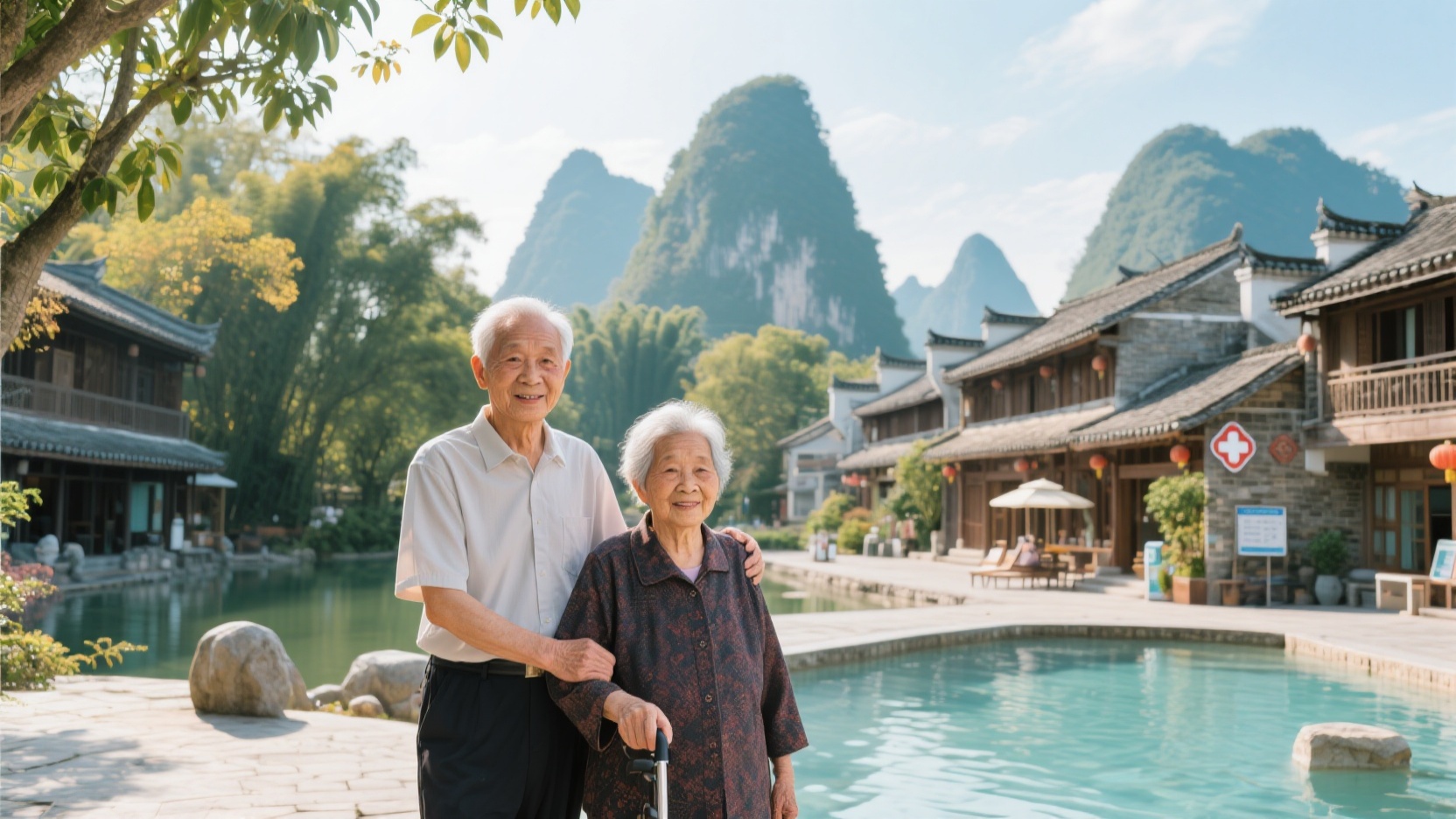
Before taking my 70-year-old parents to Liuzhou for the first time, my biggest worry wasn't whether they would like the snail rice noodles, but whether this city, famous for its industry and natural scenery, would truly be friendly to elderly people who are slow-moving and easily fatigued. Five days later, I discovered that as long as you slow down the pace and choose accommodations in locations convenient for elevators and hospitals, Liuzhou is actually very suitable for senior citizens.
First, let's talk about the pitfalls: When traveling with parents, you can't simply copy the itinerary of young people.
My initial itinerary included Longtan Park, Ma'anshan, and Yaobu Ancient Town in one day. However, on the first day, my dad's legs started to ache halfway through Longtan Park, and he almost sprained his ankle on the stone-paved road in Yaobu Ancient Town in the afternoon. So, I scrapped the entire plan and changed it to only include one or two key locations each day. We had to go back to the hotel for two hours to rest at noon and then go out again after 4 pm.
For accommodation, I chose a mid-range chain hotel by the Liujiang River. It had an elevator, a toilet in the lobby, and a ramp for people with disabilities. Importantly, there was a hospital of level two or above within a ten-minute drive. The old town of Liuzhou is not large, and taxis and ride-hailing services are readily available, so there was no need to take elderly people on crowded buses.
II. A five-day, four-night leisurely tour itinerary: visiting only one or two spots each day.
On the first day of arrival, we didn't plan any sightseeing; we just took my parents for a walk along the flat ground by the Liujiang River. We tried to keep the walk from the hotel to the riverbank under ten minutes, strolling slowly along the waterfront promenade. If there was a musical fountain, we sat down to wait; otherwise, we enjoyed the river view. The restrooms along the river were very close together, with a public restroom every few hundred meters, which was very convenient for the elderly.
The next morning, we went to Longtan Park. Entering from the North Gate, there's a flat avenue; you can take the park's electric shuttle bus to the vicinity of the Wind and Rain Bridge and then walk around. There are restrooms near the North Gate, the Visitor Center, and the Wind and Rain Bridge, most with accessible stalls. For lunch, we went back to the hotel and had a bowl of non-spicy or mildly spicy snail rice noodles. The neighborhood shops are more welcoming than the trendy ones; there's no queue, and the spiciness is adjustable. We went back to the hotel for a two-hour nap at noon, and in the evening, we took a short walk around Liuhou Park. The paths are flat, there's plenty of shade, and there are stone benches readily available if you get tired.
On the morning of the fourth day, we visited the Liuzhou Industrial Museum. This is the most suitable indoor attraction in Liuzhou for parents; it has good air conditioning, accessible elevators on each floor, clean restrooms with accessible stalls on each floor, and manageable walking distance. The elderly particularly resonated with the old machines and factory buildings, making the visit easy and not tiring. We returned to the hotel for a midday rest, and in the afternoon, we visited Yaobu Ancient Town, walking only along the outer riverbank, avoiding the deeper stone-paved paths, to enjoy the night view of the Liujiang River.
On the morning of the fifth day, we went to Qingyun Market to buy souvenirs. The ground was slippery, so we had the elderly wait at the entrance while the younger people went in to buy. After buying, we returned to the hotel to pack, had lunch, and then headed back.
3. Day 3: Choose one of two options: an ancient town or a hot spring? Which should we choose when bringing elderly people?
If you want to save energy, prioritize hot springs. Hot springs around Liuzhou are about an hour's drive away. Choose a hot spring resort with changing rooms, non-slip mats, and rest areas, and where there are chairs and handrails beside the pools. Elderly people should limit their soaking time to 15 minutes or less, and drink warm water afterward. Avoid going into the water on an empty stomach or immediately after eating. Hot spring areas usually have plenty of restrooms and lounge chairs, suitable for a relaxed pace.
If you'd like to see natural scenery and cultural sites, you can visit Zhongdu Ancient Town. The town is free, but some alleyways are paved with bluestone, which can be uncomfortable for your knees. It's best to take the town's shuttle bus to the vicinity of the pier, then walk a short distance along the flat riverside path; avoid wearing soft-soled, thin shoes. Public restrooms are concentrated near the visitor center and the pier, but there aren't many, so use them whenever you see one. Choose one and don't try to use both. Return to your hotel for a two-hour lunch break.
IV. Details that senior citizens truly care about: elevators, restrooms, walking distance, and distance to hospitals.
When traveling with parents, no matter how beautiful the scenic spots are, nothing is more important than a clean restroom without a queue. Longtan Park, the Industrial Museum, the Yaobu Ancient Town Visitor Center, and the Liujiang River waterfront promenade have a relatively high density of restrooms, but there are fewer in the alleys of Zhongdu Ancient Town. Although Ma'anshan has an elevator, it's windy at the summit and the viewing platform is occasionally slippery, so I didn't take my parents up this time.
I limit my walking distance to no more than one kilometer per segment; if it exceeds that, I take an electric cart or taxi. Before each outing, I glance at the map to confirm the travel time from the nearest hospital to the hotel or attraction. The advantage of living in the city center is its proximity to level two or higher hospitals; in case of blood pressure fluctuations or injuries, the elderly can be reached in about ten minutes. My two-hour afternoon nap isn't laziness; it's to allow my heart and joints to recover.
V. Blogger's Summary and List of Practical Tips
No need to rush in Liuzhou, the slower the better. Skip the queues at the popular snail rice noodle shops and choose a neighborhood store instead; skip climbing Ma'anshan Mountain and choose a flat spot by the river; skip three or four spots a day and choose one in the morning and one in the afternoon, then go back to the hotel for a two-hour nap at noon.
A packing list of 20 items for seniors traveling: ID card and medical insurance card, two pairs of non-slip shoes, knee pads, folding cane, thermos, medicine refill box, disposable toilet seat cover, tissues and wet wipes, light jacket and thick jacket, umbrella, reading glasses, spare battery for hearing aid, power bank, snacks, sun hat, portable cushion, medical record summary or medication list, house key, a small amount of cash, and a small towel.
Five categories of commonly used medications to remind you: 1. Cardiovascular and antihypertensive drugs; 2. Hypoglycemic drugs and blood glucose meters; 3. Gastrointestinal and antidiarrheal drugs; 4. Joint and bone pain relievers or topical ointments; 5. Cold and fever reducers and anti-allergy medications. Adjust the above items according to your parents' health condition, and be sure to consult a doctor before departure.
A leisurely trip to Liuzhou with parents isn't about visiting a lot of tourist attractions, but about having enough time for a nap each day, easy access to restrooms, and reasonable travel distances. When traveling with elderly people, slow and easy is key, and less is more.