
Don't eat in Haikou during winter | Locals' firsthand experience: 6 limited-time foods from the Great Heat to the Beginning of Autumn – don't be fooled by travel guides!
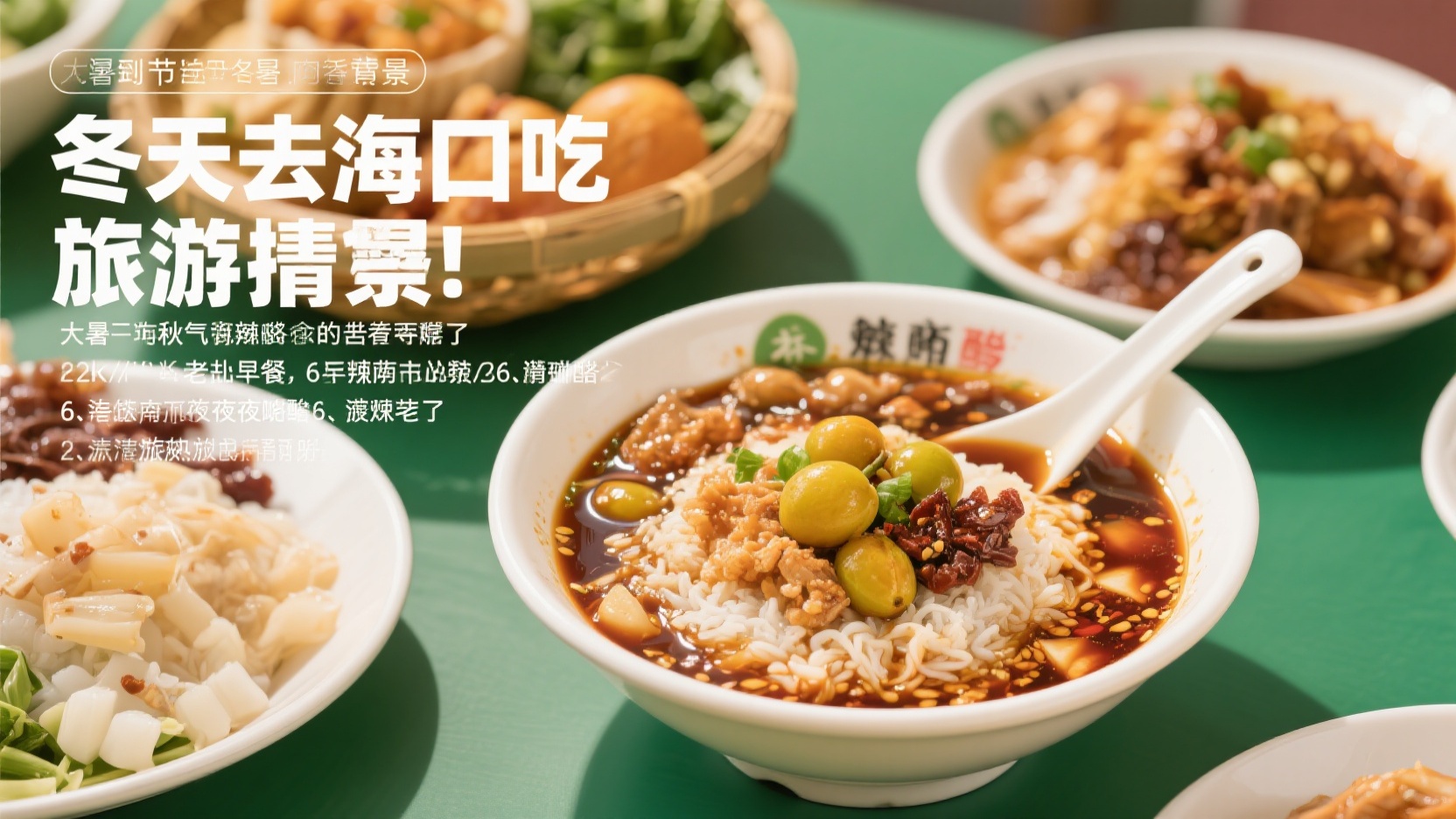
Having lived in Haikou for seven years, the sentence I most want to roll my eyes at is "Eating seafood in Haikou in winter is the most comfortable"—the person who said this probably didn't have their life saved by a bowl of piping hot spicy soup rice at the Bo'ai South Road intersection in mid-July.
The true culinary delights of Haikou don't begin during peak tourist season, but rather during the sweltering summer months, a time often shunned by tourists. From the Great Heat (Dàshǔ) to around the beginning of autumn, Haikou experiences not dry heat, but a humid, steamy heat. Locals combat this weather not by hiding in air-conditioned rooms, but by a set of seasonal dishes that "fight heat with heat, awaken the appetite with sourness, and finish with sweetness." These flavors are only at their peak in July and August; after the beginning of autumn, they lose their charm.
Those online guides to "spend a warm winter in Haikou in December" have distorted the local food narrative. While winter is certainly comfortable, many summer-limited ingredients and flavors are simply not available. Salted yellow plums aren't in season, the clams in fermented vinegar are half-eaten, and even the watermelon in Qingbuliang (a traditional Haikou dessert soup) has been replaced with canned watermelon. True food connoisseurs will arrive in Haikou a week before the Great Heat (a solar term) and stay until three days after the Beginning of Autumn (another solar term).
Next, I'll break down the locals' summer survival list for four meals a day. Don't ask why there's no coconut chicken; locals don't rely on it to stay alive at this time of year.
Breakfast: Spicy soup rice isn't just a winter treat; it's an essential dish for dispelling dampness during the hot summer months.
Tourists often assume that breakfast in Hainan is simply Hainan noodles, but around the time of the Great Heat (a solar term in Hainan), the old residents of Shuixiangkou flock to spicy soup restaurants. The soup, made with white pepper, pork offal, and pickled vegetables, is spicy and piping hot. Paired with a bowl of white rice, a piece of sausage, and a fried egg, it is the breakfast faith of Haikou people to combat the summer heat and humidity.
This is the perfect time to eat during this season because the humidity in Haikou is extremely high in July and August, making people feel drowsy and lacking appetite. A bowl of hot, spicy soup will make your forehead sweat slightly, allowing the moisture accumulated from a night of air conditioning to dissipate from your pores. The local standard is: first, drink a couple of sips of the broth, then tear some fried dough sticks into pieces and soak them in the soup, and finally finish with rice mixed with pickled vegetables. You can try doing it like the locals: soak the rice in the oil from the sausage, add a spoonful of chili, and that feeling of sweat pouring from your nose is what a hot summer morning should feel like.
If you insist on having a bowl of iced coconut milk in the morning, the locals will just laugh and say that's what tourists do.
Lunch: Hot pot with fermented rice wine, a sour and spicy treat to soothe the stomach on a sweltering summer day.
At midday when temperatures are highest, locals often opt for fermented vinegar hot pot. This broth, made from fermented brewing lees, is white with a hint of red, brightly sour, and mildly spicy. From the Great Heat to the Beginning of Autumn, small clams, squid, and seaweed from the nearby sea are at their fattest, curling up sweetly and deliciously in the hot pot.
Why eat it at this time of year? Because appetites are at their worst during the hottest days of summer, and the sourness of the fermented vinegar instantly awakens the taste buds. Locals have a specific order for eating it: first, sip a bowl of the original broth to whet the appetite, then add clams and sandworms, wait for the shellfish to open, then scoop out the seaweed, and finally, soak up some hot rice noodles to absorb the broth. Rice isn't the main dish; finishing with rice noodles is a tacit understanding among Haikou locals. If you come in winter, the clams are smaller and less flavorful—it's a completely different experience.
Those who order fermented rice wine as a regular hot pot in winter are only experiencing half of its benefits.
Afternoon Tea: Salted Yellow Skin Water is Haikou's Hidden Gem in July and August
At 3 PM, don't head to the trendy "Old Dad's Tea"; instead, find a street corner stall selling salted yellow peel water. Yellow peel is a summer-limited fruit in Hainan, available only from late June to mid-August each year, and basically disappears after the start of autumn. Salt, yellow peel, and ice are mashed together, creating a salty-sweet and sour flavor that lingers in the mouth, refreshing and cooling.
Locals typically enjoy it with fried sweet potato chips or barley cakes. A handful of salted wampee peel, a handful of freshly fried sweet potato chips, sitting under the arcade enjoying the breeze – this is a typical Haikou afternoon on a sweltering summer day. Tourists often ask, "Why not lemonade?" Because wampee peel water soothes the throat and reduces internal heat, while also counteracting the dryness of fried foods. Truly good salt water made with freshly crushed wampee peel will have the peel floating on the surface, along with small pieces of pulp; towards the end, you have to tear open the lid to scoop out the pulp and eat it.
If the menu says "Yellow Skin Water available year-round," it's best to leave immediately, as it's just syrup.
Late-night snack: brown sugar soup with sweet soup and fried duck chin, a perfect way to end a sweltering summer night.
The nights in Haikou don't cool down just because of the daytime heat; the ground still radiates damp heat. At this time, locals will go out for a bowl of chilled brown sugar syrup (Qingbuliang) instead of following the trend and ordering the coconut milk version. The brown sugar syrup Qingbuliang is more old-fashioned, with ingredients including mung beans, barley, winter melon and barley, macaroni, longan pulp, and crushed peanuts.
This is the perfect time to eat it during this solar term because the body remains hot and restless on the nights of the dog days of summer. The brown sugar syrup and herbal soup are cooling and diuretic, and the ice-cold temperature perfectly counteracts the daytime heat. The local standard is a bowl of herbal soup with two fried duck chins or a few chicken wing tips. The alternation of sweet, savory, hot, and cold flavors is the right way to enjoy a late-night snack in Haikou during the summer.
Many travel guides describe Qingbuliang as a "Haikou dessert," but in the eyes of locals during the hottest days of summer, it is a refreshing and cooling treat after a main meal to keep them going.
In conclusion
Don't ask the locals, here's one thing I didn't tell you: If you come to Haikou in July or August, try not to go out to eat at noon. Go out after 4 pm. The spicy soup rice is most popular before 9 am.
Don't ask the locals what I didn't tell you, part two: You can tell the owner in advance to lower the acidity of the vinegar hot pot. Don't force yourself to eat the original sour flavor, otherwise your stomach will protest.
Don't ask the locals what I didn't tell you, part three: Old salt yellow peel water is only available from the end of June to mid-August. If you want to drink it again after the beginning of autumn, you'll have to wait until next year. Don't believe the claim that it's available all year round.
Don't ask the locals, part four: When making Qingbuliang (a type of sweet soup), look for the old shops on the street. Most of the ones in tourist areas and shopping districts are made with coconut powder, and the taste is completely different.
Don't ask the locals what I didn't tell you, part five: If you want to avoid the crowds, don't come to Haikou in winter looking for so-called "winter-escape delicacies." The hottest days of summer are when the locals' taste buds truly shine.