
Avoid crowded artsy spots in Fuzhou | Locals' firsthand experience: This 5km walking route truly captures the essence of old Fuzhou.
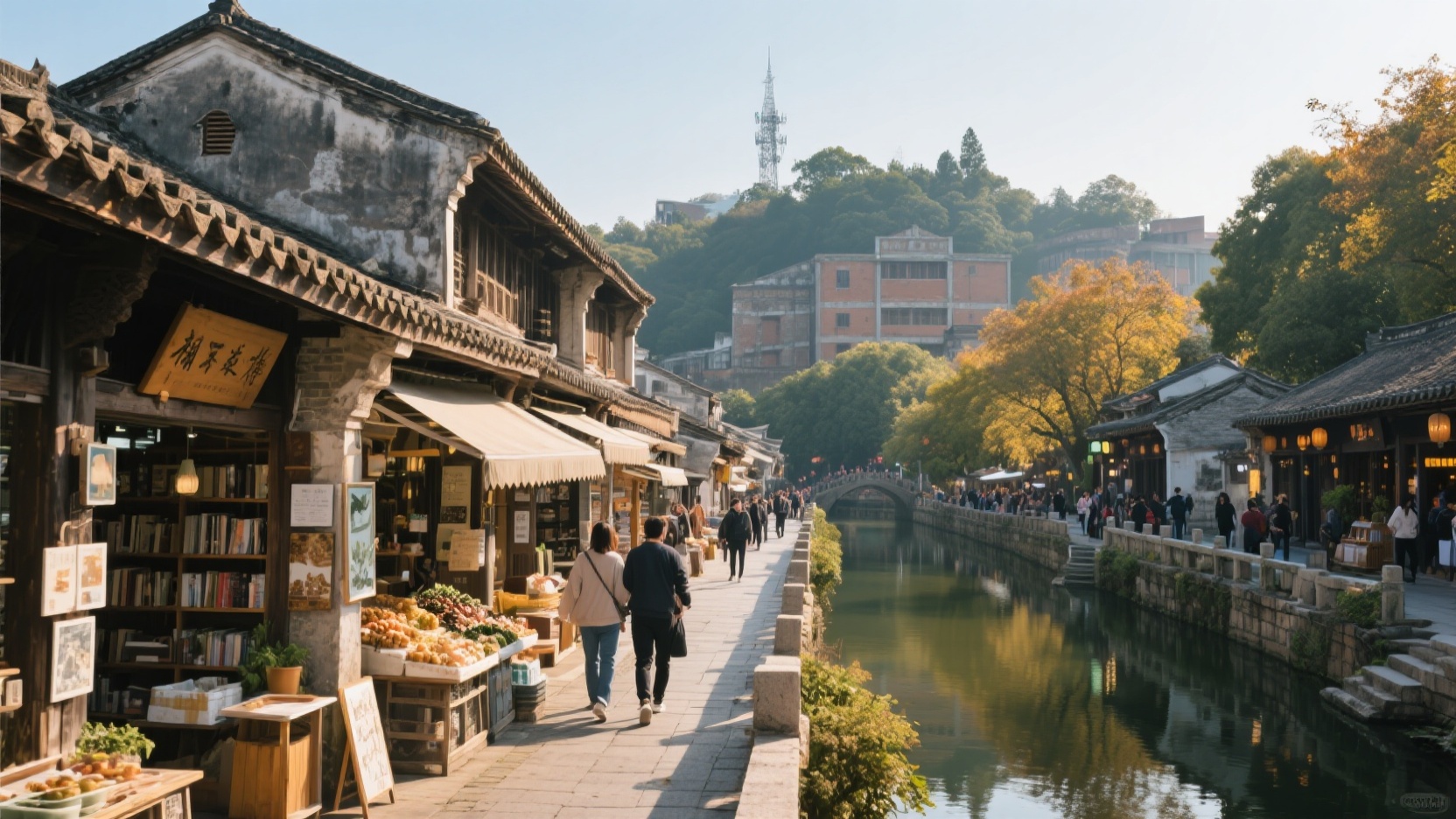
In Fuzhou, the cultural attractions least worth making a special trip to are often the top-ranked spots in travel guides. I walk through the main street of Sanfang Qixiang dozens of times a year, but I almost never turn into Nanhou Street; those who take photos of the night view of Shangxiahang and leave have likely missed its true, older side. Those who understand Fuzhou's artistic side as "walking to the end of a street and buying a cup of bamboo-tube tea" are easily missing its most substantial aspects.
First, let me pour some cold water on this: Locals don't even go into these popular tourist spots.
"Nanhou Street Main Street" is the first pitfall. It's not that Sanfang Qixiang (Three Lanes and Seven Alleys) is inaccessible, but the main street, from fish ball shops to bubble tea shops, is basically a product fair where people are pushed around. Locals automatically circle around Guanglu Lane and Wenru Lane as soon as they reach the entrance of the lanes, leaving only tour groups and photo spots on the main street, resulting in photos with only the backs of heads in the background. If you want to find the real former residences of celebrities, you have to turn into the side alleys, not follow the main street and look for the signs one by one.
The second pitfall of "Shangxiahang" is the nighttime lighting. The riverbanks are bathed in a uniform warm yellow light, and the antique-style facades look as new as freshly wallpapered walls. After dusk, it gets so crowded that you can't even stop at the bridgehead. If you want to capture a Republic of China era feel, go deeper into Xing'an Lane and Tangfang Lane during the day. They are much cleaner than the main riverbanks, and even the water stains on the old walls have more depth than the lighting.
The third pitfall of "Yantaishan Internet Celebrity Coffee Street" is its lack of substance. Newly opened shops along the slope block half of the old walls, and the queues outside are longer than those at exhibitions. The so-called photogenic spots are just a mirror and a bunch of fake flowers. The truly worthwhile old villas and former consulates on the mountain are overlooked, and many guides don't even tell you their closing times.
A 5-kilometer-long local cultural and artistic walking route, more like Fuzhou than any travel guide.
This route starts from the north slope of Wushan Mountain, passes through Macau Road, Guanglu Lane, Baimahe Park, Shaoyuan No. 1, Fanghua Theater, and finally ends at Suwei Road Market, covering approximately five kilometers. It's recommended to start around 2 or 3 PM, arriving at the market just before closing time when there are fewer people and better lighting. There's no need to rush early or go at night. Except for the final section, there's almost no uphill climbing, making it very low-intensity.
It has no standard exits, nor any stores that require a purchase. What you see are office workers crossing the park, students eating ice cream on the steps of an old factory, and theatergoers waiting for a late-night show outside the theater. This everyday life is the unpretentious side of Fuzhou's culture and art. Putting your camera away and walking around for a while, you can better feel that this city is not in a hurry to prove anything.
North slope of Wushan Mountain: The city park in the morning is not a tourist attraction.
This isn't part of the Three Lanes and Seven Alleys area, but rather a whole old town community on the hillside. Walking uphill from the north entrance of Wushan Road, a ten-minute walk will lead you to a slope with stone lanterns, old banyan roots, and locals practicing Tai Chi. It's worth stopping for ten minutes because Fuzhou's history is layered on cliff inscriptions, completely different from the trendy photo spots; some inscriptions are so blurred you have to get close to see them.
The best vantage point is on the stone bridge halfway up the north slope, looking east with the old house rooftops and the Black Pagoda in the background. The light is softest before dusk. There aren't many places to eat nearby, so I recommend going to the Guanglu Fang area after you come down the mountain. There you'll find local favorites like lao hua (a type of noodle soup) and xiaolongbao (soup dumplings), which are much more reassuring than the touristy eateries near the entrance of Wushan Mountain.
From Macau Road to Guanglu Lane: The alley entrance is closer to the old Fuzhou than the main street.
Macau Road connects Wushan and the west side of Sanfang Qixiang (Three Lanes and Seven Alleys). The road is narrow and shaded by trees, so most of the car noise is blocked by the lanes. The reason for stopping for ten minutes is that here you can see old house entrances, the remnants of arcade buildings, and street vendors selling green olives, rather than uniformly branded tourist shops. Reaching the entrance of Guanglu Lane and turning into Daguang Lane, it's a whole level quieter than Nanhou Street.
The independent bookstore is tucked away in a courtyard deep in the alleyways. The old wooden floors inside give it a pleasant feel, and it's often the site of small book clubs. From the entrance of Daguangli Alley, looking back at Guanglu Lane, the shadows cast on the walls after 3 PM are more captivating than those cast on the main archway. For food, there are small street-front shops selling rouyan (meat dumplings) and yuanxiao (sweet rice balls). These snacks are perfect for dining, and enjoying them under the arcades is much more enjoyable than taking them out.
Baimahe Park and Shaoyuan No. 1: A Wild Atmosphere in an Old Factory
Walking from Guanglu Lane to Baima River, you'll first pass through a section of old community boundaries. Baima River Park isn't a large park; the riverside path is narrow, with dense canopies of trees on both sides. In the afternoons, you can see elderly people playing chess. Stop for ten minutes because this greenway brings the historical and cultural feel of the alleyways back into everyday life; watching the reflection on the river is more pleasant than looking at the imitation antique walls. Don't come on rainy days, as the stone path will be slippery; only on sunny days does it have that old-world, translucent feel.
Walking along the river to Shaoyuan No. 1, the creative park converted from an old factory lacks a grand entrance. Design studios, small galleries, and a tiny coffee shop are crammed between several red-brick workshops. My camera spot was on the side wall of the old factory building in the center of the park; the afternoon sun would turn the brick wall a reddish-brown. Nearby, you can grab a bowl of guobian (a type of rice noodle soup) or peanut soup—both are street stalls. Don't worry about the ambiance; just sitting by the roadside waiting for the guobian to be flipped over is quite comforting.
Fanghua Theater and Suwei Road Market: Theater and daily life are just one street apart.
Fanghua Theater, located on Baima North Road, is one of the oldest theaters in Fuzhou. It's not open all the time, but you can often see veteran theatergoers leaving rehearsals or waiting for tickets when you pass by in the evening. Taking a ten-minute break to check the Yue Opera schedule on the posters is more informative than checking out a national chain bookstore. The best spot to take a photo is south of the theater entrance sign, capturing the shadows of the plane trees.
The route ends at the Suwei Road Market. This isn't a planned tourist spot; before the market closes in the afternoon, you'll hear vendors calling out their wares of fish balls, fish paste, and braised tofu. The vendors won't chase you around taking photos. The most worthwhile place to stop is under the market's semi-open roof; the light filtering through the gaps makes the colors of the food look more authentic than any filter. Just pick any nearby flatbread shop where an elderly woman is making it—that's the local way of ending a day. Don't go to the brightest one next door; walk a few steps further in for a safer experience.
In conclusion: Don't ask what the locals didn't tell you.
First, when visiting Sanfang Qixiang, please walk through Guanglu Lane and Wenru Lane, and avoid wasting time on the main street of Nanhou Street.
Second, during the day, you can go deep into the alleys in Shangxiahang, and at night you don't need to make a special trip just for the lights.
Third, this walking route is suitable for afternoons from late autumn to spring. In summer, avoid midday, as it is hot and there is no shade.
Fourth, for those who enjoy taking photos, a standard zoom lens is enough; a telephoto lens is unnecessary because alleys are narrow and the distance is short.
Fifth, don't mistake Fuzhou's arts and culture for art galleries and performance tickets; they are more often found hidden in old factories, vegetable markets, and old theaters.