
Fuzhou's Art and Culture: A Deep Dive into the City
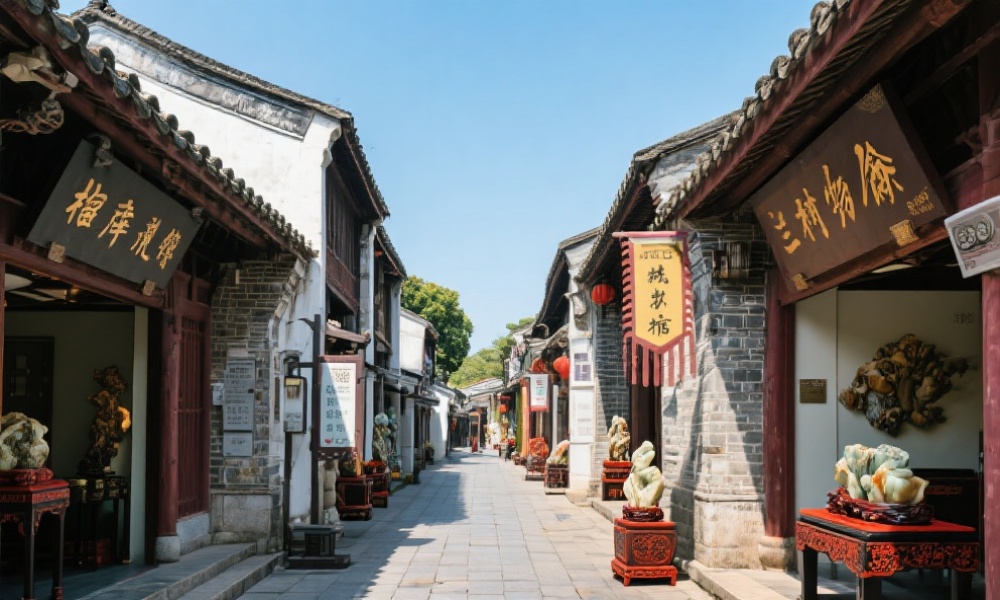
Fuzhou, an ancient city with a history of over 2,200 years, is not only the political, economic, and cultural center of Fujian Province, but also an indispensable part of the diverse yet unified landscape of Chinese civilization. Its unique geographical location endows it with natural scenery combining mountains and sea, while its profound historical heritage has nurtured a rich and diverse cultural and artistic legacy. This article aims to plan a cultural and artistic journey centered on museums, historical sites, and intangible cultural heritage experiences for travelers seeking in-depth cultural experiences, guiding you to stroll through Fuzhou and savor the charm of this Min-style capital.
Tracing the Cultural Heritage of Fuzhou: The Grand Narrative of Museums
Embarking on a cultural and artistic journey through Fuzhou, the Fujian Provincial Museum is an indispensable first stop. As the largest comprehensive museum in Fujian Province, its collections cover multiple fields including Fujian history, nature, and art. From the relics of the prehistoric Minyue civilization to the prosperity of the Maritime Silk Road during the Song and Yuan dynasties, and the flourishing of Min-style culture during the Ming and Qing dynasties, the museum systematically outlines the historical evolution of Fujian and even Fuzhou through meticulous curation and rich artifacts. Particularly noteworthy are the "Fujian History and Culture Exhibition" and the "Fujian Arts and Crafts Masterpieces Exhibition." The former allows visitors to gain a comprehensive understanding of Fuzhou's position in Chinese civilization, while the latter showcases the essence of traditional Fujian crafts such as Shoushan stone carving and bodiless lacquerware.
Afterwards, visitors moved to the Fuzhou Shipyard Culture Museum in Mawei District, shifting their focus to modern China. The Fuzhou Mawei Naval Academy and Shipyard were one of the cradles of modern Chinese industrial civilization and a vivid example of "learning from the West to strengthen ourselves." The museum provides a detailed introduction to the founding background, development process, and profound impact of the shipyard on modern Chinese navy, education, and science and technology. Through artifacts, models, and historical documents, visitors can truly feel the turbulent era, Fuzhou's unique contribution to the nation's path to strength, and the shipyard spirit that emerged from this period.
The Enduring Legacy of Ancient Houses: Historical Echoes of Sanfang Qixiang and Shangxiahang
The soul of Fuzhou undoubtedly lies in the Sanfang Qixiang (Three Lanes and Seven Alleys) historical and cultural district. It is one of the largest and best-preserved Ming and Qing dynasty architectural complexes in China, often referred to as a "living fossil of the neighborhood system." Strolling through it, the blue bricks and gray tiles, the saddle-shaped walls, and the carved window lattices silently tell the story of a century of splendor. This area produced many influential cultural figures and revolutionary pioneers who shaped Chinese history, including Lin Zexu, Yan Fu, Bing Xin, and Lin Juemin. Visitors can choose to visit the former residences of Lin Juemin, Yan Fu, and Bing Xin, gaining a deeper understanding of their lives and thoughts, and experiencing the patriotism of that era's elites. Meanwhile, the district's cultural and creative shops, art galleries, and traditional teahouses offer visitors an immersive experience of the slow-paced life of Fuzhou, allowing them to savor a cup of jasmine tea, listen to a storytelling performance, and let time slow down.
Echoing the literati culture of Sanfang Qixiang (Three Lanes and Seven Alleys) is the Shangxiahang Historical and Cultural District. As a former important commercial center of Fuzhou and a crucial node on the Maritime Silk Road, Shangxiahang carries the commercial memories of Fuzhou since its opening to foreign trade. It was once a distribution center for goods along the Minjiang River, bustling with merchants and dotted with guild halls. Today, the restored ancient buildings, such as the Zhang Zhenjun Ancestral Hall and the former site of the Fuzhou General Chamber of Commerce, still retain a strong commercial atmosphere and local flavor. Strolling through Shangxiahang, one can observe the fusion of architectural styles from different periods, experience Fuzhou's openness and inclusiveness as a port city, and feel the intertwining of traditional commercial culture and modern life.
Intangible Cultural Heritage Craftsmanship: The Inheritance of Min Capital Art at Your Fingertips
A cultural and artistic journey through Fuzhou should delve deeper into the fabric of its intangible cultural heritage. Shoushan stone carving and bodiless lacquerware are among the most representative national-level intangible cultural heritage items in Fuzhou and even Fujian Province. Shoushan stone, with its warm, delicate texture and vibrant colors, is hailed as a "Chinese treasure." In Fuzhou, visitors can tour the Shoushan Stone Culture and Art Museum or specialized stone carving studios to observe firsthand how master carvers transform natural stone into exquisite works of art. Through hands-on experience or guided tours, visitors can learn about the unique creative concepts of "selecting stones," "appreciating stones," and "adapting techniques to the material."
Lacquerware made from clay is renowned for its unique charm, described as "light as paper, bright as a mirror, hard as porcelain, and smooth as jade." Its production process is intricate and meticulous, integrating various techniques such as sculpture, painting, and decoration. At the Fuzhou Lacquerware Factory's exhibition hall or related intangible cultural heritage experience centers, visitors can admire exquisite lacquerware from the Qing Dynasty to the present day, learning about its long process from clay modeling, clay removal, applying ash, lacquering, polishing, to painting. They may even have the opportunity to experience simple lacquer painting under professional guidance, personally feeling the warmth and heritage of this ancient craft.
Furthermore, Min Opera, as one of the five major opera genres in Fujian, showcases the aesthetic tastes of the Fujian people with its unique singing style, performance form, and local characteristics. If time permits, watching a Min Opera performance at a local theater or cultural center in Fuzhou would be a perfect complement to experiencing Fuzhou's cultural arts.
A cultural and artistic journey through Fuzhou is a profound dialogue about time and space, history and the present. It is not only a visual feast but also a spiritual cleansing. Slow down, immerse yourself in it, and you will discover that the beauty of Fuzhou goes far beyond its surface.