
Taste of Dali | In-depth appreciation of Bai ethnic cuisine, a guide to avoiding pitfalls in authentic local food.
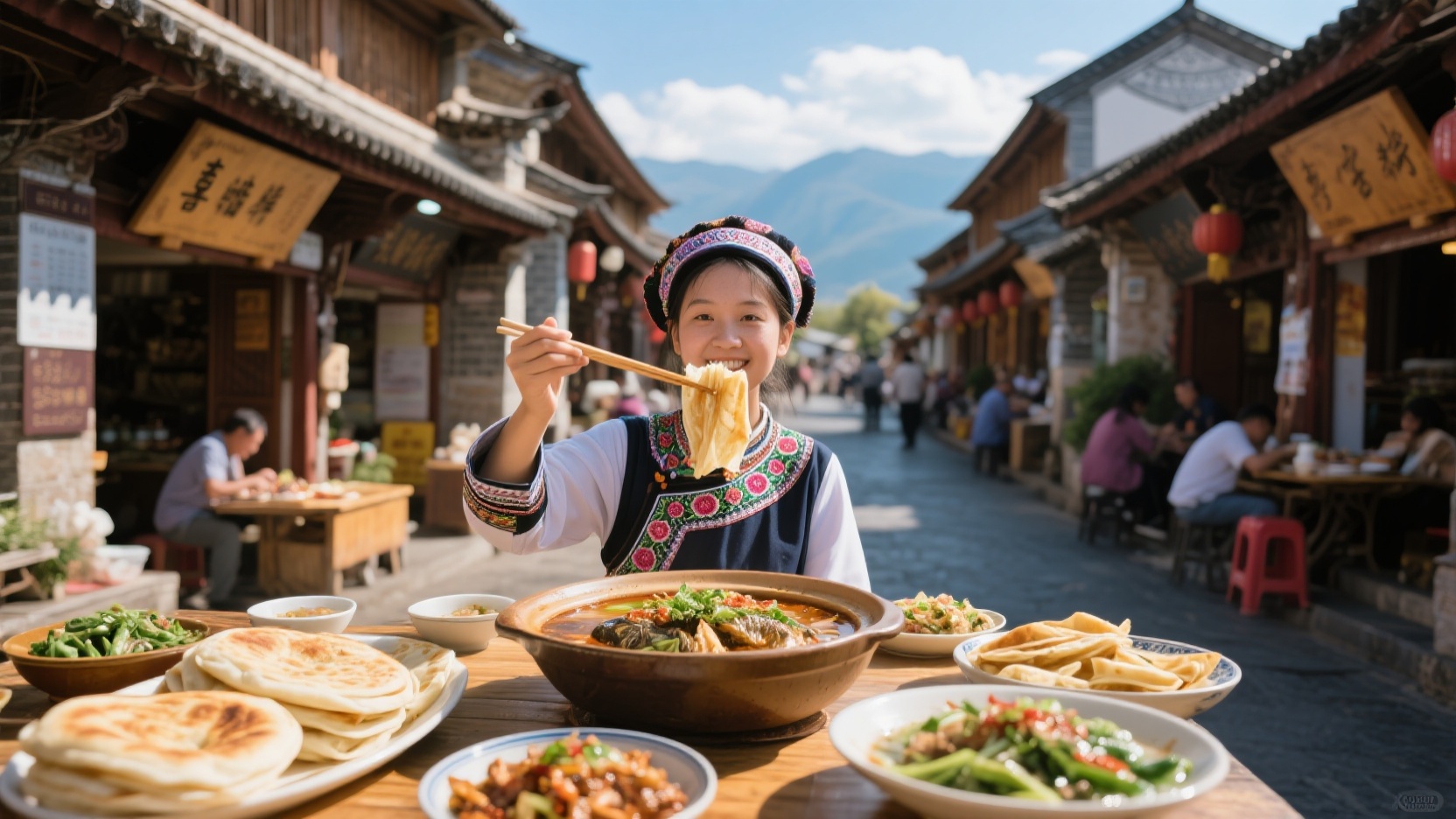
Dali, this ancient city steeped in romance and beauty, possesses charm not only in the natural scenery of Cangshan Mountain and Erhai Lake and the unique flavor of Bai culture, but also in its rich and authentic cuisine. As a shining pearl of northwestern Yunnan, Dali's food blends the culinary wisdom of the Bai, Han, and surrounding ethnic minorities, forming a distinctive flavor system. A deep appreciation of Dali's cuisine is an indispensable part of understanding the city's cultural fabric.
Must-try signature dishes list
The dining table in Dali is a feast for the taste buds. Here are some authentic signature dishes that you shouldn't miss:
Xizhou Baba: A specialty snack originating from Xizhou Ancient Town, made primarily from flour through repeated kneading and fermentation, then baked in a special oven. The outer layer is golden and crispy, while the inside has distinct layers and a fragrant, glutinous texture. It comes in two flavors: sweet and savory. Sweet Baba is often filled with brown sugar and sesame seeds, making it sweet and delicious; savory Baba is seasoned with meat filling, scallions, and other spices, resulting in a savory and aromatic flavor. Its unique charcoal baking method gives the Baba a distinctive, irreplaceable caramelized aroma.
Erkuai: One of the representative staple foods of Dali and even the whole of Yunnan. High-quality rice is steamed, pounded into blocks, and can be sliced, shredded, or cooked whole. The most common are roasted Erkuai and stir-fried Erkuai. Roasted Erkuai is usually roasted over charcoal until soft, then spread with sweet bean sauce and chili sauce, and wrapped with fillings such as fried dough sticks and vegetables, resulting in a soft, glutinous, fragrant, and chewy texture; stir-fried Erkuai is stir-fried with sliced meat and vegetables, resulting in a savory and flavorful dish, a frequent guest on the local people's daily table.
Milk fan (乳扇): A unique dairy product of the Bai ethnic group, shaped like a thin fan and milky white in color. Its production process is unique, involving coagulating fresh milk, stretching it into thin sheets, and then drying it. It can be eaten in various ways, including frying, deep-frying, and baking. Fried milk fan is crispy on the outside and tender on the inside, with a rich milky aroma, often eaten dipped in white sugar, sweet but not cloying; baked milk fan has an added caramelized flavor, and can be sprinkled with salt and pepper or coated with rose jam, offering a unique taste. Its unique texture and milky aroma are difficult for other dairy products to replicate.
Cold Chicken Rice Noodles: A refreshing and popular snack in hot weather. Featuring smooth rice noodles as the main ingredient, it's topped with a variety of toppings including shredded chicken, crushed peanuts, bean sprouts, and chives, and drizzled with a special spicy and sour sauce, sesame oil, and Sichuan peppercorn oil. The flavor is spicy, savory, and tangy, with a chewy texture and tender chicken, making it an excellent choice for cooling down and satisfying hunger.
Clay Pot Fish: A specialty dish of Dali, typically made with bowfish from Erhai Lake (now mostly farmed, wild resources are scarce) or other local freshwater fish. The fish is simmered in a clay pot with over ten ingredients, including ham, tofu, wood ear mushrooms, vegetables, and egg dumplings. The broth is milky white and rich, the fish is tender, and the flavor is mellow and robust, making it a traditional main dish for entertaining guests.
Carved plums: A traditional Bai ethnic snack and a unique type of preserved fruit. Made from high-quality green plums through multiple processes including hand carving, soaking, and pickling. The plum flesh is translucent and shaped like a relief sculpture, with a balanced sweet and sour taste and the distinctive fragrance of plums. It's an excellent gift for relatives and friends, and also a refreshing snack after a meal.
Spicy and Sour Fish: Unlike the rich flavor of casserole fish, spicy and sour fish focuses more on stimulating the taste buds. Fresh fish is selected and cooked with local ingredients such as sour papaya, pickled chili peppers, and tomatoes. The broth is sour and spicy, appetizing, and the fish is fresh, tender, and delicious, making it a favorite among many spicy food lovers. Its sourness primarily comes from the natural sour papaya, rather than vinegar, resulting in a more natural and unique flavor.
Local favorites for food
To truly experience the authentic cuisine of Dali, the key is to avoid tourist hotspots and immerse yourself in the local neighborhoods.
Xiaguan City Center: The administrative center of Dali City and the main residential area for locals. Restaurants here are more affordable and offer flavors closer to the daily lives of locals. Many long-established restaurants and food stalls can be found on Tai'an Road, Fuwen Road, and Renmin Street (Xiaguan section). For example, on Tai'an Road, you can find many authentic rice noodle shops, barbecue stalls, and home-style restaurants. It lacks the commercial atmosphere of the old city, offering instead a more vibrant, down-to-earth atmosphere.
Xizhou Ancient Town: Besides the famous Xizhou Baba (a type of pancake), Xizhou Ancient Town also has some hidden snack shops offering Bai ethnic specialties such as pea flour noodles and Liangxia (a type of cold noodle dish). Although there are many tourists, with a little attention, you can still find old shops frequented by locals.
The alleys surrounding Dali Old Town: While the main streets of the old town are lined with shops, some quiet alleys off the main thoroughfares still retain small, family-run restaurants. These shops may be inconspicuous, but they often offer authentic Bai ethnic home-style cuisine at reasonable prices. Asking local guesthouse owners or residents is a good way to get this information.
Tips for avoiding overpriced and overpriced shops and tourist attractions
Amid the tourism boom in Dali, some trendy restaurants and eateries within scenic areas often suffer from mediocre food and inflated prices. Here are some tips to avoid these pitfalls:
Beware of overly packaged "Instagrammable" restaurants: Many shops that gain widespread popularity on social media may prioritize decor and photogenic appeal over the food itself. Their dishes may be modified to cater to mass tastes, but often lose their authentic flavor. One criterion is to observe the proportion of local diners; if locals are scarce, caution is advised.
Avoid the core areas of tourist attractions: Restaurants in the heart of popular tourist areas such as Dali Old Town and Shuanglang are generally expensive and may have "tourist prices." It is recommended to choose to eat in the surrounding areas or in local residential areas a little further away after visiting the attractions.
Ask locals for recommendations: taxi drivers, guesthouse owners, and local residents are the best food guides. They are usually happy to share their favorite restaurants that offer authentic flavors at reasonable prices. This kind of word-of-mouth recommendation is often more reliable than online advertisements.
Pay attention to platforms like Dianping, but be discerning: When using food review platforms like Dianping, carefully filter reviews. Prioritize reviews with local accents or detailed descriptions of the dishes, rather than blindly pursuing high scores or beautiful pictures.
Pay attention to menu prices and portion sizes: Before ordering, carefully review the menu prices and inquire about portion sizes to avoid extra charges due to information asymmetry. For seafood and other ingredients weighed by weight, be sure to confirm the pricing method and weight.
The cuisine of Dali is not only a treat for the taste buds, but also a window into understanding Bai culture and the local way of life. Slow down, use your taste buds to feel every whiff of Dali's vibrant atmosphere, and let your flavors take you deep into the soul of this ancient city.