
Cang'er Art Landscape | An In-Depth Cultural and Artistic Tour of Dali
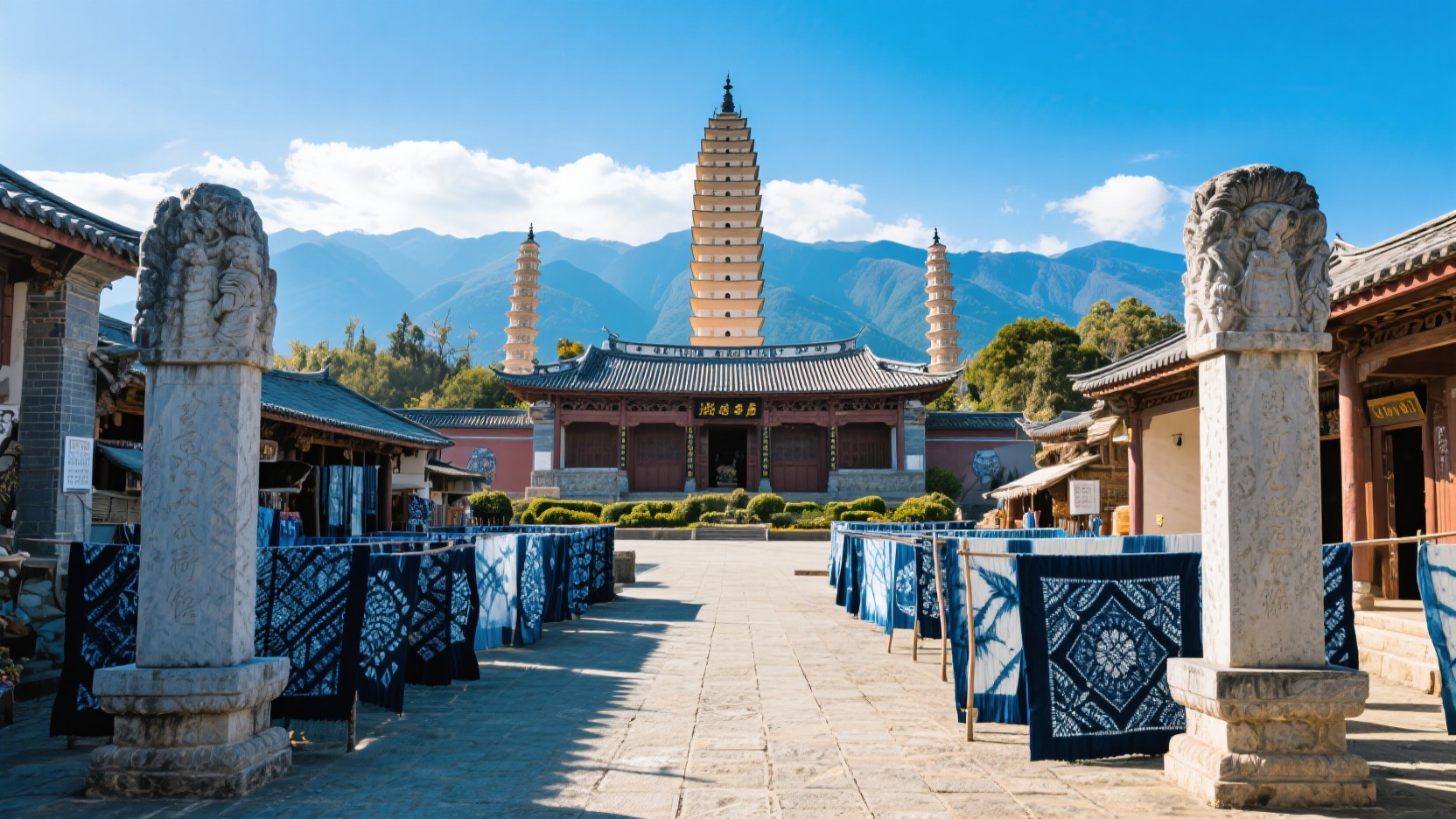
Dali, renowned for its breathtaking natural scenery reminiscent of "wind, flowers, snow, and moon," also harbors a rich history, a vibrant Bai ethnic culture, and a unique artistic heritage. For travelers seeking a profound cultural experience, Dali is far more than just a tourist destination; it is a cultural treasure trove waiting to be explored. This guide will plan an in-depth journey centered on culture and art, avoiding superficiality and immersing you in Dali's millennia-old heritage and enduring craftsmanship.
First stop: Tracing the origins of the ancient city and experiencing the elegance of the Bai ethnic group.
Dali Ancient City, the capital of the Nanzhao and Dali Kingdoms, is not merely a commercial district, but a living history museum. Its grid-like street layout and Ming and Qing dynasty architectural complex embody the wisdom of Bai people's traditional urban planning and philosophy of life. Strolling through the ancient city, you'll discover the unique landscape of "a river encircling the city, water in every home, and flowers in every household," a testament not only to the harmonious coexistence of humanity and nature but also to the Bai people's pursuit of aesthetic living.
To gain a deeper understanding of the ancient city, the Dali City Museum is an indispensable stop. The museum houses a vast collection of precious artifacts from the Nanzhao and Dali kingdoms, including bronzes, pottery, Buddhist statues, and ethnic costumes. Through these exhibits, you can directly experience the rise and fall of these two ancient kingdoms, the evolution of religious beliefs, and the exquisite craftsmanship of the Bai people's ancestors. Particularly noteworthy are the Buddhist artworks that blend Han, Tibetan, and South Asian cultural elements, vividly demonstrating Dali's role as a crucial hub on the Southwest Silk Road.
Within the ancient city, especially around Renmin Road and Yangren Street, many traditional Bai ethnic minority residences are still preserved. These buildings mostly adopt the layout of "three courtyards and one screen wall" or "four courtyards and five patios," with upturned eaves, carved beams and painted rafters, and are particularly characterized by wood carving, stone carving, and colorful paintings. Their exquisite craftsmanship and rich patterns not only showcase the ingenuity of Bai artisans but also embody auspicious meanings and the Bai people's yearning for a better life. Slowing down and observing the details of these buildings allows one to appreciate the unique charm of Bai architectural art.
Second stop: Remnants of the Kingdom, Bathed in Buddhist Light
A cultural and artistic journey through Dali inevitably traces its history as the political and cultural center of the Nanzhao and Dali kingdoms. The Three Pagodas of Chongsheng Temple, a landmark architectural complex in Dali, are not only visually stunning but also a testament to the millennia-long spread of Buddhist culture in the region. Chongsheng Temple was once the royal temple of the Nanzhao and Dali kingdoms. Its main pagoda, the Qianxun Pagoda, and two smaller pagodas to the north and south form a triangular structure, blending architectural features of the Tang and Song dynasties, creating a magnificent and imposing sight. The three pagodas have withstood numerous earthquakes throughout history, demonstrating not only the superb architectural skills of ancient craftsmen but also a sacred sense of protection. The thousands of Buddhist artifacts unearthed within the temple further confirm Dali's important position in the history of Buddhism in Southwest China.
Not far from the ancient city lies Taihe Village, home to a historically significant stone stele—the Nanzhao Dehua Stele. Erected in the first year of the Dali era of the Tang Dynasty (766 AD), this stele is an important material resource for studying the history of Nanzhao, the relationship between the Tang Dynasty and Nanzhao, and the early culture of the Bai people. The inscription details the historical process of Nanzhao's relationship with the Tang Dynasty, from war to peace, as well as the foundation of Nanzhao's state and its governing philosophy. Its calligraphy is also of great research value, representing the stone carving art of border ethnic minority areas during the Tang Dynasty. Standing before the stele, one can almost travel back a thousand years and hear the historical echoes of that era's turbulent development.
Afterwards, we drove to Xizhou Ancient Town, a Bai ethnic settlement even more rustic and tranquil than Dali Ancient City. Xizhou was once an important commercial port on the Ancient Tea Horse Road. The well-preserved Bai residential clusters within the town, such as the Yan Family Courtyard and the Dong Family Courtyard, are a concentrated embodiment of Bai commercial culture and architectural art. These courtyards are not only grand in scale, but their "galloping horse corner tower" architectural style, exquisite wood carvings, stone carvings, clay sculptures and paintings, as well as the unique "three-drop water" gate, all showcase the superb craftsmanship of Bai architecture and the aesthetic taste of wealthy merchants. In Xizhou, you can more directly experience the perfect fusion of Bai traditional lifestyle and architectural art.
Third stop: Intangible cultural heritage craftsmanship, passing on artistic traditions
The culture and art of Dali are inseparable from its intangible cultural heritage passed down through generations. Among the most representative is Zhoucheng tie-dyeing. Zhoucheng, known as the "Hometown of Tie-Dyeing in China," boasts a tie-dyeing technique with a history of over a thousand years. Tie-dyeing is a traditional craft that involves binding and sewing fabrics, then immersing them in natural plant dyes (primarily indigo) to create a myriad of patterns. Each piece of tie-dyed fabric is unique, embodying the ingenuity and hard work of Bai women. In Zhoucheng's tie-dye workshops, you can witness the entire process from design and tying to dyeing and drying, and even experience the joy of tie-dyeing yourself, feeling the vitality and artistic charm of this ancient craft.
Besides tie-dyeing, the area around Dali also boasts other exquisite intangible cultural heritage crafts such as Jianchuan wood carving and Heqing silver ornaments. While these may not be part of the main itinerary, their works are frequently found in handicraft shops within the ancient city. Jianchuan wood carving, with its delicate openwork and relief techniques, depicts lifelike flowers, birds, and figures; Heqing silver ornaments, with their unique forging and engraving techniques, incorporate Bai ethnic totems and auspicious patterns into everyday jewelry. These handicrafts are not only beautiful tourist souvenirs but also a material embodiment of the Bai people's aesthetic taste and wisdom of life.
A cultural and artistic journey through Dali is a deep and leisurely exploration. It requires us to set aside our restlessness and attentively feel the stories behind every brick and tile, and the craftsmanship embodied in every handicraft. From the Bai ethnic minority residences in the ancient city to the radiant light of Buddha at Chongsheng Temple, from the epic inscriptions on the Nanzhao Dehua Stele to the fingertip art of Zhoucheng tie-dyeing, Dali's culture and art, like the Cangshan Mountains and Erhai Lake, are profound and layered. We hope this route will guide you beyond the scenery and allow you to truly touch the soul of Dali.