
Don't go to escape the summer heat! It's not spring or autumn that's the right time | Local testimonial: Don't be fooled by travel guides anymore, these are the authentic ways to experience the Great
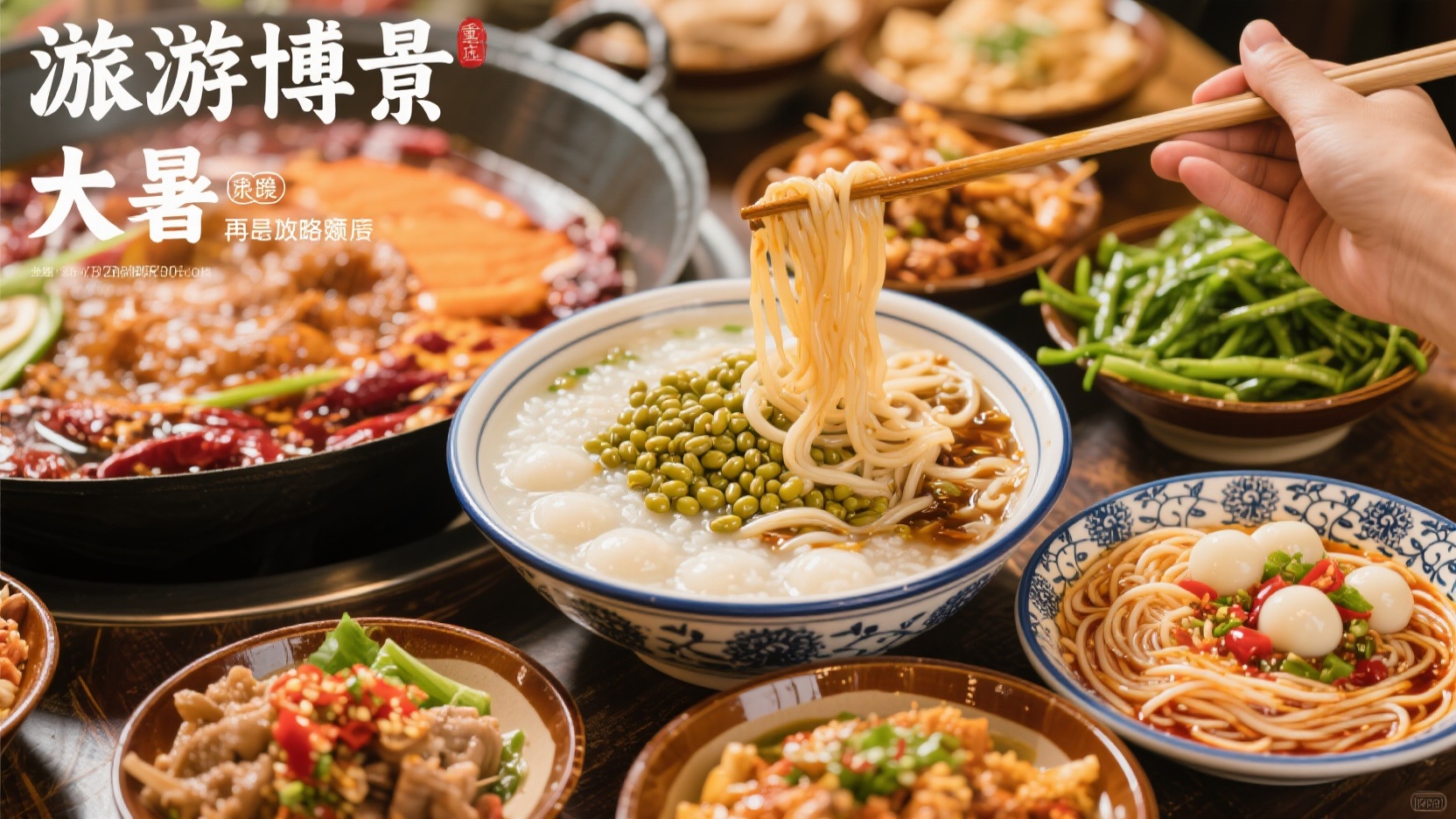
Last year during the Great Heat, I accompanied a friend from Shanghai on a long walk in Yuzhong District. She almost suffered heatstroke while standing at the entrance of Hongyadong, constantly muttering, "Who said Chongqing is only good in spring and autumn? How can we eat hot pot in this awful weather?" I pointed to an old Chongqing man next to me, shirtless and playing drinking games, and said, "Believe it or not, the locals eat the most at this time of year."
While Chongqing enjoys comfortable spring and autumn weather, its food scene is most underestimated, particularly around the time of the Great Heat (Dàshǔ). Out-of-town travel guides often advise avoiding summer, but Chongqing locals consider the Great Heat the golden period for "fighting heat with heat" in their cuisine. During this time, restaurants in the old city keep their air conditioning on, yet are packed with locals; hot pot restaurants see even higher turnover rates, and cold shrimp stalls are in high demand. Today, we'll guide you through Chongqing's Great Heat-limited culinary delights, based on four meals a day.
Breakfast: Mung bean porridge with cold noodles, a "double coolness" only available during the Great Heat period.
When the Great Heat arrives, the most sought-after breakfast at Chongqing's breakfast stalls is mung bean porridge with cold noodles. The mung beans must be cooked until they split open, giving the broth a slightly reddish hue, and the cold noodles must be freshly dusted, each strand distinct and coated in rapeseed oil. This combination is not just an ordinary breakfast; it's Chongqing people's first line of defense against the high temperatures.
How do locals pair it? A dish of pickled vegetables, preferably with young ginger and cowpeas, and a small bowl of water spinach congee. Add a few water spinach leaves to the congee for a smooth yet crunchy texture. The cold noodles must be topped with garlic water, vinegar, and chili oil. Mix it all together and slurp it down with the congee. After sweating it out in the sweltering heat, you'll feel cool all over.
Lunch: Hot pot isn't just for winter; using heat to fight heat is the right approach.
Outsiders think eating hot pot in the summer is torture, but locals insist on doing the opposite. On a sweltering summer day, sitting in a nine-compartment hot pot, briefly dipping tripe and duck intestines in boiling oil, and then taking a swig of ice-cold Chongqing beer, your pores instantly open up—a feeling of exhilaration that air-conditioned rooms can't provide. This is Chongqing people's unique "steam-style hot pot" in the summer.
How to prepare it? The broth should be made with aged, slightly spicy oil. The dipping sauce should only contain sesame oil and minced garlic; never add oyster sauce. First, add bean sprouts and cucumber slices, then cook the tripe, and finally, add a serving of mung bean noodles. Remember, during the hottest days of summer, choose a restaurant with old ceiling fans or a well-ventilated open space. The hotter it is, the more you should sit outside to let the sweat dissipate; you'll feel cooler on a summer night afterward.
Afternoon tea: Hand-rubbed ice jelly and chilled shrimp – don't miss out, or you'll have to wait another year!
Ice jelly and cold shrimp are only available during the Great Heat period; they're basically sold out after August. Ice jelly, a hand-rubbed dessert that Chongqing locals have enjoyed since childhood, has tiny air bubbles on its surface and is so tender it feels like swallowing a cool breeze. Cold shrimp aren't actually shrimp; they're tadpole-shaped dumplings made from rice flour, soaked in brown sugar syrup, with a spoonful of fermented rice and crushed peanuts.
Locals have a secret menu for eating this dish: ice jelly should be served with brown sugar syrup, not rose jam; liangxia (a type of cold dessert) can be mixed with half a bowl of ice jelly, then sprinkled with white sesame seeds and hawthorn slices. The most authentic way is to sit at a stall under a banyan tree, where the owner ladles fresh from an enamel basin. The brown sugar syrup must be ice-cold, clinging to the sides of the cup; one sip and your back will feel cool, more effective than air conditioning.
Afternoon tea snack: Iced glutinous rice balls, Chongqing locals' "solid-state air conditioner".
Iced glutinous rice balls are a "lifesaver" on a hot summer afternoon. The small glutinous rice balls are cooked and immediately rinsed in ice water, then placed on crushed ice and brown sugar shaved ice, topped with a spoonful of fermented rice wine, raisins, and hawthorn. The texture changes from soft and chewy to crisp and icy, offering a much more complex flavor profile than ordinary desserts.
Many travel guides say that iced glutinous rice balls are a standard feature of dessert shops in Sichuan and Chongqing, but only around the time of the Great Heat (a solar term in China) will locals specifically queue up at iced glutinous rice ball stalls in old residential areas. Be sure to order the "traditional fermented rice flavor," and don't add fruit or coconut milk; those are just for tourists. The crushed ice should be chewed, and the fermented rice should be fermented until slightly sour. Paired with the chewy texture of the glutinous rice balls, the sweltering heat of the Great Heat is instantly relieved.
Late-night snack: Hot and sour noodles with ice-cold beer, the hotter it is, the more you want to slurp them up.
As night fell, the fever in Chongqing didn't subside significantly, but the street vendors selling hot and sour noodles only started opening. Hot and sour noodles taste better during the Great Heat (Dàshǔ) than in any other season because the sweet potato noodles absorb moisture, making them more chewy after cooking, and the chili oil releases a stronger, more pungent aroma in the heat. Locals often enjoy a bowl of hot and sour noodles for a late-night snack, along with an ice-cold bottle of Guobin or Shancheng beer.
The authentic way to eat it is "dry-cooked hot and sour rice noodles" rather than soup noodles. The noodles should be thick and round, cooked until they are 70% done, and then drained. In the bowl, only chili oil, Sichuan peppercorn powder, garlic water, pickled mustard greens, crushed peanuts, and vinegar are added, without any soup. After mixing, the noodles are covered with the seasonings, and then paired with a sip of ice-cold beer, the alternation of spiciness and coldness is the most enjoyable combination on a hot summer night.
To finish the late-night snack: "tendra vegetables" and grilled pig brains from a barbecue stall.
During the Great Heat (a solar term in China), there's also "tendra greens" available at barbecue stalls. In Chongqing, tendra greens are at their most tender in summer. When grilling, they're brushed with a secret sauce, sprinkled with cumin and chili powder, and grilled until the leaves are slightly charred and the stems are still crisp. Locals find the vegetables more addictive than the meat when it comes to barbecue.
A must-have accompaniment is grilled pig brain. Fresh pig brain is mixed with millet peppers, houttuynia cordata, minced garlic, and Sichuan peppercorn oil, then grilled in a foil box until bubbling and sizzling, melting in your mouth like tender tofu. On a sweltering summer night, with the river breeze blowing, the numbing spiciness of the pig brain and the crispness of the water spinach create the last culinary memory of summer in Chongqing. Don't be deterred by the shabby appearance of the roadside stalls; those are the flavors that locals have enjoyed since their school days.
In conclusion
1. Don't ask the locals "Is it hot in Chongqing during the Great Heat?" The answer will always be "Yes, it's hot, but the food is really delicious."
2. If you come to Chongqing in the summer, don't go to the chain hot pot restaurants in shopping malls. Instead, choose older community restaurants with outdoor seating. Otherwise, you'll have wasted your trip.
3. To make sure the ice jelly is "hand-rubbed," you need to make sure it has dense air bubbles. If it's made with powder, the texture will be no different from rubber.
4. When eating hot pot during the Great Heat, don't order extra spicy right away. Try medium spicy and slightly oily first, and pairing it with ice-cold beer will prevent your stomach from getting burned.
5. Don't just trust reviews when it comes to late-night snacks. If a stall is full of shirtless locals after 10 pm, the food is generally pretty good.