
Where to Stay in Changsha Without Making a Mistake? A Comprehensive Review of Homestays and Chain Hotels in Three Districts (Blogger's Personal Tested and Avoidable List)
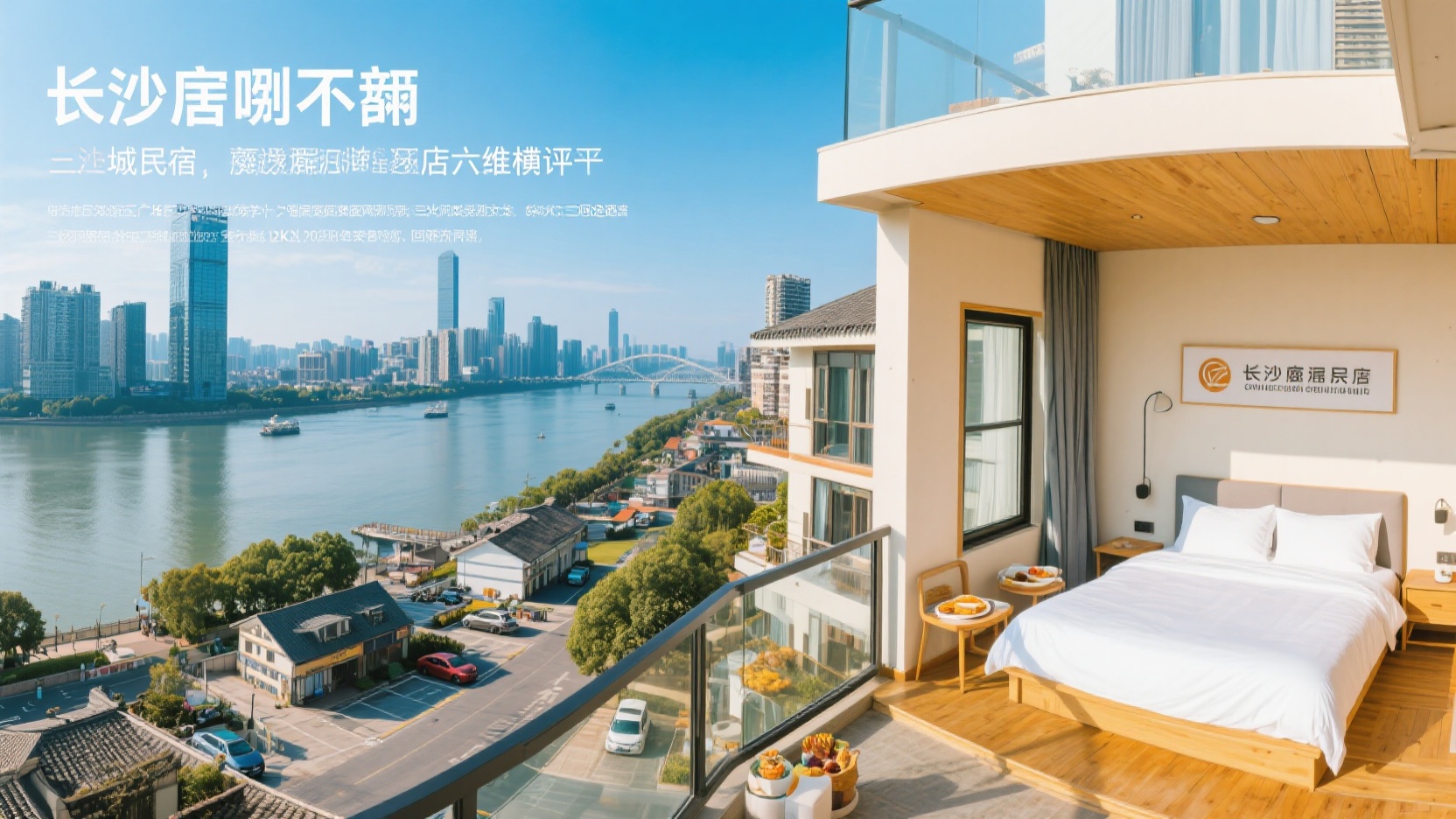
After trying out more than twenty accommodations in Changsha, I found that within the same budget range, the anxiety of choosing between guesthouses and chain hotels often stems not from the brand, but from the location. Apartment guesthouses in the same building and chain hotels across the street may be in similar locations, but the experience in terms of soundproofing, breakfast, parking, and luggage storage is completely different. This article divides Changsha into three representative areas, placing each area within a price range, and provides a horizontal comparison between boutique guesthouses and chain brand hotels.
First, let me explain the evaluation logic: six comparative evaluations within the same area and price range.
This time, instead of following administrative divisions or popular online lists, Changsha was divided into three areas based on actual travel scenarios: "University Town Area," "Wuyi Square Core Area," and "Beichen Riverside New Area." Each area was placed into a price range, and the experience of staying at a boutique homestay and a chain brand homestay was compared side-by-side. Among the six criteria, "location" refers to the actual walking distance to the subway or major attractions; "soundproofing" refers to whether sleep was disturbed at night; "cleanliness" refers to the cleanliness of bedding, bathroom, and corners; "breakfast" refers to whether it is included and its quality; "parking" refers to the number of parking spaces and ease of access; and "luggage storage" refers to the flexibility after check-out.
It needs to be clarified beforehand: the advantage of chain hotels is their stable minimum standard, while the advantage of boutique guesthouses is their higher maximum standard; neither is absolutely better or worse. The pitfalls the blogger encountered are mainly concentrated in the following categories: "good photos but remote location," "poor soundproofing in renovated old houses," and "lack of transparency regarding breakfast options."
II. Budget-friendly: In the university town area, the "atmosphere" of homestays is inferior to the "stable lower limit" of chain stores.
When budgets are squeezed down to the most economical options, many people look for accommodation near the Yuelushan University Town. Chain budget hotels in this area are typically located near bus stops or subway stations. Rooms are small but compact, hygiene is generally acceptable, bedding is mostly standard laundry, and while soundproofing is a weak point, it's still better than guesthouses in older neighborhoods. Breakfast is usually not included or only includes simple packaged food. Parking is almost nonexistent, and luggage can be left at the front desk but not overnight.
The biggest advantage of boutique homestays in this area is their space and design. Many are located in old residential buildings behind Lushan South Road, with independent desks and small kitchens, suitable for long-term stays or exam preparation. However, the locations require climbing hills or going through alleys, making it inconvenient to return late at night; soundproofing is a major problem, with the sound of flushing water upstairs and conversations in the hallway clearly audible; hygiene depends on the landlord's self-discipline, which can be great if you encounter a conscientious landlord, but you'll encounter a terrible experience if you encounter a negligent landlord; breakfast is mostly not provided, parking is nonexistent, and luggage storage requires a verbal agreement with the landlord, which can easily lead to problems if the landlord is not present.
Conclusion: For budget travelers, chain stores are more reliable, especially for solo travelers, late-night travelers, and those who only need to stay one night; homestays are suitable for regular guests who are out during the day, don't have high requirements for bathroom facilities, and have chosen a reliable host.
III. Comfortable Area: In the core area of Wuyi Square, chain brands have turned the tide with breakfast and invoices.
Mid-range budgets are the most popular choices in Changsha. Chain brands around Wuyi Square typically occupy office buildings or standalone properties, just a few minutes' walk from Huangxing Road and the IFS (International Finance Centre). These stores generally have consistent hygiene standards, standard mattresses and pillows, and mid-range soundproofing. Breakfast may be simple, but it's consistent. Some stores have limited parking or partnerships with parking lots, and luggage storage is available at the front desk, even after check-out for half a day. Standardized invoice and reimbursement processes are crucial for business travelers and frequent guests.
Boutique guesthouses in the same area are mostly located in high-rise apartments, near the river or shopping districts, offering significantly better night views and room designs for photos. However, most do not include breakfast, which must be obtained by going downstairs; there are long queues for the building's elevators during peak hours; soundproofing depends on the building's quality, as some apartments have floor-to-ceiling windows overlooking the river, but even those can be penetrated by a subwoofer from the neighboring building; parking is usually not available in designated spaces, requiring parking at the shopping mall and then walking; luggage storage requires communication with the guesthouse owner, and there may be no response if you check out in the early morning.
In conclusion: For comfort-oriented options, if you need breakfast, invoices, fixed parking, or late-night flight storage, chain brands are a more convenient choice; if the focus is on taking photos, cooking, and sharing costs with multiple people, then suites in homestays offer higher value.
IV. Quality-oriented: In the Beichen Riverside area, boutique homestays are beginning to surpass traditional homestays in terms of river views and service.
If your budget prioritizes quality, the Beichen Delta and Binjiang areas of Changsha are worth exploring. This area boasts numerous newly built residential complexes, ample parking, and well-managed properties. Boutique guesthouses often rent high-floor river-view rooms, featuring high-end renovations, brand-name mattresses, smart toilets, and dryers. Some even offer butler-style breakfast or breakfast from nearby partner companies. Hygiene and soundproofing are comparable to or even surpass mid-range chain hotels. Luggage storage can be delivered to the subway station or room in advance, offering greater flexibility. Ideal for couples celebrating anniversaries, families with children, or multi-day leisurely trips.
The area also boasts strong chain high-end brands, offering standardized room service, immediate invoicing, and 24/7 front desk. However, their room types are relatively homogeneous, and river-view rooms are limited in number, requiring advance booking to secure one. Breakfast options may surpass those of guesthouses, but they lack the authentic "staying in someone else's home" feel of guesthouses. Parking and luggage storage are well-organized, making them suitable for business banquets or those with strict adherence to procedures.
Conclusion: In the quality category, the gap between the two is narrowing. Homestays excel in river views and room types, while chain stores excel in service and certainty. For families or couples, prioritize high-floor suites in homestays; for those traveling with elderly people or requiring frequent night audits or invoicing, chain stores offer greater peace of mind.
V. Blogger's Summary: Ask three questions first, then choose the type.
After visiting these three areas, my biggest takeaway is: don't use a one-size-fits-all approach like "guesthouse or chain," but rather quickly narrow it down by considering "whether you need social interaction, breakfast, or an invoice." If you don't need any of these three, you can choose any hotel based on your budget and the area; if you need more than two of them, chain hotels offer greater certainty.
Practical Tips: First, Changsha hotel prices fluctuate greatly during holidays and weekends, so it's safer to book a room in popular areas a week in advance. Second, in the University Town area, try to choose accommodations near main roads with access control; don't be fooled by vague descriptions like "five-minute walk to the subway," check the actual route on a map. Third, for high-rise guesthouses around Wuyi Square, check the number of elevators and the floor; this will save you a lot of time returning late at night. Fourth, the Beichen Riverside area has plenty of parking spaces, making it suitable for those driving, but remember to confirm whether parking fees are included. Fifth, whether choosing a guesthouse or a chain, take photos before check-in, especially of the bathroom and doors/windows, to avoid disputes upon check-out. Sixth, if you need an invoice, be sure to ask in advance; many individual guesthouses cannot issue them, and asking upon arrival can put you at a disadvantage.
The last question prompts a quick selection based on three questions: "Do you want social interaction? Do you want breakfast? Do you want an invoice?" If you want social interaction or cooking, choose a homestay; if you want breakfast or an invoice, choose a chain; if you want all of the above, choose the one with the most comprehensive services in the quality category.