
Yinchuan locals' daily meals: 7 everyday street foods, from beef noodles in the morning to roasted lamb trotters late at night.
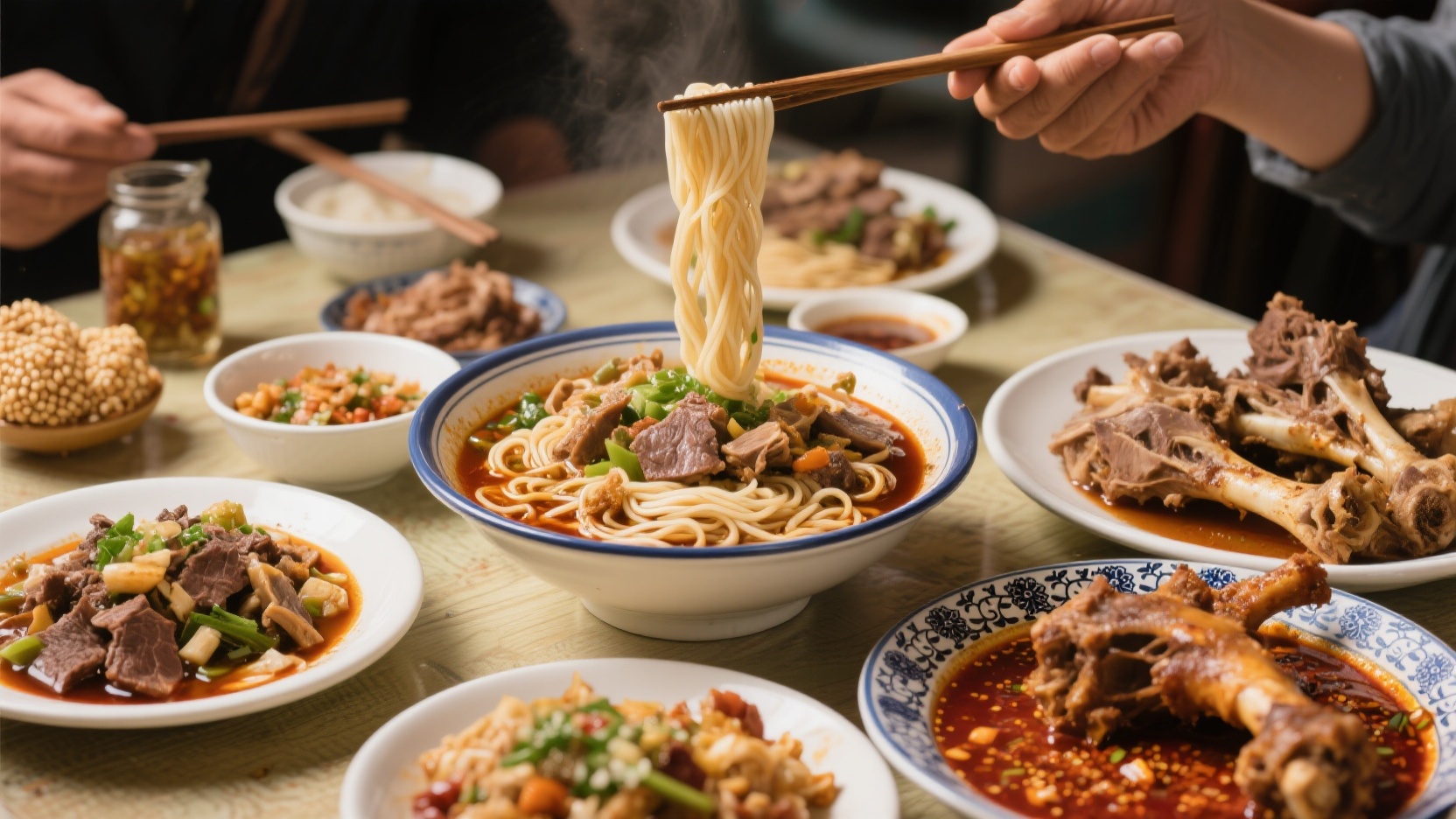
A day in Yinchuan rarely begins with a fancy brunch; instead, it starts with a bowl of hot soup, a piece of flatbread, or a plate of mutton. As the capital of the Ningxia Hui Autonomous Region, Yinchuan's daily cuisine revolves around mutton, noodles, and Hui snacks, with a focus on the natural flavors of the ingredients and the precise use of spices. Below are seven everyday street foods eaten by locals, categorized by time of day: morning, lunch, afternoon tea, and late at night.
Morning: Clear broth beef ramen
At 6:30 a.m., steam was already rising from the beef noodle shop downstairs in the residential building. Yinchuan beef noodles share the same origin as Lanzhou beef noodles, but have local preferences: the dough is made with high-gluten flour, salt, and alkali, and pulled into very thin or medium-thin strands; the beef bone and beef broth is simmered for several hours, resulting in a clear broth that highlights the beef bone aroma. Blanched white radish slices are placed at the bottom of the bowl, then the noodles are ladled in boiling broth, topped with diced beef, cilantro, and garlic sprouts, and finally a spoonful of mutton fat chili oil. The first taste is of clear, flavorful broth, chewy noodles that absorb the broth, and fragrant, not overpowering, chili oil. For office workers, adding a tea egg is a standard start to the day for Yinchuan locals.
Morning: Lamb offal soup with flatbread
Another group of breakfast diners opts for lamb offal soup. The sheep's head, stomach, heart, and lungs are cleaned and gutted, then cooked and sliced into strips or shreds. When reheating, a clear lamb broth is used as a base, along with pieces of lamb offal soup, chili peppers, and cilantro. Lamb offal soup is a traditional dish from the Yinchuan area. The gluten-free dough is poured into lamb lungs and cooked until tender. After being cut into pieces, it absorbs the broth like a sponge. The soup is bright red, with a strong, spicy flavor. The lamb stomach is crisp and chewy, the lamb offal soup is soft and tender, and there's a slightly numbing aftertaste from Sichuan peppercorns. Regular diners will also break off a piece of white bread and soak it in the soup, eating until they're drenched in sweat, feeling truly awake for the day.
Lunch: Hand-pulled mutton
In local eateries, hand-pulled mutton is often the star of group meals. It's made with Ningxia Tan sheep ribs or forelegs, placed in cold water with only Sichuan peppercorns, ginger slices, and salt. After skimming off any foam over high heat, it's simmered until a chopstick can easily pierce it. Good hand-pulled mutton isn't overly seasoned; the focus is on the tender texture and evenly distributed fat of the Tan sheep. Once served, it's cut into wide strips and accompanied by a vinegar and garlic sauce or dried chili salt. The lean meat is fine-fibered yet tender, and the fat melts in your mouth, with almost no gamey smell. For the people of Yinchuan, a weekday lunch isn't extravagant; a plate of hand-pulled mutton with steamed buns, mixed scallions, and a bowl of mutton soup makes for a hearty meal.
Lunch: Lamb noodles
When dining alone, mutton noodles with minced meat sauce are a more frequent choice. Diced mutton, potatoes, tofu, tomatoes, and garlic sprouts are stir-fried in hot oil until fragrant, then seasoned with chili powder, Sichuan peppercorn powder, and salt, and simmered in water to create a bright red broth. The noodles are handmade or pressed into thin, leaf-shaped pieces, cooked and then topped with the sauce. The broth should be plentiful and the noodles evenly distributed. The texture is distinct: the mutton is dry, fragrant, and chewy; the potatoes are soft; the tofu absorbs the broth; and the noodles are coated with a tangy, spicy, and savory sauce. This noodle dish embodies the characteristics of Ningxia noodles: "plenty of broth, rich flavor, and chewy noodles," and is the quickest way to fill your stomach in a small, unassuming street stall.
Afternoon tea: Eight Treasure Tea with Sugar Sesame Seeds
Around three or four in the afternoon, the tea stalls and snack shops in Yinchuan's old town experience a brief lull. Eight-treasure tea, made with tea leaves as a base, includes longan, red dates, goji berries, rock sugar, sesame seeds, raisins, and chrysanthemum. Boiling water is poured into a covered bowl and steeped, releasing a sweet aroma with the steam. Sugar-coated sesame cakes are Hui-style fried pastries, made with flour, eggs, brown sugar, and a little sesame oil. The dough is shaped into flower forms and then deep-fried until bright red. The outer layer is crispy, the inside soft, and the brown sugar imparts a caramel aroma that complements the sweetness of the eight-treasure tea. This combination of tea and dessert serves as both an afternoon snack to replenish energy and a common way for locals to entertain guests or chat.
Late at night: Spicy paste
As night falls, the most bustling food stalls in Yinchuan's night markets are undoubtedly those serving spicy hot pot. The broth for this dish doesn't use beef tallow; instead, it's a paste made from finely ground chili powder, cumin powder, Sichuan peppercorn powder, white sesame seeds, and starch. Water is added, brought to a boil, and then vegetables are cooked in the broth. Potato slices, bean curd sheets, beef tendon noodles, broccoli, and other ingredients are skewered on bamboo sticks, dipped in the broth, and coated with the red paste. It's fragrant, spicy, and thick; the spiciness comes from the chili powder, not the oil, making it intense but not greasy, with a slightly numbing aftertaste. Young people sit in small groups, chatting and enjoying their hot pot—a typical social scene after a long day at work.
Late at night: Roasted lamb trotters
The final dish at a late-night diner is often roasted lamb trotters. First, the lamb trotters are cleaned and trimmed, then simmered in a braising liquid with star anise, cinnamon, Sichuan peppercorns, dried chilies, and soy sauce until they become gelatinous and tender. They are then roasted over charcoal until the skin is slightly charred, and finally sprinkled with cumin, chili powder, and white sesame seeds. When you bite into it, the outer skin is crispy and fragrant, the tendons are soft and sticky, and the strong seasonings don't overpower the natural richness of the lamb trotters. This dish doesn't require much formality; it's perfect for enjoying slowly with beer, or as a satisfying end to a day's culinary journey.
From beef noodles in the early morning to roasted lamb trotters late at night, the people of Yinchuan eat their meals not in shopping districts but in the streets and alleys. A bowl of soup, a plate of meat, and a skewer of food connect the warmth and daily life of this city—from the main streets to the back alleys, you can understand this city through its food in a day.