
Tracing the Footsteps of the Western Xia Dynasty | Yinchuan: A Dialogue Between Ancient Western Xia Charm and Contemporary Art
Yinchuan, a pearl in the border region nestled amidst the Helan Mountains and nourished by the Yellow River, is not only the capital of the Western Xia Dynasty in the long river of history, but also a unique arena where diverse cultures blend and ancient and modern art converse. For travelers seeking a profound cultural experience, Yinchuan is far more than just a geographical location; it is a weighty epic waiting to be unfolded and a contemporary scroll slowly revealing itself. XOOTOUR's experienced destination column will meticulously plan a cultural and artistic journey through Yinchuan, guiding you through time and space to experience the city's profound cultural heritage and vibrant artistic vitality.
First stop: The former capital of Western Xia, the legacy of the dynasty.
Yinchuan's cultural foundation is deeply rooted in the mysterious Western Xia Dynasty, which once dominated Northwest China between the 11th and 13th centuries. Exploring Western Xia relics is the starting point for understanding Yinchuan's cultural heritage.
Western Xia Imperial Tombs: The Silent Guardians of the Eastern Pyramids
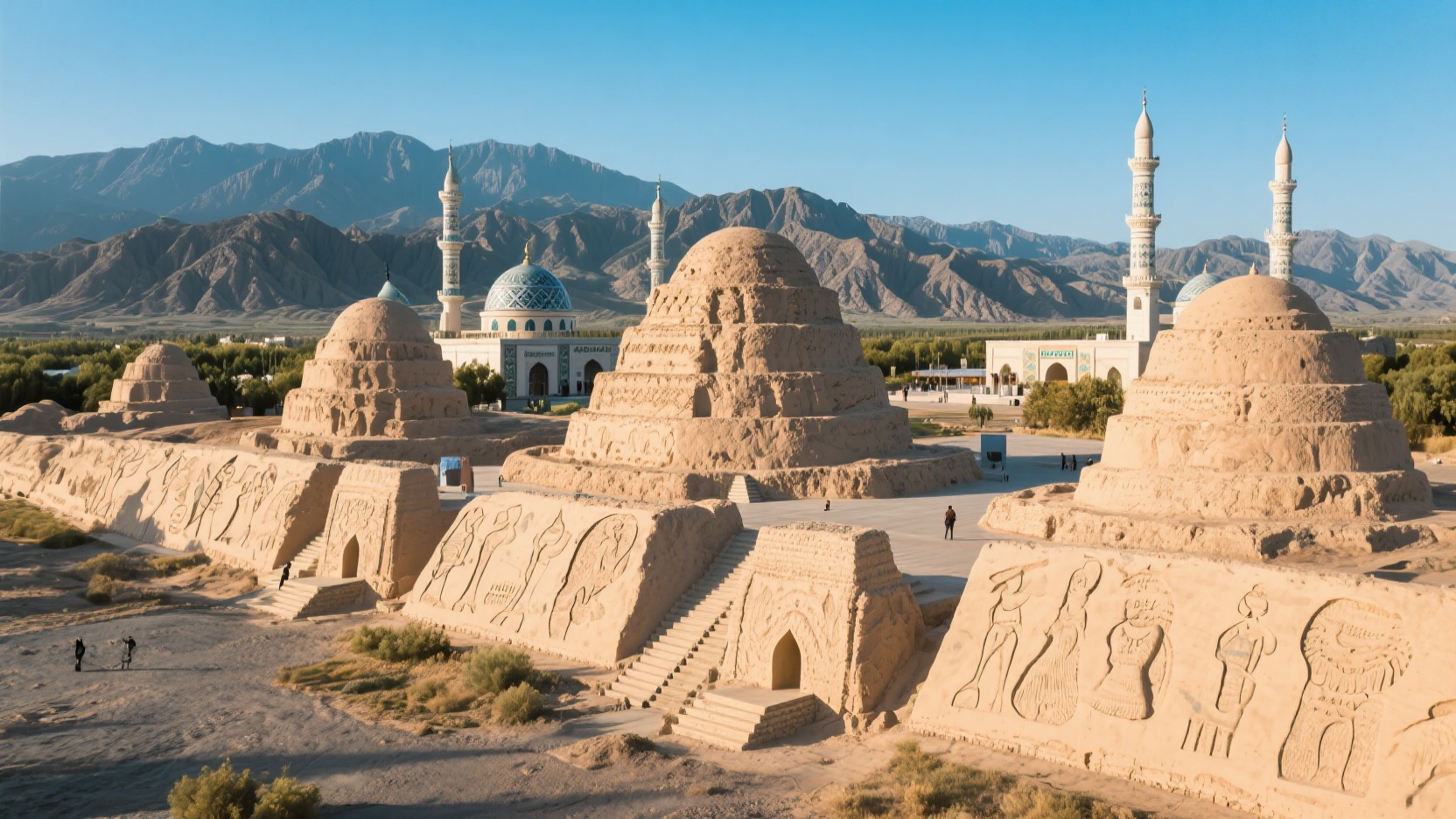
Located at the foot of the Helan Mountains, the Western Xia Imperial Tombs are the burial sites of the emperors and members of the royal family of the Western Xia dynasty, and are hailed as the "Oriental Pyramids." These rammed earth platforms, covered in loess and with clearly defined outlines, appear particularly magnificent and mysterious on the vast Gobi Desert. They are not merely tombs, but also symbols of the glorious civilization of the Western Xia dynasty. Their architectural style blends the characteristics of Han, Tibetan, and Tangut ethnic groups, and the unique "brick tower" structure of the mausoleums remains an unsolved mystery for archaeologists. Strolling among them, feeling the vicissitudes of a thousand years of wind and sand sweeping across the mausoleums, one can almost hear the whispers of the ancient dynasty and imagine the iron horses and golden spears and cultural creations of the Tangut people.
Western Xia Museum: Decoding the Code of a Lost Civilization
The Western Xia Museum, located adjacent to the royal tombs, is the best window into understanding Western Xia culture. The museum houses a large collection of precious artifacts, including Western Xia script, Buddhist statues, porcelain, and architectural components. Western Xia script, created by order of Li Yuanhao, the founding emperor of Western Xia, is characterized by its square shape and complex strokes, and is a significant symbol of the independence of Western Xia civilization. Through the exhibits, you can directly experience the achievements of the Western Xia Dynasty in politics, economy, military, culture, and religion, understand how it forged a unique path of development amidst the influence of Han and Tibetan cultures, and ultimately how it faded into the dustbin of history. The museum's exhibition design is excellent, using multimedia interactive methods to bring the distant history of Western Xia to life.
Second stop: The Jiangnan region north of the Great Wall, a place of diversity and integration.
Yinchuan's charm extends far beyond the Western Xia Dynasty. As an important node on the Silk Road, it has been a place where many ethnic groups and cultures have converged since ancient times, forming a unique "Jiangnan beyond the Great Wall" landscape.
Ningxia Museum: A Panoramic View of a Thousand Years of Splendor in the Frontier
The Ningxia Museum is a comprehensive platform for understanding the historical and cultural evolution of the entire Ningxia region. Its exhibitions cover prehistoric civilization, the history of the Western Xia Dynasty, Ming and Qing Dynasty frontier culture, and modern development. In addition to Western Xia artifacts, the museum's rich collection of stone tools, bronzes, Han Dynasty portrait stones, and Hui ethnic folk artifacts collectively paints a vivid picture of the exchange and integration among the various ethnic groups on this land. Here, you can systematically understand the unique contribution and position of Yinchuan and even the entire Ningxia region within the diverse yet unified framework of Chinese civilization. The museum's rich collection and clear narrative make it an ideal place for in-depth learning about the region's history and culture.
Najiahu Mosque: An Architectural Poem of Hui Culture
Located in Yongning County, the Najiahu Mosque is one of the most representative Islamic buildings in Ningxia and an important window into Hui culture. Originally built in the Ming Dynasty, the mosque has undergone numerous renovations and expansions, blending traditional Chinese palace architecture with Islamic elements. Its upturned eaves, bracket sets, painted beams, domes, and minarets coexist harmoniously, showcasing the wisdom and creativity of the Hui people in cultural integration. The exquisite brick carvings, wood carvings, and paintings inside the mosque silently tell the story of the Hui people's faith, art, and life. Visiting the Najiahu Mosque is not only about appreciating architectural art, but also about experiencing the cultural traditions and lifestyle passed down through generations of the Hui people, and witnessing a vivid portrayal of the harmonious coexistence of diverse cultures in Ningxia, known as the "Jiangnan of the Northwest."
Third stop: At the foot of Helan Mountain, new artistic talents emerge.
From ancient dynastic ruins to the integration of diverse ethnic groups, Yinchuan's cultural exploration ultimately turns its attention to the foot of the Helan Mountains, where not only are there artistic imprints of ancient humans, but also the flourishing development of contemporary art.
Helan Mountain Rock Paintings: The Artistic Code of Ancient Humans
The Helan Mountain rock paintings are a world-class cultural heritage, recording the life scenes, religious beliefs, and aesthetic concepts of ancient humans in the Helan Mountain region. Tens of thousands of rock paintings are carved into the black rocks of the Helan Mountains, depicting hunting, herding, dancing, sacrifices, and various mysterious symbols and human faces. These bold yet vibrant lines are a primitive art form representing the dialogue between prehistoric humans and nature, and precious evidence of the early artistic development of human civilization. Standing before the rock paintings, gazing at these millennia-old carvings, one can almost travel through time and space, engaging in a silent dialogue with the ancient artists, and experiencing the source and enduring charm of human artistic expression.
Yinchuan Contemporary Art Museum: An Art Oasis with an International Perspective
Located within the Yellow River Wetland Park, the Museum of Contemporary Art Yinchuan (MOCA Yinchuan) is a modern work of art in itself, its unique architecture a testament to its heritage. With a curatorial philosophy of "global vision, local concern," the museum is dedicated to collecting, researching, and exhibiting contemporary art from China and around the world, with a particular focus on artistic exchange with countries along the Silk Road. The museum regularly hosts high-level international art exhibitions, connecting the ancient city of Yinchuan with global contemporary art trends. Here, you can appreciate diverse art forms and experience how art reflects the times, critiques reality, and envisions the future. MOCA Yinchuan is not only a temple of art but also a bridge for cultural exchange, adding a vibrant modern chapter to Yinchuan's cultural and artistic journey.
A cultural and artistic journey through Yinchuan is a profound experience that transcends time and integrates diverse cultures. From the grandeur of the Western Xia Imperial Tombs to the mystery of the Helan Mountain rock paintings, from the vastness of the Ningxia Museum to the innovation of the Yinchuan Contemporary Art Museum, every step carries the weight of history and the brilliance of art. Slow down, savor the moment, and you will discover that Yinchuan is far richer and more captivating than you imagined.