
Shenzhen 5-Day 4-Night Relaxing Trip | A Personal Review and Tips for Taking Parents on a 2-Hour Nap Every Day (with a 20-Item Packing Checklist)
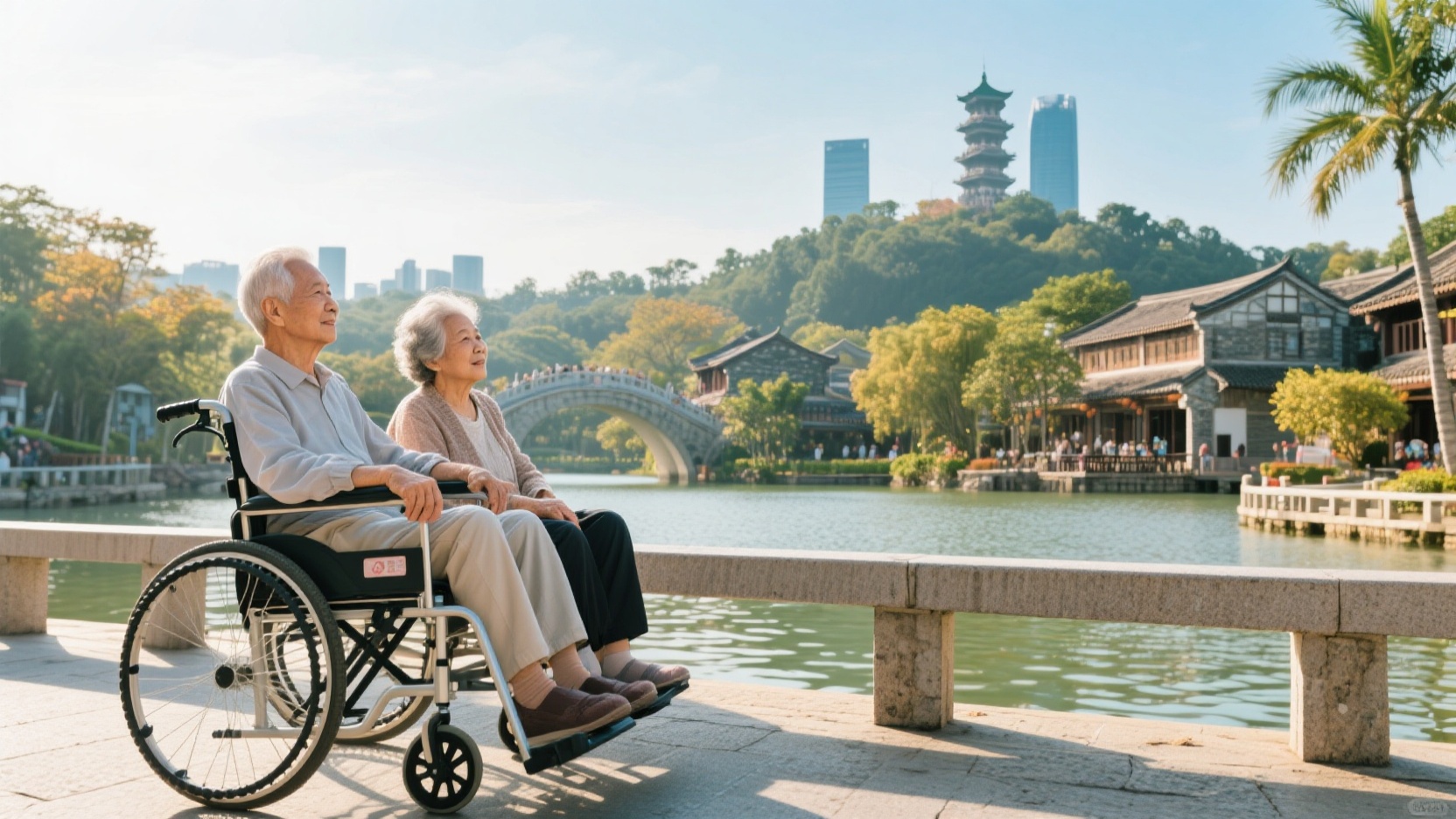
After spending five days in Shenzhen with my parents, I scrapped my original itinerary of three attractions per day. Shenzhen may seem young, but the best way to experience it for seniors isn't by checking off tourist spots, but by prioritizing "elevator access, restroom availability, lunch break time, and hospital proximity." This is a revised, "laid-back" five-day, four-night itinerary based on my second scouting trip, with only one or two key locations planned for each day, ensuring we're back at the hotel by 2 PM.
First, define your "lunch break radius": choose a hotel in Futian or Nanshan districts, and make sure it's close to a hospital and subway station.
When bringing parents to Shenzhen, be sure to choose a hotel directly above a subway station or with a connecting walkway to avoid having to cross a pedestrian bridge after exiting the station. I personally tested this and stayed near the Futian Civic Center, where the subway and shopping mall are downstairs. The entire route from the room to the platform is accessible by elevator, and it takes no more than 20 minutes to get to Shenzhen Bay or Lianhuashan. Shenzhen Metro has a high coverage of accessible elevators, but it gets very crowded during rush hour, so I recommend going out after 9:30 am. I previously took them to stay at a sea-view hotel in Yantian; the view from the window was beautiful, but there was a long slope right outside the lobby, which the elderly couldn't climb, so we changed hotels the next day.
When choosing a room, I consider three things: the distance between the toilet and the bed, whether there's a shower bench or a shower chair available, and whether there are continuous handrails in the hallway and elevator area. Most mid-range chain hotels in Shenzhen provide shower benches. If you note "elderly guests" when booking, the front desk will usually give you a room on a lower floor near the elevator. Hospitals like People's Hospital and Peking University Shenzhen Hospital (level II and above) are all within a 15-minute drive of the main urban areas of Futian and Nanshan districts, which is why I insist on not staying in Yantian or Dapeng.
Part Two: The "Non-Slope Version" of Shenzhen Bay Park and Lianhuashan Park
Don't try to do too much after arriving on the first day. Go to Shenzhen Bay Park in the afternoon. There's a gentle slope from the subway station to the seaside boardwalk, accessible by wheelchairs and walkers. There are many toilets along the boardwalk, one every few hundred meters, and most have accessible restrooms. We only walked a short section from Mangrove Station to Talent Park, about forty minutes one way, and then sat on the stone benches to enjoy the sea view. The University of Hong Kong-Shenzhen Hospital is near Shenzhen Bay; in case of chest tightness or a fall, it's within a ten-minute drive.
The next morning, we went to Lianhuashan Park. Many travel guides recommend that elderly people climb to the summit plaza, but I don't suggest that. Instead, take the park's electric shuttle bus directly from the South Gate to the summit. After getting off, the flat path is only a couple hundred meters long, and the elevators and ramps are wide enough. The restrooms at Lianhuashan are very clean, mainly located at the South Gate and the summit. We left at 11:30 am, returned to the hotel for lunch and a two-hour rest. In the afternoon, if energy permits, we went to the new Shenzhen Museum to enjoy the air conditioning. The elevators inside the museum go directly to each floor, and each floor has benches and drinking fountains.
3. On the third day, choose one of the following: Gankeng Ancient Town Slope Route or Mission Hills Hot Spring Resort.
On the third day, let your parents decide. If you want to explore an ancient town, go to Gankeng Hakka Ancient Town. Don't enter from the main gate; enter from the south gate to avoid the steps. The main alley has smooth stone slabs, but some side alleys have slopes, so it's recommended to only walk on the main road. There are many toilets in the ancient town, and the visitor center has accessible toilets. It's about a 20-minute drive from the Second People's Hospital of Longgang District. Spend an hour and a half exploring in the morning, then return to the hotel for a nap after lunch. In the afternoon, you can either have tea or stay home.
If you'd like to soak in a hot spring, Mission Hills Hot Spring Resort is more suitable for seniors than OCT East because you don't need to go up the mountain, the changing rooms and hot spring pools are on the same floor, the floor is non-slip, and there are sitz baths available. Limit your soak to 40 minutes. There's a shopping mall next door for convenient supplies. The only thing to be careful about is that the water temperature shouldn't exceed 40 degrees Celsius, and be sure to drink warm water afterwards.
IV. Last two days: Boat tour at Sea World and electric cart ride to Fairy Lake Botanical Garden to conclude the day.
On the fourth day, we went to Sea World. From the subway station to the Minghua Ferry Terminal, it was all flat ground and a plaza with no steps. The restrooms were located on the second and first floors of the mall, accessible by elevator, and the Shekou People's Hospital was right next door. I didn't want to board the cruise ship; I just watched the ships and the sunset from the shore. The elderly person wasn't seasick and we weren't in a rush. After lunch, we returned to the hotel for a two-hour nap as usual.
On the fifth day, after checking out, head to Fairy Lake Botanical Garden. Be sure to take the park shuttle bus from the main entrance to Hongfa Temple or Heaven on Earth; do not walk uphill yourself. The park shuttle buses run frequently, and staff will assist wheelchair users. While Fairy Lake Botanical Garden has many slopes, the walking distance can be kept under 20 minutes with the shuttle bus. For the return trip, it is recommended to allow 1.5 hours to reach the airport or high-speed rail station; avoid arriving late.
V. Blogger's Summary: Slow swimming isn't about walking less; it's about minimizing the risk of every movement you make.
After five days, my biggest takeaway is that Shenzhen is not so much about the tourist attractions themselves, but rather its excellent accessibility and abundant medical facilities. Planning only one or two stops each day, returning to the hotel before 12:30 PM, heading out again at 2:30 PM, and returning to the hotel at 4:30 PM – this "lunch break-style tourism" actually produces more photos than rushing around, and feels more like genuine companionship.
The following list is the final version I prepared when packing my parents' luggage; I suggest you copy it directly:
1. Two pairs of non-slip soft-soled shoes; 2. A foldable lightweight seat cushion; 3. ID card and social security card; 4. Reduced printouts of past medical records; 5. Foldable trekking poles or four-legged walking sticks; 6. Original packaging of commonly used medications (unopened); 7. Blood pressure monitor and finger pulse oximeter; 8. Insulated water bottle; 9. Individually packaged nuts or soda crackers; 10. Anti-lost wristband with buckle; 11. Disposable raincoat; 12. Light jacket and knee pads; 13. Portable urine bag and disinfectant wipes; 14. Mobile phone power bank and emergency contact card; 15. Small medicine containers, but with the instructions retained; 16. Spare batteries for reading glasses and hearing aids; 17. Non-slip shower slippers; 18. Two foldable shopping bags; 19. Sun hat and sunglasses; 20. A small pack of tissues and hand sanitizer.
You should have enough of the following five types of commonly used medications: 1. Antihypertensive drugs and cardiac emergency medications; 2. Hypoglycemic drugs and glucose tablets; 3. Cold and fever reducers; 4. Gastrointestinal medications and oral rehydration salts; 5. External medications such as adhesive bandages, iodine swabs, and liniments. Do not check any medications in; carry them with you, along with a small card listing your medical history and allergies.