
Staying in Shenzhen | In-depth analysis of five distinctive accommodation areas to help you choose the best place to stay
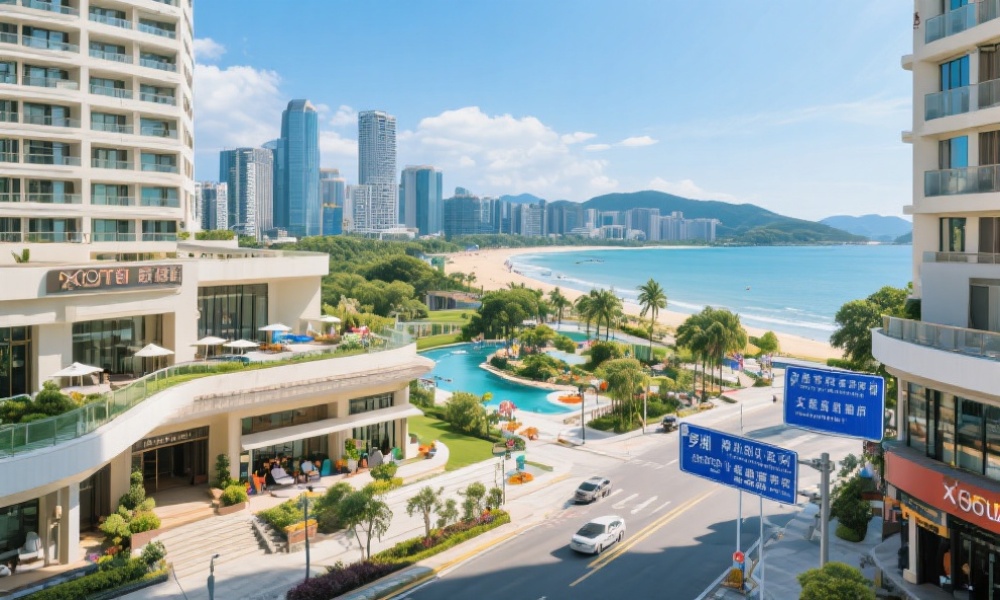
Shenzhen, a vibrant international metropolis, attracts business travelers, technology innovators, cultural explorers, and leisure vacationers with its unique charm. For first-time visitors or repeat travelers, choosing an accommodation area that matches their travel purpose is crucial. This article will provide an in-depth analysis of five core accommodation areas in Shenzhen from a professional perspective, aiming to offer precise reference for your accommodation decisions.
1. Luohu District | Suitable for: Cross-border transit, shopping and dining, nostalgic exploration, and first-time visitors to Shenzhen.
Luohu District, as one of the earliest developed districts in Shenzhen, bears the historical imprint of the city's development. Its geographical location adjacent to Hong Kong, with multiple land border crossings such as the Luohu Port and the Wenjindu Port, makes it a crucial hub connecting Shenzhen and Hong Kong. Therefore, for travelers who frequently travel to and from Hong Kong or use it as a cross-border transit point, Luohu District is undoubtedly the first choice.
Advantages: Extremely convenient transportation, with Luohu Railway Station and Metro Station forming a comprehensive transportation hub; a strong commercial atmosphere, with Dongmen Old Street, King Glory Plaza, and other places offering a wide range of shopping and dining options, from local snacks to international cuisine, satisfying all kinds of "shopping and eating" needs; diverse hotel options, from budget chain hotels to international brand five-star hotels, covering a wide range of budgets; mature living facilities, with complete medical, educational, and entertainment facilities.
Shortcomings: Some areas have relatively old buildings, and the pace of urban renewal is relatively slow; there is a huge flow of people during peak hours, which may lead to overcrowding; compared with emerging areas such as Futian and Nanshan, there is a lack of large-scale modern cultural and artistic facilities or high-end business environments.
2. Futian District | Suitable for: Business travelers, high-end shopping, city center experiences, and conference attendees.
Futian District is Shenzhen's Central Business District (CBD), characterized by its towering skyscrapers and modern atmosphere. It is home to numerous financial institutions, multinational corporate headquarters, the Shenzhen Convention and Exhibition Center, and the Civic Center, among other iconic buildings, making it the economic and administrative core of Shenzhen.
Advantages: A highly developed transportation network with a dense network of subway lines providing rapid access to all districts of the city; abundant high-end hotel resources, including numerous internationally renowned brands offering first-class service and facilities to meet high-standard business and leisure needs; an exceptional shopping experience with upscale shopping centers such as MixC and COCO Park, bringing together international brands; a beautiful surrounding environment with parks like Lianhuashan Park and part of Shenzhen Bay Park providing urban oases suitable for both business and leisure; and unparalleled convenience for business travelers attending exhibitions or large conferences, as it is the location of a convention and exhibition center.
Weaknesses: Accommodation and dining costs are generally high; nightlife is relatively monotonous, mainly concentrated in high-end bars or shopping districts; it lacks the atmosphere of traditional urban life and is more inclined towards the fast pace of modern cities.
3. Nanshan | Suitable for: Families with children, art and culture enthusiasts, tech and business people, seaside leisure, and travel/living experiences.
Nanshan District is a hub for technological innovation and a cultural tourism area in Shenzhen, boasting renowned universities and technology companies such as Shenzhen University, Tencent, and DJI, as well as numerous theme parks and cultural attractions including Window of the World, Splendid China, Happy Valley, and OCT Creative Culture Park. Its long coastline also provides abundant seaside leisure resources.
Advantages: Abundant and diverse tourism resources, integrating culture, entertainment, and technology, especially suitable for families with children to explore in an educational and entertaining way; hotels offer both unique features and quality, ranging from themed hotels to sea-view apartments to meet the needs of different families and groups; large coastal leisure areas such as Shenzhen Bay Park and Talent Park provide excellent walking, running, and sea-viewing experiences; international and creative dining options cater to various regional flavors; numerous emerging communities in the area offer a beautiful environment suitable for medium- to long-term stays.
Disadvantages: The area is large, and the distance between attractions may be far, so travel needs to be planned carefully; traffic congestion is obvious in some areas during peak hours; some high-end hotels are quite expensive.
4. Bao'an District | Suitable for: Airport transit passengers, business travelers, those in the airport-related economy, and emerging leisure industries.
Bao'an District is located in western Shenzhen and boasts two major city-level infrastructure projects: Shenzhen Bao'an International Airport and Shenzhen World Exhibition & Convention Center. In recent years, with the development of the Greater Airport New City, Bao'an District is rapidly emerging as a new economic growth engine and transportation hub in western Shenzhen.
Advantages: It is closest to Shenzhen Bao'an International Airport, making it extremely convenient for passengers traveling to and from Shenzhen by air or those needing to transfer. Nearby hotels offer free shuttle services. It boasts the world's largest convention and exhibition center—Shenzhen World Exhibition & Convention Center—making it an ideal choice for exhibitors and visitors. In recent years, large-scale commercial complexes such as One Avenue and Happy Harbour have been added, providing diverse options for shopping, dining, and entertainment. The coastal resources have great development potential, with attractions such as the "Bay Area Light" Ferris wheel at Happy Harbour becoming emerging leisure landmarks.
Disadvantages: It is far from the city center of Shenzhen (Futian and Luohu), and it takes a long time to get to the core attractions; some areas are still under development and construction, and urban infrastructure is still being improved; outside of the exhibition period, the occupancy rate of some hotels may fluctuate greatly.
5. Yantian/Dapeng | Suitable for: Seaside vacations, nature retreats, family vacations, road trips
Yantian District and Dapeng New District, located in eastern Shenzhen, boast a long coastline, high-quality beaches, and abundant mountain and sea resources, earning them the title of Shenzhen's "back garden." Far from the hustle and bustle of the city, their unique natural scenery and resort atmosphere attract travelers seeking relaxation.
Advantages: Beautiful natural scenery, with famous beaches such as Dameisha, Xiaomeisha, Jiejiaosha, and Xichong, as well as hiking destinations like Wutong Mountain and Qiniang Mountain; a wide selection of resort hotels and guesthouses, from luxury resorts to unique seaside inns, catering to different budgets and styles; offering a variety of water activities and seafood experiences; excellent air quality and a tranquil environment, making it an ideal destination for leisure and family vacations; suitable for self-driving tours, allowing exploration of multiple attractions along the coastline.
Disadvantages: Transportation is relatively inconvenient, as it is far from the city center of Shenzhen, and public transportation options are limited, with driving being the main mode of travel; some attractions are crowded during holidays, which may affect the experience; dining and shopping options are relatively concentrated and not as diverse as in the city center.
In conclusion, choosing accommodation in Shenzhen should be precisely matched to your specific itinerary, travel purpose, and preferences. If your primary focus is on business conferences or exploring the city center, Futian is an ideal choice; if you frequently travel to Hong Kong or prefer traditional local life, Luohu is more suitable; families with children or science and culture enthusiasts should consider Nanshan; for airport transfers or attending large-scale conferences, Bao'an's convenience is irreplaceable; and for those seeking a mountain and sea retreat and tranquil relaxation, Yantian and Dapeng are your best choices. XOOTOUR suggests that when planning your itinerary, you should first identify your core activity areas, and then use this as a basis, combined with the characteristics of each area, to make the accommodation decision that best suits your needs.