
Old Shenzhen in the Festivals: Practical Ways to Enjoy Xiasha Big Pot Dish, Nan'ao Grass Dragon Dance, Shatoujiao Fish Lantern Dance, and the Heritage Day Market
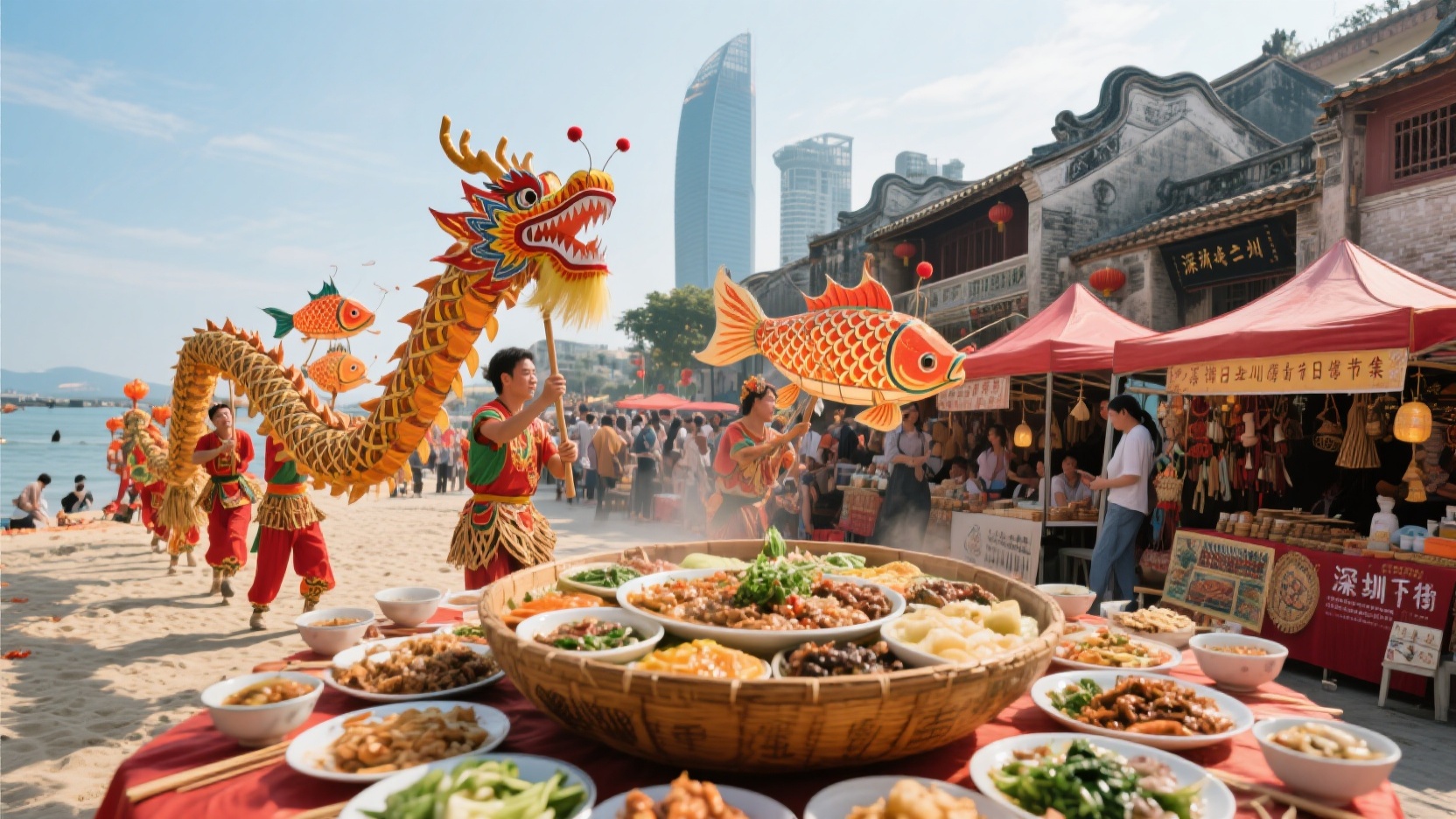
Traditional cultural experiences in Shenzhen are often obscured by skyscrapers and commercial districts, but by exploring villages, seaside resorts, and ancient towns according to the lunar calendar, one can still encounter living intangible cultural heritage. The following four locations are perfect for more than just a quick visit; allow half a day to enjoy a traditional village feast, watch a sea-worshiping dragon dance, follow a procession of fish lanterns at night, or complete a handmade craft in a market. It's recommended to use January, February, Mid-Autumn Festival, and June as your time references, rather than trying to visit all four at once; traveling according to the seasons will create a more natural experience.
Around the Lantern Festival (January 15th of the lunar calendar): The Xiasha Big Pot Feast, where people sit around a pot to eat and reminisce about their clan.
Xiasha Big Pot Dish is the most representative clan-based culinary custom in Futian District, Shenzhen. It is usually held around the Lantern Festival (January 15th of the lunar calendar) or on important ancestral hall celebrations at the Xiasha Village Ancestral Hall Square. Hundreds of round tables are arranged along the alleyways, allowing villagers and tourists to dine together. The dish is served in layers in a wooden basin: the bottom layer contains radishes and pork skin; the middle layer contains braised pork and dried eel; and the top layer contains sliced chicken, roast duck, dried oysters, and fresh shrimp. The ingredients are pre-cooked and then heated in the basin before the meal. The focus of the experience is not on individual dishes, but on the order of "sharing the food together": before the meal, clan elders preside over a ceremony; during the meal, family stories are passed down orally; everyone at the table shares a single basin, and the food is eaten until it's almost empty. Radishes, soaked in the meat broth, are often the most popular. Tourists who wish to experience this can arrive in Xiasha Village before the Lantern Festival, watch the preparation and plating of the dish in the afternoon, and then join the feast in the evening to experience the commotion of thousands sharing a meal. This custom is said to be related to the practice of villagers contributing vegetables to support the army at the end of the Southern Song Dynasty, and later evolved into a symbol of identity based on shared ancestry.
On the evening of the second day of the Lunar New Year: the Nan'ao Grass Dragon Dance and the Tanka fishing fire sea worship ceremony.
The Nan'ao Grass Dragon Dance is a traditional New Year custom of the Tanka fishermen in Nan'ao Subdistrict, Dapeng New District, Shenzhen, held annually on the night of the second day of the Lunar New Year. The grass dragon, made on-site from fresh sword grass and vines, is dozens of meters long and its body is adorned with incense sticks. As night falls, the fishermen first perform an "eye-dotting" ceremony on the beach, followed by a shirtless dragon dance parade along the coastline accompanied by the sounds of gongs, drums, and firecrackers. Finally, the grass dragon is thrown into the sea and burned, signifying sending the dragon back to the sea and taking away misfortune. Tourists can arrive at the beach early in the evening to watch the dragon-making procession conclude. During the parade, walk along the outer edge of the procession, but do not crawl over the dragon's body or touch the burning incense. This ceremony carries the Tanka people's memories of "living off the sea." The grass dragon is not permanently preserved; it is burned after the ritual, and this "use and burn" nature lends it a raw and authentic feel.
Lantern Festival, Mid-Autumn Festival and Tin Hau's Birthday: Fish Lantern Dance in Sha Tau Kok, Schools of Fish Swimming Through the Night
The Shatoujiao Fish Lantern Dance, originating from Shalanxia Village in Yantian District, was listed as a national intangible cultural heritage representative project in 2008. It is typically performed on the nights of the Lantern Festival, Mid-Autumn Festival, and the birthday of the goddess Tin Hau, usually in open spaces within the village or in front of the Tin Hau Temple. Dancers, dressed in dark clothing, crouch and move low, holding fish lanterns to mimic the tail-wagging, feeding, and schooling movements of fish such as yellow croaker, grouper, and mackerel. At night, candles are lit inside the fish lanterns, making them appear from a distance like a school of fish swimming across the land. Besides watching the parade, visitors can also observe the lantern-making demonstrations before and after the performance: bamboo frames, silk covers, and hand-painted scales. In some performances, spectators are allowed to try holding a simplified fish lantern. The story behind the dance is related to the migration of the Wu family of Shalanxia during the Ming and Qing dynasties and the near-shore fishing industry. The segments in the dance such as "fish searching for food" and "fish darting across the beach" are essentially the result of fishermen's long-term observation of fish behavior rather than purely stage choreography.
June Cultural Heritage Day: Nantou Ancient City Intangible Cultural Heritage Market - Sit down and be a craftsperson for half a day.
Around the time of "Cultural and Natural Heritage Day" in June each year, Nantou Ancient Town usually hosts a Shenzhen Intangible Cultural Heritage-themed market. This market brings together projects scattered throughout the town, offering opportunities to experience multiple crafts at once. Common stalls include Tian's paper cutting, Xia's windmill making, Xiangyun yarn dyeing and finishing, fish lantern making, and Guangcai painting. It's recommended to allow at least three hours: first, quickly browse and identify the projects along the main street of the ancient town, then choose one or two to try. At the paper cutting stalls, the inheritors will teach you from folding the paper to cutting, and you can take the finished product home. The Xiangyun yarn experience area demonstrates segments of the process of dyeing with yam juice and covering with river mud; because the complete process is time-consuming, most of the exhibits are small square scarves. The significance of the market is not shopping, but rather transforming "seeing intangible cultural heritage" into "half a day of hands-on experience." As Shenzhen is a city of immigrants, these projects mostly came with different ethnic groups, and their concentrated presentation in the ancient town forms a beautiful cultural mosaic.
These four scenarios collectively illustrate that Shenzhen's intangible cultural heritage is not confined to glass cases in museums, but rather found in the steaming aroma of the traditional potluck feast in ancestral hall squares, the fireworks of dragon-burning ceremonies by the sea, the flickering candlelight inside fish lanterns, and the guidance of artisans in markets. If you can only choose one trip, January and June are the easiest times to participate; if you want to follow the seasons, Nan'ao on the second day of the Lunar New Year and Shatoujiao on Mid-Autumn Festival night are closer to the original experience.