
Avoid these terrible accommodations in Quanzhou | Local testimonials: These 3 trendy spots are not worth staying at; these 5 are truly worthwhile.
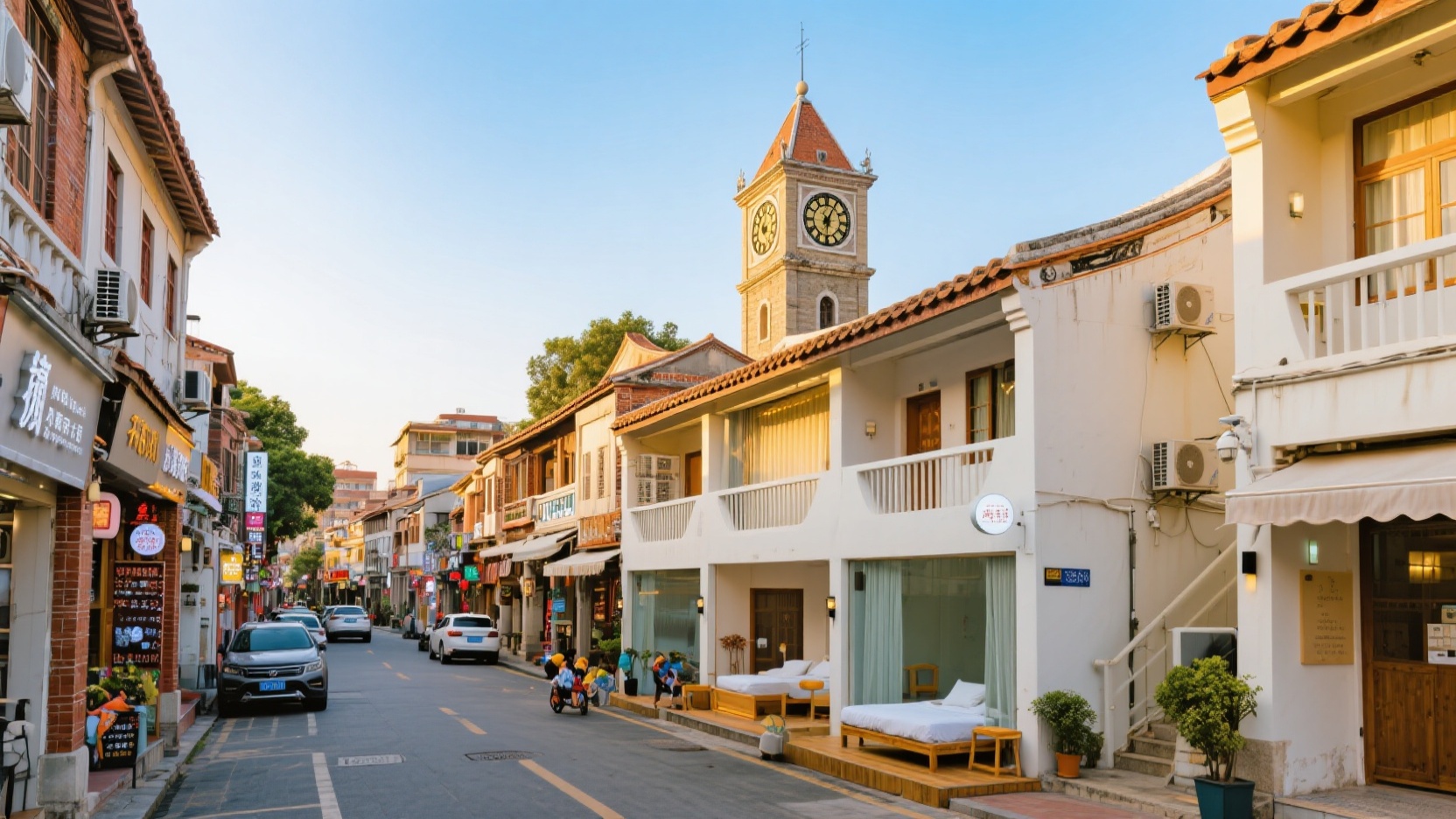
If someone stays near the Bell Tower on West Street during their first visit to Quanzhou, eight out of ten will be woken up at 2 a.m. by the simultaneous sounds of loud bass from bars and the dragging of suitcases on the stone-paved streets—this isn't a problem with the guesthouse, it's a problem with the area they chose.
Many travel guides translate "staying near tourist attractions" directly as "convenient accommodation," but in Quanzhou, the core area of the ancient city is precisely where sleep, safety, and travel efficiency are the worst. Below, we'll first break down three frequently recommended "Instagrammable" areas, and then provide five truly suitable local residential areas. Quanzhou currently does not have a subway; commuting times mentioned below are calculated using taxis or buses.
Avoid staying in the area around West Street and the Clock Tower: what tourists see as "zero distance," locals see as a "noise trap."
West Street and the Bell Tower are the main thoroughfares of Quanzhou's ancient city, with a high concentration of guesthouses. However, locals rarely arrange to host friends and family here. The biggest pitfall is that while the guesthouses appear "close," many are actually hidden in back alleys, inaccessible by car, and dragging luggage along cobblestone streets can be incredibly arduous.
The nights are even more chaotic. Bars, milk tea shops, and late-night food stalls along West Street stay open very late. The old wooden houses have poor sound insulation, so the sounds of slippers upstairs and conversations next door can be heard clearly. Some alleys are dimly lit late at night, making it unsettling for solo tourists to return home.
Parking is practically impossible. Private vehicles are restricted within the old town, and parking spaces are extremely limited. So-called "guesthouses with parking spaces" often require walking hundreds of meters to a public parking lot. Dampness, mosquitoes, and musty smells during the humid season are also unavoidable problems with old houses.
Don't stay in area 2: LingSHOW Tiandi and Quanxiu Road bar street. While convenient for nightlife, the real problem is you won't be able to get home late at night.
LingSHOW Tiandi and the Quanxiu Road area are marketed as "convenient for nightlife," but if you're not specifically there to club, staying here is just asking for trouble. Noise from people leaving clubs at 2 or 3 a.m., drunken shouting downstairs, and the smell of alcohol in the elevator are all common occurrences.
Traffic is even more troublesome. Quanxiu Road is severely congested during the evening rush hour and on weekends. Although it's not far from West Street and the Confucian Temple as the crow flies, taking a taxi often takes more than 20 minutes. When waiting for a bus on the roadside, pedestrians and vehicles mingle, making it unsafe late at night. Parking spaces are scarce and expensive, resulting in a poor driving experience.
Don't stay in the third area: near Quanzhou Station. It seems convenient for catching trains, but it's actually far from the old city and quite desolate.
The area around Quanzhou Station is usually recommended because it's convenient for catching early morning trains. However, Quanzhou Station is not close to the ancient city and major attractions. Even without traffic, it takes more than 20 minutes to get to West Street by taxi. This convenience only applies to very early trains; it's not cost-effective at other times.
The surrounding area has few restaurants, many large trucks, dim streetlights, and is quite deserted at night; there are also unlicensed taxis soliciting passengers. Some so-called hotels are converted residential buildings, and hygiene and management are a matter of luck. If it weren't for the high-speed train arriving in the early morning, there would be no need to stay in this area.
Quanzhou doesn't have a subway, but the ancient city isn't very large; a taxi ride from the secondary core area into the ancient city usually takes only about ten minutes. The following five areas are categorized according to the number of people, instead of vaguely stating "how far is it from the attractions?"
Accommodation 1: The area around West Lake Park, suitable for families with cars and those who want a good night's sleep.
This area is about a 10-15 minute taxi ride from West Street and Kaiyuan Temple, and there are also frequent bus routes. It's a residential area familiar to locals in Quanzhou. There are plenty of local breakfast, noodle soup, and beef restaurants nearby, so you don't need to go all the way to the old town in the morning.
Residents stroll in the evenings, and the main streets are well-lit, making you feel safe. Parking is much better than in the old town; most hotels have parking spaces, and public parking is relatively easy to find. It's suitable for families with cars, those who enjoy quiet parks, and those who want to sleep through the night.
Accommodation 2: Along Citong Road and Fengze Street, the least likely residential area to disappoint first-time visitors to Quanzhou.
This area is a long-established urban lifestyle hub with frequent bus routes. It takes about 10 to 15 minutes by taxi to West Street and the Confucian Temple, and it's also not far to Wanda Plaza in Puxi. There are many local snack shops and Minnan restaurants nearby, offering a wide variety of late-night dining options.
The main road is well-lit at night, the sidewalks are wide, and the area is safe. Parking is adequate; some hotels have underground parking garages, and roadside parking is more plentiful than in the old town, but it can still be crowded during rush hour. It's suitable for first-time visitors to Quanzhou who want convenient transportation but don't want to be bothered by the noise of the old town.
Accommodation 3: The Zhongjun World City area in the east of the city, a cost-effective option for families with children, long-term stays, and those traveling by car.
It's about a 20-25 minute taxi ride from the ancient city. When there's no traffic, the roads are smooth, resulting in a more well-organized community and ample parking. There are many shopping malls and a wide variety of dining options, including local chains and Fujian cuisine, so children and the elderly don't have to squeeze into the ancient city.
The community is new, with excellent streetlights and surveillance, making it safe to return home late at night. Parking is convenient, with ample spaces available at hotels and shopping malls. Suitable for families with children, long-stay tourists, and travelers driving in and out of Quanzhou.
Accommodation 4: The Donghai Main Street area, for those who prefer a quiet sea view and want to visit Xunpu Village.
It's about a 20-30 minute taxi ride from the old town, but very close to Xunpu Village, offering a good escape from tourist crowds. Local amenities are readily available, with plenty of seafood stalls and Minnan cuisine restaurants, ensuring plenty of options for dinner. The area is predominantly residential, quiet, safe, and with convenient parking.
Avoid the trendy river-view apartments above Taihe Plaza; there are many restaurants and bars downstairs, long elevator wait times, and it's not quiet. It's more suitable for those who prefer a quiet sea view, are on business trips, or are specifically going to Xunpu Village for photos.
Accommodation 5: Located in the eastern part of the ancient city at the intersection of Nanjun Road and Baiyuan Road, a discreet entrance for young backpackers.
This area is within walking distance of the Confucian Temple, Qingjing Mosque, and Guan Yue Temple, and about a 10-15 minute walk to West Street. It's a rare local residential area in the old city. There are many time-honored snack shops nearby, making it convenient to eat.
The number of tourists noticeably decreases after 10 PM. The alleyways have local residents, and the streetlights and community surveillance are better than those at the back of West Street. Parking remains difficult; it's recommended not to drive. Taking a taxi to the main road is very convenient for getting on and off. This is suitable for young backpackers who want to stay in the old town but want to avoid the noise of West Street.
In conclusion
First, don't use "closeness to scenic spots" as the only standard for accommodation in Quanzhou. Proximity to the core area of the ancient city often comes at the cost of sleep and a sense of security.
Second, the first principle for self-driving is not to enter the old town, and do not believe "the guesthouse has parking". Many so-called parking spaces are in public parking lots hundreds of meters away.
Third, if you are only staying one night and need to catch the high-speed train the next day, staying in the Chengdong or Xihu area is more comfortable than staying near Quanzhou Station. Allowing 25 minutes for a taxi is sufficient.
Fourth, when returning to the hotel late at night, try to choose a hotel along the main road with a front desk staff. Do not choose a stand-alone guesthouse deep in an alley for the sake of "old house experience".
5. It is difficult to get a taxi in the old town on weekends and holidays, but it is easier to get a taxi in the secondary core areas. Don't wait until the early hours of the morning to call a taxi.