
Don't choose accommodation randomly in Quanzhou | A comparative review of homestay chains in Xijie and Puxi areas (including luggage storage to avoid pitfalls)
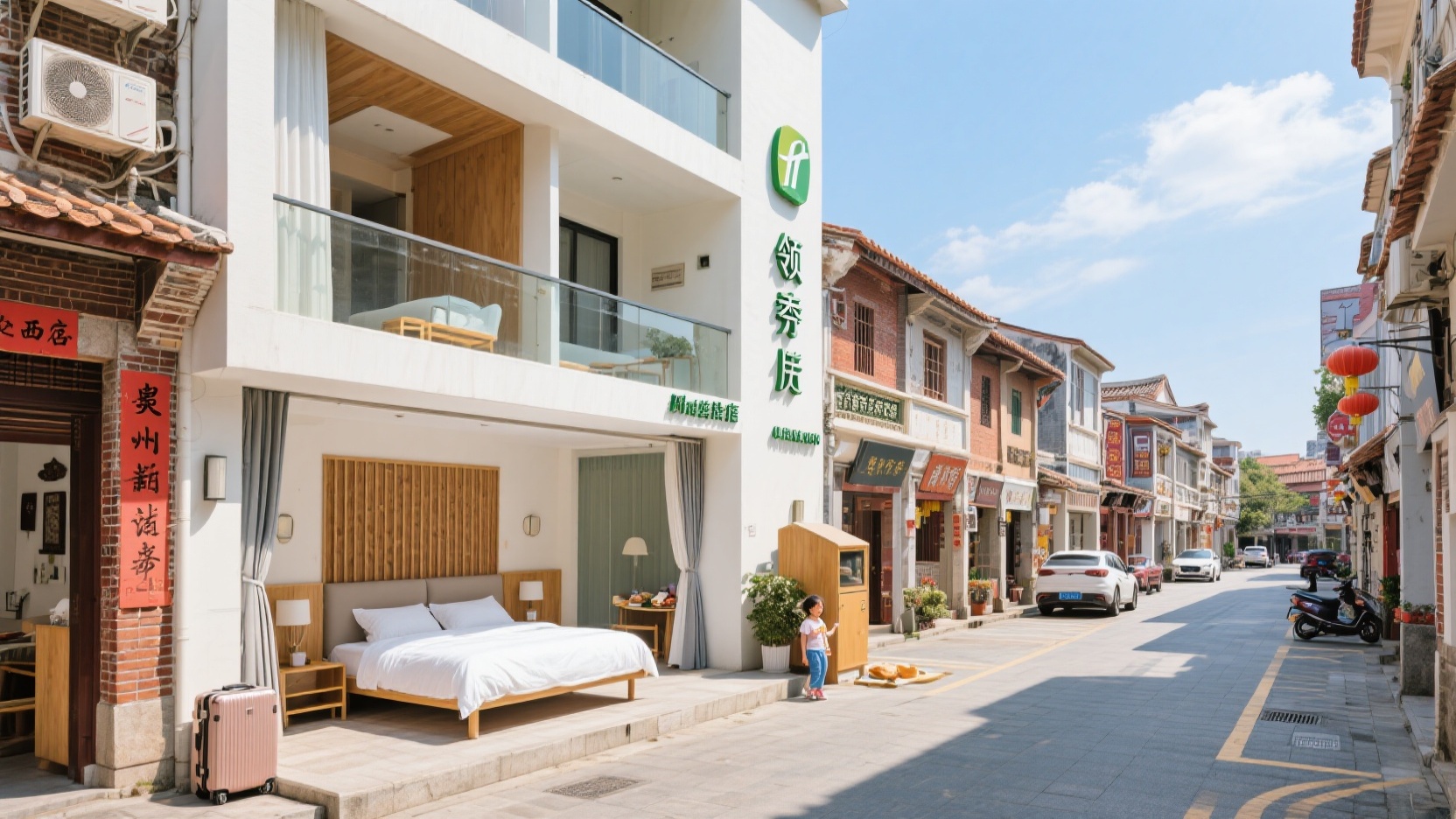
Budget-friendly options: B&Bs in the alleys of the old town's west side vs. chain hotels on the edge of the old town
If you're aiming for the core area of West Street at this price point, there are almost no chain hotels to choose from. So-called "chain hotels on the edge of the old city" are usually located in the East Street and Yiquan Street areas, more than a ten-minute walk from the Bell Tower. For guesthouses in the alleys, you can stay near Jiuguanyi and Taikui Alley, with superior locations. However, good locations come at the cost of sleep quality: old house guesthouses generally have poor soundproofing, and wooden staircases and courtyard corridors will amplify the footsteps of guests returning in the early morning. Chain hotels, at least, have brick walls and standard doors, providing adequate soundproofing.
Regarding hygiene, budget-friendly guesthouses have suffered from significant hygiene issues in recent years, with linens often outsourced. While they may appear clean to the naked eye, corners in the bathrooms can easily reveal their shortcomings. Chain budget brands generally maintain a higher level of hygiene. Don't expect much from either. Guesthouses might serve plain porridge with mung bean cakes, while chains offer packaged bread with soy milk. Parking is inconvenient; the old town's alleyways are narrow, and parking spaces in front of chain stores are limited. Public transportation or ride-hailing services are recommended. Luggage storage: Guesthouse owners offer flexible hours, and leaving luggage at the front desk after check-out is generally negotiable; chain stores have strict regulations for luggage storage, which are more standardized but have time limits.
Comfort-oriented budget: Puxi Wanda/Lingxiu Tiandi apartment/guesthouse vs. mid-range chain hotel
This budget offers the widest range of choices in Quanzhou, but it's also the easiest to make a mistake. High-rise apartment-style guesthouses near Lingxiu Tiandi and Wanda Plaza in Puxi offer superior views and larger spaces compared to chain options in the same price range: suites of 50-60 square meters, complete with washing machines and kitchenettes, are suitable for stays of two nights or more. However, the locational advantage of these apartment-style guesthouses is only superficial: many are hidden in mixed-use buildings, requiring waiting for elevators at night, and are often crowded with delivery drivers and visitors. Soundproofing depends on the building structure, and with lightweight partitions, you'll need to bring your own earplugs.
Mid-range chain hotels in the same area are usually located on Jiangbin North Road or Citong Road. Their lobbies, elevators, and corridors are generally cleaner, and soundproofing is within acceptable limits. In terms of hygiene, the cleaning depth of apartment-style guesthouses is inconsistent; finding a previous guest's hair in the dryer is not uncommon. Chain hotels, on the other hand, have more traceable bedding changes. For breakfast, mid-range chains usually have open kitchens or freshly cooked noodles/thinner soup, while apartment-style guesthouses often don't include breakfast or offer breakfast vouchers for shops downstairs, which may feel more local. Parking: Apartment-style guesthouses generally have underground parking, but it's at your own expense and spaces are limited; chain hotels offer free or low-cost parking, which is more convenient for those driving. Luggage storage: Chain hotel concierges can generally store luggage until the evening of the same day, while guesthouses require scheduling with the housekeeper, offering more flexibility but depending on luck.
Quality-oriented budget: High-end chain hotels in Binjiang/Donghai vs. designer homestays in the ancient city
If you're looking for a higher-quality option, "Old Town Inns" and "River View Inns" in Quanzhou represent two completely different paths. Designer-run guesthouses in the Old Town area are concentrated around West Street, Xinmen Street, and Yuanhe 1916. These are renovated old houses with courtyards or terraces, offering great photo opportunities, and their locations allow you to enjoy the tranquility of the area surrounding Kaiyuan Temple in the early morning. However, half the price is for a sense of "local character," and soundproofing and privacy aren't necessarily better than more comfortable options. Some rooms are adjacent to a communal tea room, and the butler provides a strong social atmosphere.
High-end chain hotels in Binjiang or Donghai are closer to standard vacation accommodations: independent buildings, carpeted corridors, double-glazed windows, and impeccable soundproofing and cleanliness; breakfast is a buffet with a wide variety, suitable for families with parents or children. Parking: High-end chains have large underground parking garages, either free or exclusive to guests; guesthouses in the ancient city generally do not have private parking spaces, requiring guests to park in nearby parking lots and then drag their luggage. Luggage storage: High-end chains offer multi-day storage, while guesthouses typically offer shorter storage times after check-out, but will collect packages for you. Location depends on your itinerary: If you're visiting the ancient city and temples during the day, staying in a guesthouse there will save you travel time; if you're going to Xunpu, Luoyang Bridge, or driving to Chongwu, Binjiang or Donghai are clearly more convenient.
My final conclusion among the three budget tiers
For budget-conscious travelers, the prerequisite for choosing a homestay is "being able to accept the atmosphere of an old house," otherwise chain hotels are more reliable. For comfort-oriented travelers, homestays are suitable for those who want to stay for an extended period and need to do laundry and cook, while chain hotels are suitable for those who value standard service. For quality travelers, choosing a homestay is about buying the atmosphere of Quanzhou at night, while choosing a chain hotel is about buying certainty and quality of rest.
Many guesthouse photos in Quanzhou are two shades brighter than the actual rooms, so I suggest not just looking at the retouched pictures. First, check if the room is located in an alley and if it's a converted historical building. Also, I didn't include "aesthetics" as a key criterion for any of the three price ranges, because the beauty of Quanzhou's old town lies in its streets and alleys, not in the rooms themselves.
Blogger's Summary + Practical Tips
In short: accommodation in Quanzhou isn't about quality, but about the tug-of-war between "space needs" and "sleep needs." Guesthouses immerse you in the story of Quanzhou, while chain hotels ensure you have the energy to continue exploring the next day.
Practical Tips: 1. Avoid guesthouses in the alleys of West Street if you have a lot of luggage or are driving; the cobblestone streets will drive you crazy. 2. Business travelers who need invoices should always choose chain guesthouses, as most individual guesthouses have difficulty issuing invoices. 3. During the off-season (after Spring Festival to before May Day), guesthouse prices in Quanzhou fluctuate greatly, while chain guesthouses have smaller price differences; compare prices before you arrive. 4. When staying in an apartment guesthouse in Lingxiu Tiandi, be sure to ask about the floor and whether it's near an elevator shaft. 5. When traveling with elderly people or children, prioritize quality chain guesthouses; breakfast and soundproofing can save you a lot of emotional stress. Final quick selection advice: Ask yourself three things—Do you need social interaction? If so, choose a guesthouse; if you need solitude, choose a chain guesthouse. Do you need breakfast? If you want freshly made local breakfast, choose a small shop near the guesthouse; if you want a hassle-free self-service breakfast, choose a chain guesthouse. Do you need an invoice? If you need an invoice, choose a chain guesthouse; only put guesthouses in the final round if you don't need an invoice.