
A 7-Day, Slow-Paced Tour of Nanjing for Families and Retirees: A Comprehensive Guide
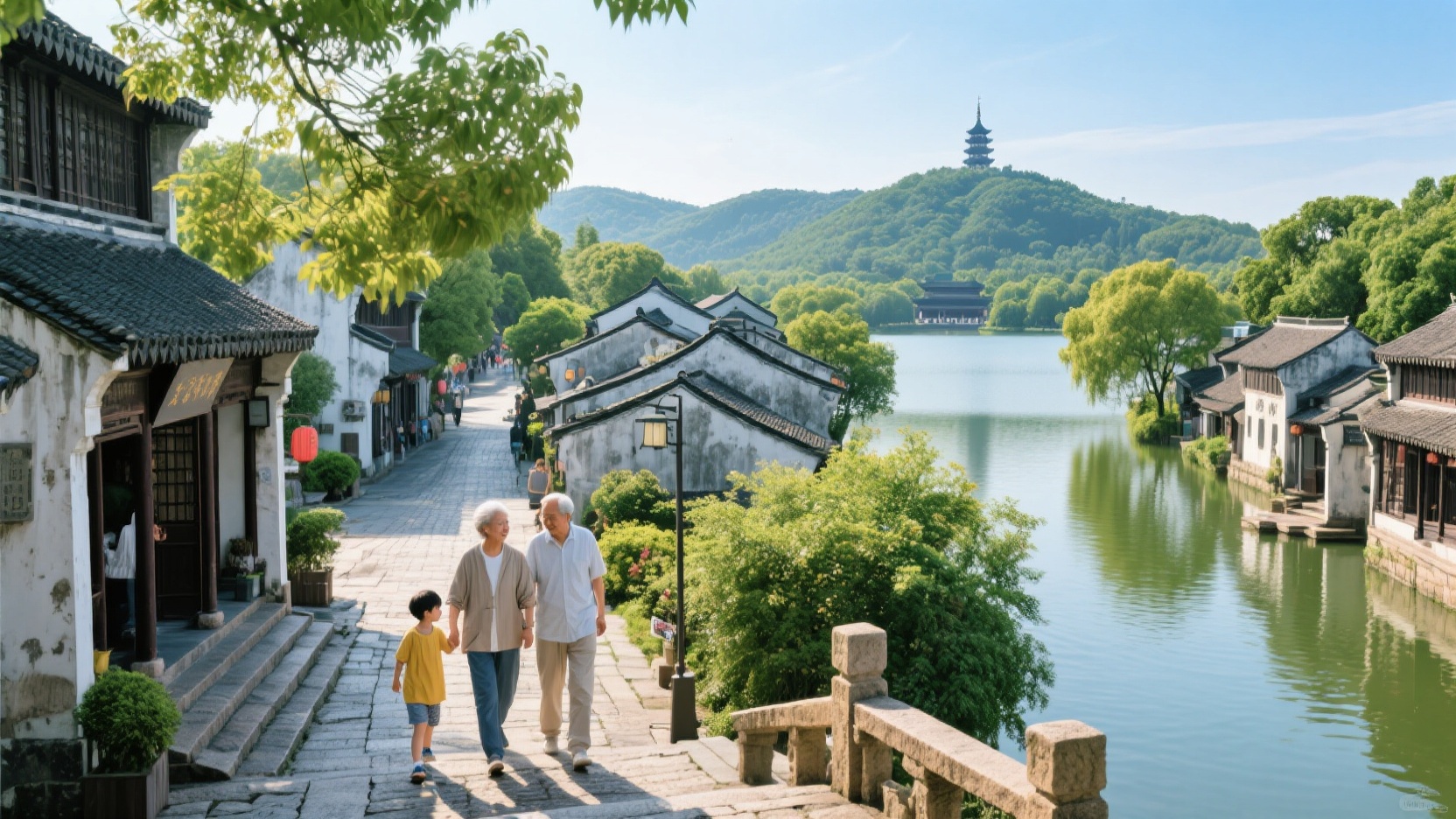
Split your Nanjing trip into seven days and six nights, allowing for a very slow pace. The following itinerary is capped at two to three key destinations per day, making it suitable for those taking time off work, families with children, and retirees. Days 3 and 4 offer two options: a nearby ancient town and a hot spring nature reserve; you can choose only one.
Day 1 Zhongshan Scenic Area: Only visit Sun Yat-sen Mausoleum and Music Terrace
It's not recommended to overschedule on the first day. Start in the morning from the Bo'ai Archway at Sun Yat-sen Mausoleum, a gentle ascent of about 300 steps. Seniors and children can take breaks according to their physical condition. It's suggested to take the shuttle bus from Xiamafang Metro Station before 9:00 AM, avoiding backtracking compared to driving. In the afternoon, head to the Music Terrace; it's small but has plenty of seating, and is suitable for a longer stay when pigeons are flying around. You can skip Ming Xiaoling Mausoleum to avoid wasting energy on unnecessary walking with later visits.
Day 2 Nanjing Museum and Presidential Palace: Primarily Indoors
The Nanjing Museum requires advance reservations. It's recommended to prioritize the History Hall and the Republic of China Hall. The Republic of China Hall's realistic streetscape is friendly to the elderly and children, and is also a convenient alternative on rainy days. The Presidential Palace area has a long route in the afternoon; just walk along the central axis and through Xuyuan Garden, keeping the time to around two hours. The western area is crowded, so it's not recommended to bring strollers. The museum is quite air-conditioned, so bring a light jacket.
Day 3-Day 4 Choose one of two options in the suburbs: Ancient Town Slow City Route
Route A: Gaochun Old Street and Yaxi Slow City. Gaochun Old Street is small in scale with smooth stone-paved streets, suitable for strollers. In the afternoon, visit Yaxi International Slow City, where you can rent electric carts or take sightseeing buses through tea gardens and villages. It's recommended to stay in Gaochun city proper, then visit Gucheng Lake Slow City the next morning for a walk along the wooden boardwalk, and return to Nanjing city center in the afternoon. This route is low-intensity walking, most comfortable in spring and autumn. A day trip is not recommended; staying overnight is necessary to see the slow city at dusk and in the early morning when the streets are empty.
Day 3-Day 4: Choose one of two options in the suburbs: Hot Springs and Nature Reserve Route
Route B: Tangshan Hot Springs and Jiangsu Garden Expo Park. Suitable for autumn/winter or rainy days. Day 3: Check into the hot spring resort in the afternoon. Only one hot spring activity is planned to avoid prolonged soaking for the elderly. Rest every 20 minutes or so while soaking in the hot spring, and avoid entering the water on an empty stomach or immediately after a meal. Day 4: Visit the Garden Expo Park in the morning, mainly to see the city exhibition gardens and cliff landscapes. Return in the afternoon. In summer, this can be replaced with Laoshan National Forest Park, choosing the section from Qifosi Temple to Bulao Village, which has a gentle slope and ample shade.
Day 5: Laomendong and Zhonghuamen City Wall: Evening is the best time to visit.
In the morning, you can rest or catch up on any unfinished sights in the city. Enter Laomendong after 4 PM to avoid the midday sun and large tour groups. The main alley of Laomendong is level, suitable for wheelchair users; however, the side alleys have more steps, so be careful. It's recommended to climb the Zhonghua Gate barbican in the evening to enjoy the view of the old city's southern skyline. Walk no more than one kilometer before returning via the same route. During lantern festivals or holidays, one-way traffic may be implemented in the evening; simply follow the main road.
Day 6 Yihe Road and Qingliang Mountain: Low-intensity street walk
The Yihe Road mansion area is primarily accessible by car, with walking as a secondary option. It's recommended to start near the Yihe Road branch of the Pioneer Bookstore and walk slowly along Luojia Road—Yihe Road—Ninghai Road, as there are almost no steep slopes. In the afternoon, the section from the main entrance of Qingliangshan Park to Ginkgo Valley is short and gentle, and the section from Ginkgo Valley to Chongzheng Academy has no steps, making it suitable for the elderly to sit for extended periods and for children to play. During the sycamore season, there are many fallen leaves, but the paths are not slippery; just be careful of slippery surfaces after rain.
Day 7 Xuanwu Lake and Ming City Wall (Taicheng Section): A relaxed finish.
On the last day, focus solely on Xuanwu Lake. Enter through Xuanwu Gate and walk along the western section of the lakeside road to Taicheng, avoiding the need to circle the entire lake. The Taicheng section of the city wall offers panoramic views of Xuanwu Lake and Jiming Temple, and has fewer steps; if you're feeling energetic, you can take a boat trip on Xuanwu Lake instead of climbing the city wall. After storing your luggage, enjoy the walk; for the return trip, take the subway to the station.
Recommended gentle slope routes suitable for the elderly and children
In Zhongshan Scenic Area, choose the main road from Xingjian Pavilion to Sun Yat-sen Mausoleum, avoiding the Stone Elephant Road; the western section of Xuanwu Lake Ring Road is entirely paved; the Laoshan Bulao Village section and the Yaxi Slow City electric vehicle lane have no continuous steep slopes; the Ming City Wall Taicheng section has fewer steps than the Zhonghua Gate section. Those bringing strollers or wheelchairs should avoid the stone slabs inside Ming Xiaoling Mausoleum and the fragmented paving sections of the Presidential Palace.
List of frequently used local apps
For public transportation, use the official "Nanjing Metro" mini-program or "Chelaile" to check bus routes; for ticket reservations, prioritize checking the official WeChat accounts of "Nanjing Museum" and "Sun Yat-sen Mausoleum"; for cycling within the city, use "Hello" or "Meituan" shared bicycles; for finding restrooms and accessible pathways, refer to the latest reviews on map software, and check "Nanjing Warning Release" for rainy days.
Clothing suggestions for rainy and dry seasons
The rainy season in Nanjing typically lasts from mid-June to early July, characterized by significant humidity and heat. It's recommended to wear quick-drying short-sleeved shirts with a light jacket, choose non-slip hiking shoes, and carry a folding umbrella. During the dry season from November to February of the following year, there are large temperature differences between day and night, requiring an inner down vest. Elderly individuals should wear knee pads and a light scarf. Spring and autumn bring frequent short bursts of rain; layering clothing in layers is the safest approach.