
Jinling Art & Culture: A Selection of In-Depth Cultural and Artistic Journeys in Nanjing
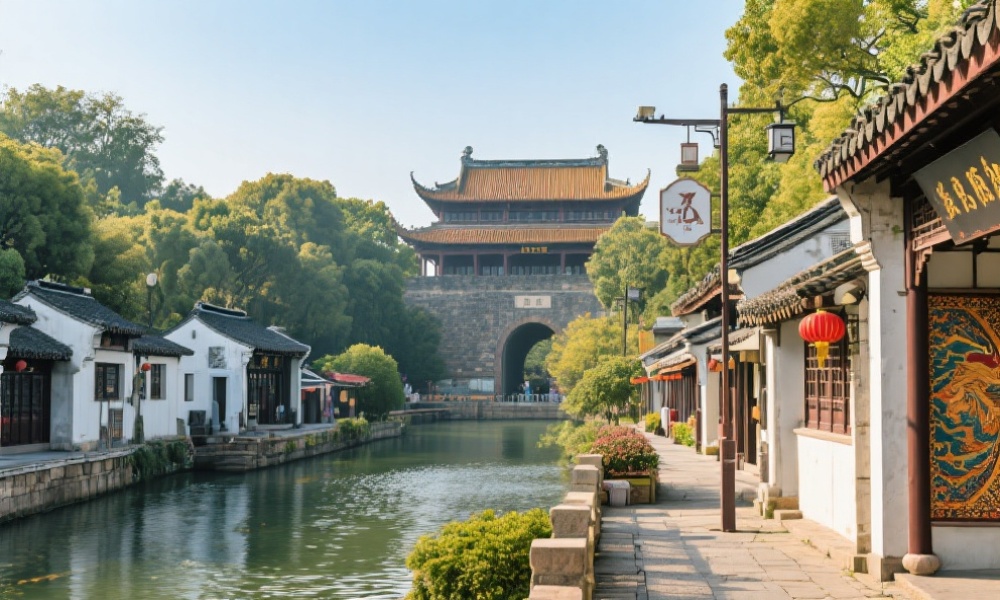
Nanjing, formerly known as Jinling, is a city whose profound cultural heritage as the capital of six dynasties intertwined with the vicissitudes of modern times, endowing it with a unique cultural and artistic charm. XOOTOUR's senior column aims to guide travelers beyond superficial visits, delving into the cultural fabric of Nanjing and planning an in-depth, slow-paced cultural tour centered on museums, historical sites, and intangible cultural heritage experiences, allowing them to feel the artistic essence and humanistic spirit that have been accumulated over thousands of years.
First stop: Imperial grandeur and the origins of civilization
The journey begins in Nanjing's magnificent historical chapters. First and foremost is the Ming Xiaoling Mausoleum , the joint tomb of Zhu Yuanzhang, the founding emperor of the Ming Dynasty, and his empress. It is not only a World Heritage Site but also an outstanding representative of Ming Dynasty imperial mausoleum architecture. The "Spirit Way" design of Xiaoling is ingenious, with a continuous line of stone statues, symbolizing both imperial authority and the ancient emperors' pursuit of eternity and their vision for the afterlife. Strolling through it, one can feel the solemnity of history blending harmoniously with the natural landscape. Its architectural layout, site selection philosophy, and stone carving art all embody the highest achievements of ancient Chinese mausoleum systems, setting a model for later imperial mausoleums.
Following this, we visited the Nanjing Museum . As one of China's three major museums, the Nanjing Museum, with its "one museum, six galleries" layout, systematically presents a broad panorama of Jiangsu and even Chinese history and culture. Its collections encompass various treasures from prehistoric times to the Ming and Qing dynasties, with a particular strength in "Six Dynasties artifacts" and "Ming and Qing porcelain." Visitors can gain a deep understanding of Nanjing's glory as the ancient capital of six dynasties and experience the evolution of artistic styles across different historical periods. The museum is not only a space for displaying artifacts but also a vehicle for historical narratives, constructing a three-dimensional cultural and artistic palace through diverse forms such as artifacts, calligraphy and paintings, and sculptures.
Second stop: Modern Events and the Flow of Cultural Heritage
In the afternoon, we turned our attention to Nanjing's modern history. The Museum of Modern Chinese History (Presidential Palace) is an indispensable window into understanding the history of the Republic of China. This site was once the Heavenly King's Palace of the Taiping Heavenly Kingdom, the Viceroy's Office of Liangjiang, and later the Presidential Palace of the Republic of China, witnessing China's arduous journey from feudal imperial rule to republic. Its architectural style blends Chinese and Western elements, possessing both the elegance of Jiangnan gardens and the solemnity of Western classicism. Through visiting its interior exhibits, such as the Zichao Building, Xuyuan Garden, and the Historical Materials Exhibition Hall, one can directly experience the political turmoil, cultural trends, and social changes of that magnificent era.
As evening falls, we moved to the Confucius Temple-Qinhuai Scenic Area . The Qinhuai River has been the cultural heart of Nanjing since ancient times; its ten-mile stretch, with its sounds of oars and lanterns, has nurtured countless poems by scholars and literati. The Confucius Temple, as a place of worship for Confucius, was the center of ancient Confucian culture. Surrounding it were educational institutions such as the Jiangnan Examination Hall and the Imperial Academy, carrying the memory of China's ancient imperial examination system. As night fell, we took a painted boat for a night cruise on the Qinhuai River, admiring the dazzling lanterns on both banks (a national intangible cultural heritage), and experiencing the unique charm of "the Qinhuai River amidst the sounds of oars and lanterns." This area is not only a historical site but also a living cultural experience zone, interspersed with traditional operas and folk performances, collectively constructing a unique panorama of Nanjing's urban life.
Third stop: Intangible Cultural Heritage Transmission and Urban Memory
The third day's itinerary aims to delve into the everyday life of Nanjing, experiencing the charm of intangible cultural heritage. In the morning, we'll visit the Laomendong Historical and Cultural District . This traditional residential area in the old southern part of Nanjing retains a large number of architectural styles from the Ming and Qing dynasties. Stroll along the cobblestone streets and feel the authentic Nanjing street life. Laomendong is home to many intangible cultural heritage experience points, such as Jinling Buddhist scripture printing techniques, Nanjing Baiju (a type of folk opera), and Qinhuai lantern making. Visitors can choose one or two intangible cultural heritage projects that interest them and participate in hands-on experiences, such as trying to make a Qinhuai lantern in a workshop, or tasting local snacks like duck blood soup and Jiang Youji potstickers, experiencing Nanjing's traditional culture from taste buds to fingertips.
In the afternoon, a visit to the Nanjing Yunjin Museum is recommended. Nanjing Yunjin is a world intangible cultural heritage, hailed as "an inch of brocade worth an inch of gold," representing the pinnacle of ancient Chinese silk weaving craftsmanship. The museum showcases the historical origins, weaving techniques, patterns, and applications of Yunjin in different historical periods. The most captivating exhibit is a live demonstration of a large-scale wooden loom, allowing visitors to closely observe the exquisite craftsmanship of two weavers working in perfect harmony to transform countless threads into magnificent brocade. Yunjin is not merely a textile; it is an artistic treasure embodying the aesthetic sensibilities, philosophical thoughts, and exquisite craftsmanship of the Chinese nation, reflecting a steadfast commitment to and inheritance of ultimate craftsmanship.
Conclusion: Take your time to explore Nanjing and savor its culture.
A cultural and artistic journey through Nanjing is not merely a simple visit to tourist attractions, but a profound experience that engages with history and resonates with art. Through carefully planned routes, you can avoid crowds, slow down your pace, and truly appreciate the vicissitudes of each historical site, the stories told by each artifact, and the transmission of each intangible cultural heritage. In the streets and alleys of Jinling (Nanjing), you will discover that culture and art are deeply ingrained in the city's very fabric, waiting to be discovered and appreciated by discerning individuals. XOOTOUR looks forward to welcoming you to Nanjing for an unforgettable, leisurely cultural tour.