
Pack Nanjing into the weekend | A 2-day, 1-night pop-up itinerary connecting museums, city walls, and the Qinhuai River at night
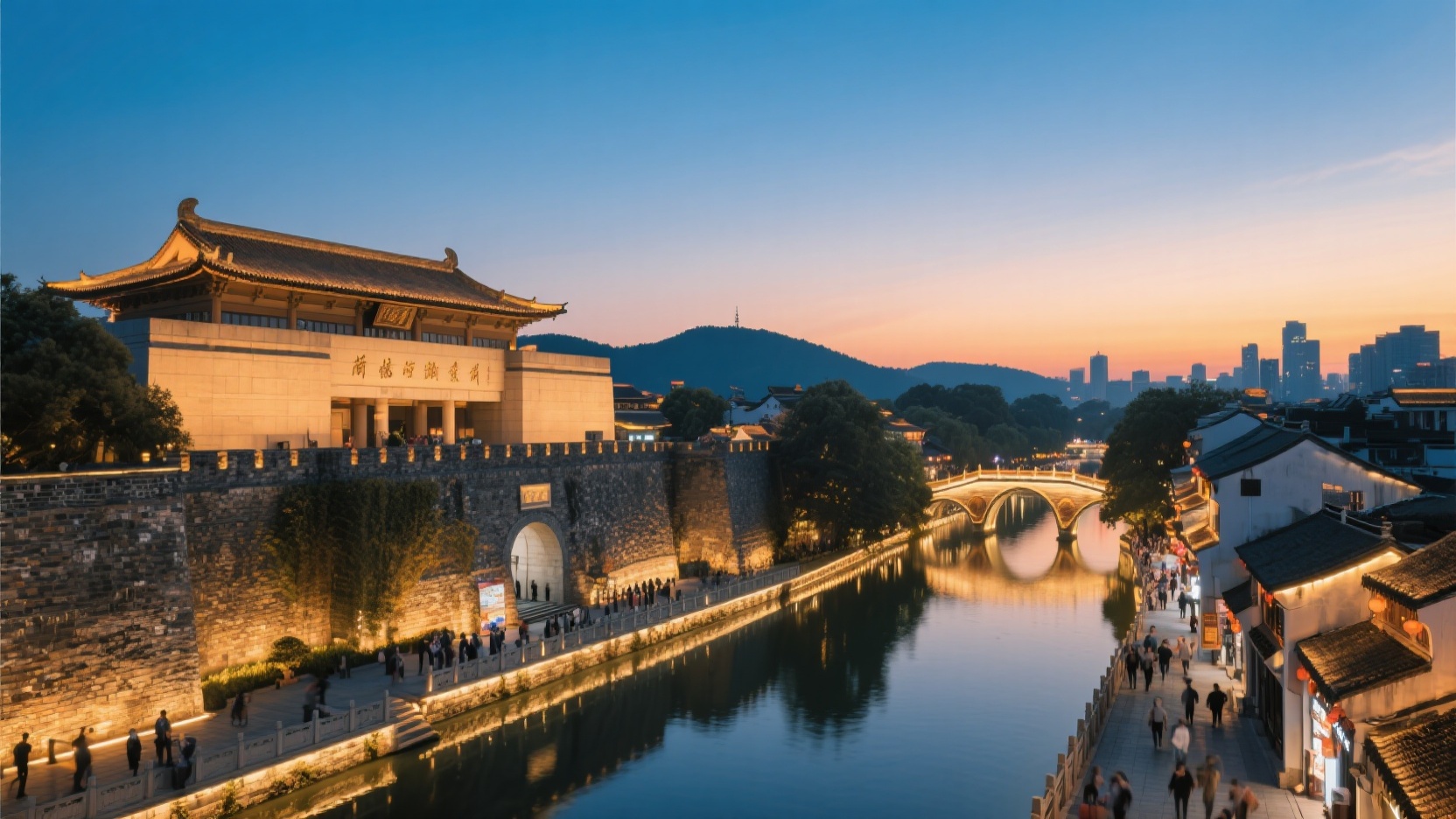
Nanjing isn't a city you can conquer in one go, but a weekend flash mob trip can be divided into two parts: the first day can be dedicated to connecting the city center with a high-density route through the museum, old-city cuisine, Xuanwu Lake sunset, and Qinhuai River night view; the second day can be reserved for a pedestrian inner loop in the southern part of the old city. This arrangement avoids detours and saves time on crossing the river or connecting to the suburbs.
Day 1: High-density city center sightseeing: Museum, Science Alley, Xuanwu Lake, and Qinhuai River at night.
First, head to the Nanjing Museum, provided you book your morning session seven days in advance through official channels. Once inside, prioritize the bronze and jade artifacts in the history hall, then quickly move through the Republic of China hall; two to two and a half hours should be sufficient. The museum is large, so I don't recommend trying to see everything; it's more worthwhile to spend time in the alleyways. It's easy to get from the museum to Daxinggong by subway. Have lunch in Kexiang Alley. This area is closer to the daily lives of locals than Confucius Temple. For potstickers, red bean dumplings, and roast duck rolls, choose based on the queue length—eat at the shortest line; don't rigidly adhere to the "must-eat" spots.
After dinner, walk along Zhongshan East Road to the Presidential Palace, only admiring the gate and the plane trees on both sides without entering. Then, cycle or take a taxi to the Yihe Road mansion area. Walk under the large grove of plane trees at the intersection of Yihe Road and Ninghai Road. The Yihe Road branch of the Vanguard Bookstore is a good place to browse books and rest briefly. There are no dense tourist signs in this area, but the Republican-era mansions, the old post office, and the light and shadow on the courtyard walls are more interesting than the usual photo spots.
In the evening, take the subway to Xuanwu Gate and walk along the Xuanwu Lake Ring Road towards Taicheng. Around sunset, the view of Zijin Mountain and the lake surface illuminated by the light from Taicheng is the softest moment of the day in Nanjing. You don't need to walk the entire Xuanwu Lake; the section from Xuanwu Gate to Taicheng is sufficient. After dark, move on to Confucius Temple and Laomendong. At Confucius Temple, just walk along the outer perimeter of Wende Bridge and Pan Pond; the night view is enough. Enter Laomendong from Gutong Lane; the two side lanes, Santiaoying and Bianying, are quieter than the main street, and the snacks and lights are more suitable for taking photos. The queues for the painted boats on the Qinhuai River are long, and the view from the boats is average; it's not recommended for a quick trip.
Day 2: In-depth exploration of the old city south: Zhonghua Gate Wengcheng, Xiaoxihu and Xinanli
No need to rush to see the sights early the next day; start from the Wengcheng (outer city wall) of Zhonghua Gate. First, climb the Ming city wall and walk a short distance eastward. You can overlook Laomendong (Old Gate East) and the ruins of the Great Bao'en Temple. There are fewer people in the early morning, and the view from the city wall is more expansive than from the ground. After descending the city wall, enter Laomendong, but avoid the main street from the previous night. Instead, turn into Xiaoxihu (Little West Lake), Duicao Lane, and Muxiang Lane. This area is a micro-renewal model of old residential areas in southern Nanjing. White walls, narrow alleys, small shops, and residents' lives coexist, making it closer to the fabric of old southern Nanjing than standard tourist attractions.
Lunch will still be in the south of the city. Options include duck blood soup with vermicelli, xiaolongbao (soup dumplings), and sweet taro soup. Prioritize non-chain shops in the alleys; if there's a long queue at one shop on the main street, walk a few steps into the side alleys – the taste won't be bad. In the afternoon, walk to Ganxi's Former Residence and Xinanli. If it's open, visit the Folk Museum to see Nanjing's traditional courtyard houses. If not, it's fine; the secondhand shops, independent bookstores, and tea shops in Xinanli and Pingshi Street are more suitable for leisurely strolls. Before heading back, you can buy roasted duck or salted duck as souvenirs on Pingshi Street. Don't wait in long queues; the taste of the old shops on the street corners is generally similar.
Transportation Saving Cards, Luggage Packing, and Avoiding Queue Pitfalls
Transportation Savings Card: The two-day trip will mainly involve the subway, with key stops along Lines 2 and 3. Linking your mobile transportation card or purchasing a multi-day subway pass will make things easier. For short-distance travel around the old city, use shared bicycles, but there are many no-parking zones around the city wall, Confucius Temple, and Laomendong, so check the ground markings before parking. If you are entering or exiting from Nanjing South Railway Station, the subway ride to the city center takes about half an hour, so you don't need to take a taxi.
Packing: A backpack is sufficient. The essential items are your ID card, power bank, collapsible water bottle, and a pair of soft-soled shoes. In summer, bring a sun hat and light rain gear; in winter, add a light down jacket and scarf. The temperature difference between indoors and outdoors in Nanjing is not significant, so heavy gear is not necessary. If you plan to climb the city wall, it is recommended to wear shoes with non-slip soles, as the bricks can be slippery after rain.
Queuing Tips: Free venues like the Nanjing Museum require advance booking; morning sessions are faster than afternoon sessions. Kexiang and Laomendong Main Street have the longest queues during lunch and dinner rush hours; visiting before 11:00 AM or after 2:00 PM will save time. Long queues are common for the painted boats on the Qinhuai River and some time-honored shops; if time is limited, you can skip them. Nighttime views are better taken from the opposite bank of Wende Bridge. The Confucius Temple area is crowded on weekend evenings; it's recommended to enter and exit via Sanshan Street or Wudingmen, avoiding the Confucius Temple station exit.