
Discover Lanzhou's culinary delights in a day | 8 local street food dishes from dawn till dusk
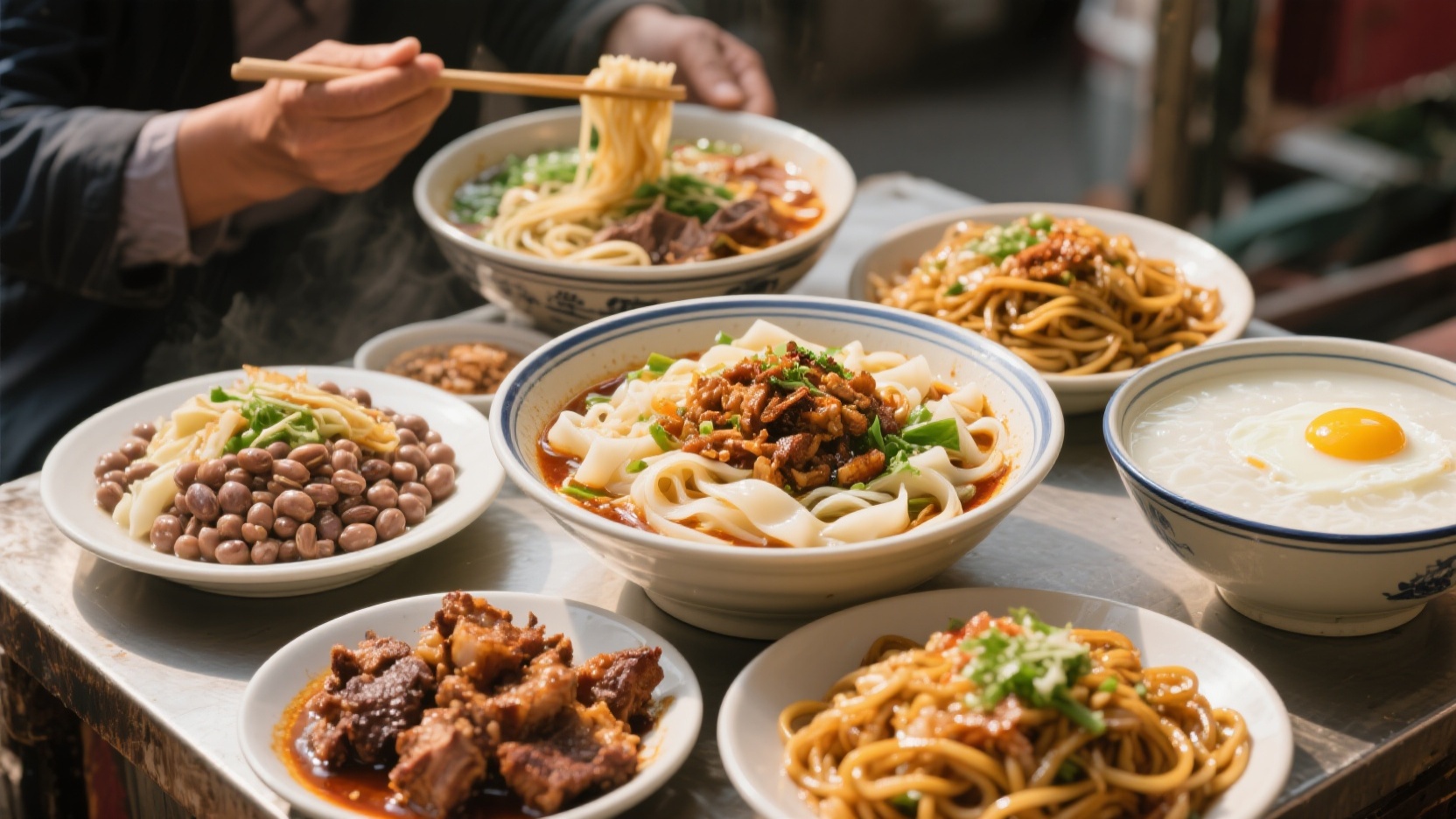
Early morning: Beef noodles and gray beans for a savory-sweet start.
For Lanzhou locals, the morning begins with a bowl of beef noodles. They don't discriminate based on the brand, only on the clarity of the broth and the chewy texture of the noodles. The essence of beef noodles lies in the broth: beef bones, beef shank, and spices like cardamom, Sichuan peppercorns, and ginger peel are simmered in cold water for five to six hours, constantly skimming off the foam until the broth is clear. The noodles are made with local Gansu wheat flour and alkaline water, kneaded, rested, stretched, and pulled to create over ten different shapes, including thin, wide, thick, and hair-thin noodles, depending entirely on the chef's skill. Slices of white radish are placed at the bottom of the bowl, then the noodles are scooped in, the broth is poured over, a spoonful of chili oil is added, and garlic sprouts and cilantro are sprinkled on top. The first pot of broth in the morning is the most flavorful, and regular customers will order a "meat and egg double flight"—adding a portion of beef and a braised egg. First, drink the broth, then mix in the chili oil; the noodles are coated in red oil, the radish is sweet, and the beef is fragrant and chewy. Only after finishing a bowl does a Lanzhou local's biological clock feel calibrated.
Another breakfast option was taken at a dessert shop. Gray beans, made primarily from wild peas, with added baking soda, red dates, and a little sugar, are simmered in a clay pot for several hours until the beans are soft and sandy, and the broth is a deep, glossy brown. A bowl of hot gray beans in the morning offers a delightful blend of bean and date aromas, subtly sweet but not cloying. Paired with a piece of crystal cake or fried dough, it's the simplest "sweet breakfast" in old Lanzhou. It used to be sold by street vendors, and it remains a staple for elderly people after their morning exercise.
Midday: Two main dishes – Gaodan Liangpi (cold skin noodles) and Jiangshui Mian (noodles with fermented vegetable broth)
During lunchtime, the liangpi (cold skin noodles) shops in the streets and alleys of Lanzhou are often packed with office workers. Gaodan liangpi is made by steaming wheat flour batter without washing the gluten, resulting in a thicker texture than regular liangpi. It's cut into long strips and topped with sesame paste, garlic water, vinegar, and chili oil, then topped with cucumber shreds and gluten. It's chewy and smooth, with the rich aroma of sesame paste and the dry fragrance of chili complementing each other, and the sourness cutting through the richness. Many locals eat liangpi with a white flatbread, dipping it in the broth to avoid waste. Liangpi serves as both a staple food and a cold dish; a bowl is neither too filling nor too greasy, making it a "light staple" on Lanzhou's lunch table.
Alternating from this is fermented vegetable broth noodles. The broth is made by naturally fermenting vegetables like celery and lotus root in jars, resulting in a refreshing, tangy flavor with a hint of herbal aroma. Hand-pulled noodles are cooked, rinsed in warm water, and then topped with the broth seasoned with Sichuan peppercorns, served with a side of tiger-skin peppers or braised meat. The tangy and appetizing flavor is especially refreshing in summer. Each household's broth vat has a slightly different sourness, a unique family-style flavor profile. For locals, lunch can be either liangpi (cold skin noodles) or fermented vegetable broth noodles, or they can start with a bowl of liangpi to whet their appetite and finish with half a bowl of broth noodles—simple yet filling, the most comforting taste between office buildings and residential areas.
Afternoon: A pause in the taste of sweet fermented rice and fried rice noodles.
Around three or four in the afternoon, sweet fermented barley is a traditional "Northwest-style afternoon tea" for Lanzhou locals. Made by steaming oats or barley and then fermenting it with yeast, the grains are plump and distinct, with a sweet, slightly alcoholic broth. It tastes best chilled. When eating, a spoonful, broth and all, is enjoyed; the fermented sweet and sour flavors gently unfold on the tongue, more thirst-quenching than milk tea, and a perfect representation of the rugged yet refined nature of Northwest China. On summer nights, chilled sweet fermented barley is a shared symbol of cooling off for generations.
Fried rice noodles are another signature afternoon snack. The prepared cold rice noodles are cut into squares and fried in rapeseed oil in a pan until a crispy crust forms. Then, garlic sprouts, salt, Sichuan peppercorn powder, and chili oil are sprinkled on top. The slightly charred exterior and tender interior, with the aroma of garlic and chili intensified by the hot oil, are a cherished afternoon memory for many Lanzhou residents, eaten hot with bamboo skewers. Together with grey bean curd, the contrast of hot and cold, salty and sweet, creates two distinct temperatures in traditional Lanzhou snacks.
Late at night: Barbecue and milk, eggs, and fermented rice wine as the final dish.
As night falls, the charcoal fires at barbecue stalls become the most prominent light source on the street. Lanzhou barbecue typically uses iron skewers to skewer lamb, cut into small pieces. While grilling, it's sprinkled with salt, cumin, and chili powder. The fat from the lean and fatty parts drips onto the charcoal, releasing a fragrant aroma. Barbecue isn't eaten by the skewer; it's served in bunches, accompanied by a clove of raw garlic, amplifying the meat's flavor with the garlic and spiciness. The iron skewers conduct heat quickly, and the edges of the skewers still sizzle slightly when they arrive at the table. Lamb tendon, beef tendon, and shank tendon each have their fans, but they all share the common thread of needing the dry aroma of cumin and chili powder.
The meal must end with a bowl of milk and egg soup with fermented glutinous rice. Milk is boiled in a copper pot, fermented glutinous rice is added, and beaten eggs are added to form egg drop soup. Finally, black sesame seeds, crushed peanuts, raisins, and a little white sugar are sprinkled on top. The milk is rich and fragrant, the fermented glutinous rice balances the sweetness with its tangy aroma, and the egg drop soup is tender and smooth. A bowl of this late at night leaves the stomach feeling warm and comforted. Roasted meat and fermented glutinous rice soup, one salty and one sweet, one strong and one gentle, form the most stable taste order of a Lanzhou night.
From the streets to the alleys, experience the city through its food in a single day.