
Avoid Hong Kong Accommodation Mistakes | Don't Be Fooled by "Convenience" Anymore: Local Experts Test These Areas for Three Special Groups
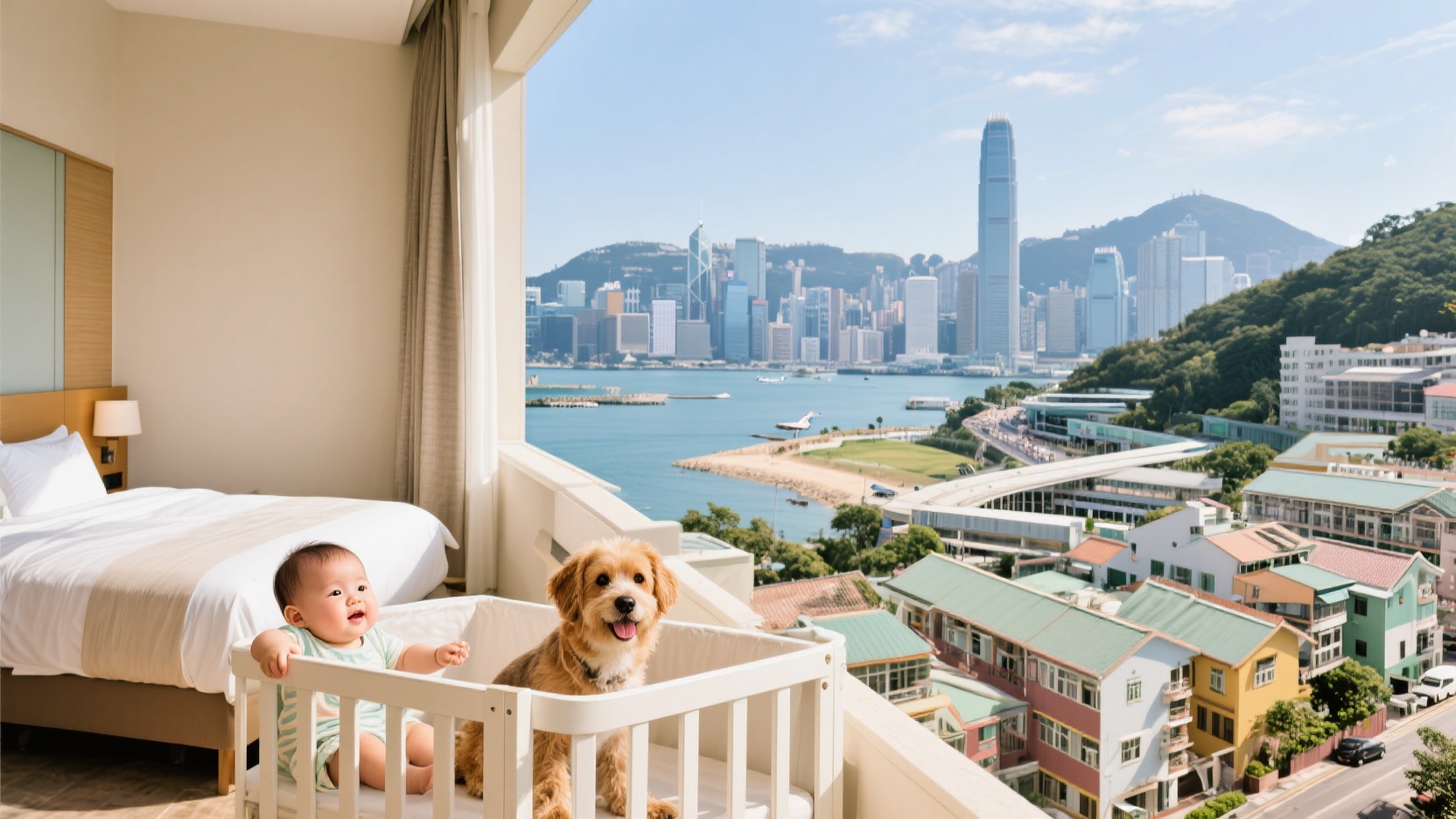
At 3 a.m., dragging two airline-issued crates, a dog was refused accommodation by three hotels on the streets of Mong Kok. The embarrassment was more real than the delay of the Hung Hom train. The biggest pitfall to avoid when choosing accommodation in Hong Kong is never a particular hotel, but rather "trying to choose rooms for special groups with the mindset of a normal tourist."
Travelers with infants under two years old, those with two or more pets, or those arriving in the early morning or catching an early morning flight will likely find themselves paying for hassle if they book rooms in Tsim Sha Tsui, Central, or Causeway Bay based on travel guides. Below is a revised guide to the area's layout based on my own experiences, which is not typically presented in travel guides.
1. Avoid crowded places with infants in Yau Tsim Mong: West Kowloon Reclamation Area understands you better than Central.
Many of the so-called "MTR-connected" hotels in Yau Tsim Mong have rooms where even unfolding a stroller is difficult, and the elevators are so narrow you have to squeeze sideways. The biggest problem when traveling with infants under two isn't the remote location, but rather the old buildings, small rooms, and poor soundproofing. The truly comfortable options are in the West Kowloon Reclamation Area, around Olympic Station and Nam Cheong Station.
This area is a local middle-class residential area, densely populated with serviced apartments and hotel-style apartments. There is a waterfront promenade and shopping mall downstairs, and strollers are almost unobstructed. Most cribs can be borrowed for free, so there is no need to add extra beds. Refrigerators and microwaves are basically standard in apartment rooms, so you don't need to ask the front desk to heat up milk in the middle of the night.
Of the six criteria, the no extra charge for pets is quite unique: most apartments in this area do not allow pets, making it cleaner and quieter for families with infants. The 24-hour front desk, elevators, and facilities for the disabled are all up to the standards of the new buildings, making them much more reliable than hotels in the old town.
II. Serviced Apartments in Tseung Kwan O South: An Alternative for Locals Bringing Children Back to Their Parents' Home
If you feel West Kowloon isn't relaxing enough, the serviced apartments in Tseung Kwan O South offer another counterintuitive solution. While most tourists might think it's far, it's directly accessible by the MTR Tseung Kwan O Line, and it's convenient to cross the border with a stroller. The rooms here are generally larger than those on Hong Kong Island at the same price, with enough space in the living room to spread out a playmat.
A crib can be requested in advance, and most apartments will provide bedding; refrigerators and microwaves are free; pets are still generally prohibited, so there's no need to worry about dog allergies. A 24-hour front desk and elevator are standard amenities, and there's a wheelchair accessible from the subway to the room.
There are plenty of local markets and parks nearby, and when you take your child out in the morning, you see more residents going to school or shopping for groceries than tourists with suitcases. This sense of "local life" is far more important for a baby's routine than living next to tourist attractions.
Third, if you are traveling with two or more pets, you can avoid chain hotels in the city center.
The reality of pet-friendly hotels in Hong Kong's urban areas is that accepting one pet is considered a favor, and they generally refuse to accept more than two. Even some so-called pet-friendly hotels only accept small dogs and charge extra cleaning fees. When traveling with two or more pets, it's best to avoid chain hotels in Tsim Sha Tsui and the Hong Kong Island business district.
A counterintuitive choice is to stay in a village house or holiday home on an outlying island, such as Mui Wo, Lamma Island, or Cheung Chau. Many landlords in these places own dogs and are more accepting of multiple pets; if you negotiate well, pets may not incur extra charges. The trade-off is the lack of a 24-hour front desk and elevator, but in return, your pets won't have to be kept in carriers.
Don't expect a crib, as village houses usually don't provide them; refrigerators and microwaves are generally available, but it depends on the specific property; accessibility facilities are also limited, making them unsuitable for strollers or wheelchairs. However, for families with multiple pets, the primary consideration is whether they can live together.
4. Lamma Island or Mui Wo: The freedom of multi-pet families comes at the cost of convenient amenities.
The village houses near Yung Shue Wan and Mui Wo Pier on Lamma Island are popular weekend getaways for local families with multiple pets. The accommodations here are mostly two-story houses with yards or balconies, allowing dogs to run around freely and cats to roam without constantly hiding under the bed. Pets are less likely to be charged extra, and it's easier to negotiate a deal during the off-season.
Refrigerators and microwaves are common in long-term rental vacation homes, but you need to ask in advance for short-term rentals; 24-hour front desks are generally not available, but the landlord or housekeeper will leave a key; elevators are almost nonexistent, and you'll have to carry your own luggage and pets; accessibility is out of the question. Therefore, this type of accommodation is only suitable for people who are physically fit and can tolerate stairs and quiet nights.
Despite the basic conditions, this kind of accommodation that doesn't treat pets like aliens is a rare find in Hong Kong. Compared to the wary looks at hotel receptionists in the city, the village house owner's statement that "dogs can sit on the sofa" is what truly makes it pet-friendly.
5. If you arrive in Hong Kong in the early morning, don't rush to the airport hotel: you'll be more awake in Tsing Yi or Tsuen Wan West.
After landing in the early morning, most people instinctively book hotels near the airport, only to find them expensive and deserted. A counterintuitive approach is to stay in Tsing Yi or Tsuen Wan West, which are not far from the airport and have 24-hour airport buses and minibuses that can get you there by 2 AM.
Mid-range hotels in the Tsing Yi area and budget business hotels in Tsuen Wan West all have 24-hour front desks and elevators, so you don't have to climb stairs with your luggage. Cribs can be requested in advance, and some rooms have refrigerators and microwaves. Pets are generally prohibited, but this is rarely the case for cross-border passengers arriving in the early morning. Wheelchair accessible facilities are generally available in these newer hotels, making it convenient to bring luggage, strollers, or baby carriages.
The key advantage is that there are 24-hour convenience stores and tea restaurants downstairs, so you can grab a hot meal if you arrive in the early morning. Compared to the isolated feeling of airport hotels, this location, which is "into the city but not across the sea," is much more friendly for those arriving in the early morning.
6. Early morning flight: Staying in Tsing Yi is less stressful than in Tung Chung
People catching early morning flights are often misled by travel guides to stay in Tung Chung, but some hotels in Tung Chung have shuttle bus schedules to the airport, and there are almost no amenities nearby in the early morning. In contrast, the airport bus service in Tsing Yi is reliable in the early morning, and the journey is short, so even if you get up early, it's not too painful.
Accommodation in this area mainly consists of mid-range hotels and serviced apartments. Cribs are available, but in limited quantities, so please make a note in advance. Refrigerators and microwaves are available depending on the room type. Pets are generally not available unless there is an extra charge. 24-hour front desk, elevators, and accessibility are standard features, making this area suitable for families with elderly members or infants traveling to catch a flight.
More practically, Tsing Yi is very close to the Airport Express Tsing Yi Station, so if the bus has a problem, you can temporarily switch to the Airport Express. This "double insurance" is the sense of security that people taking early morning flights need most.
In conclusion: Don't ask what the locals didn't tell you.
First, bringing a baby to live in Yau Tsim Mong is not convenient, it's just asking for trouble. Tent buildings without elevators and cramped rooms will render the stroller useless.
Secondly, families with multiple pets should not try to get along with hotels in the city; instead, they should go directly to village houses on outlying islands. The cleaning fees saved will be enough to cover the ferry tickets.
Thirdly, if you arrive in Hong Kong in the early morning, do not stay in airport hotels. Convenience stores in Tsing Yi and Tsuen Wan West are more lifesavers than the airport lobby.
Fourthly, for early morning flights, don't just focus on Tung Chung; taking the airport bus and the Airport Express from Tsing Yi is a more reliable option.
Article 5: Special groups should confirm six indicators when booking a room, especially the availability of a crib, elevator, and 24-hour front desk; don't be fooled by the phrase "excellent location".