
Don't go to the crowded Harbour City in Hong Kong on a rainy day | A local's firsthand experience: a cultural and artistic route that keeps you dry and prevents your shoes from getting wet. Don't be f
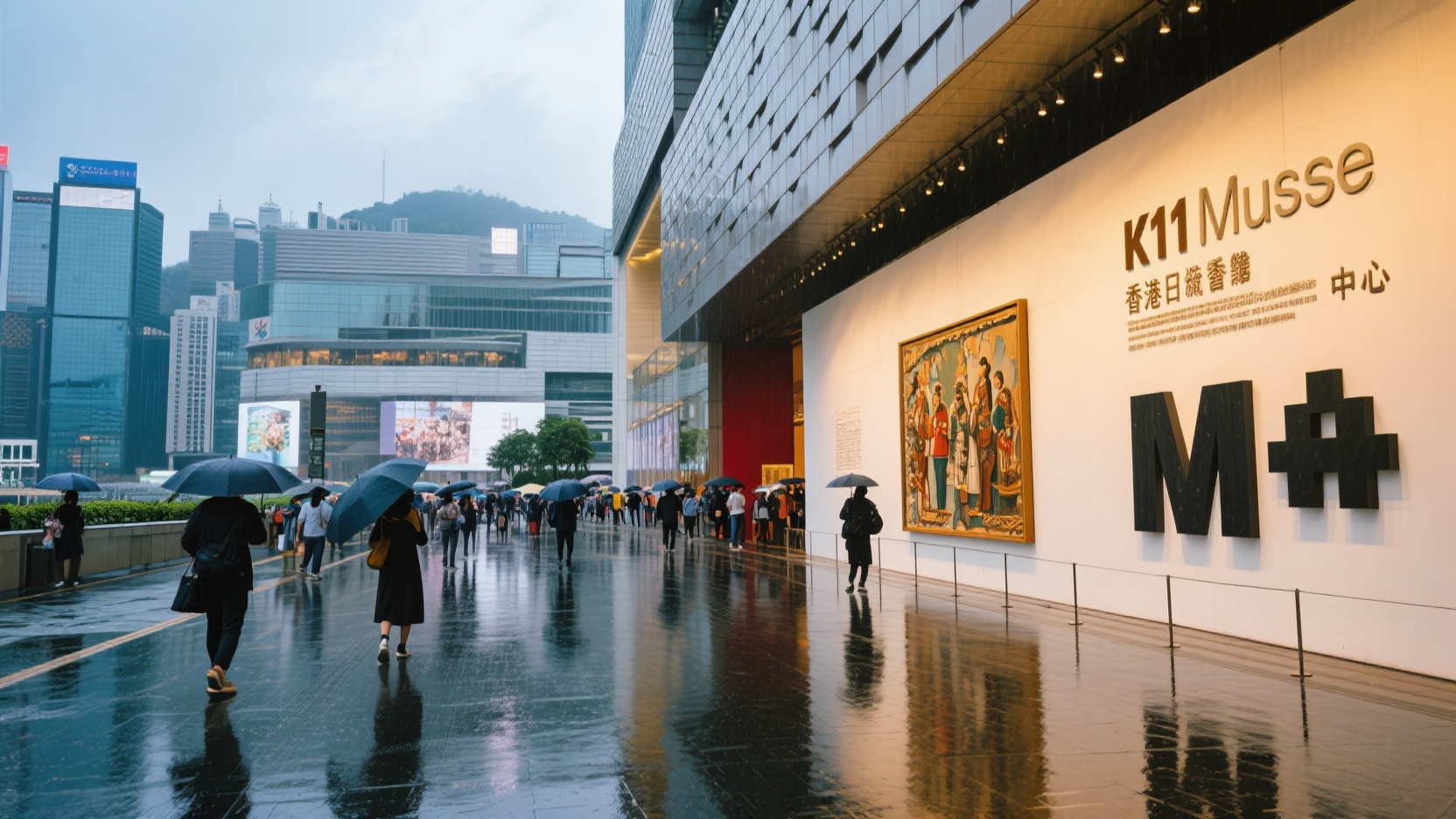
On the day Hong Kong issued a red alert for heavy rain, I saw a bunch of people crowding around the glass doors of Harbour City waiting for the rain to stop. Their shoes and trouser legs were completely soaked. I thought to myself: real locals would have already switched to using the indoor footbridge in the West Kowloon Cultural District, and their shoes would be dry when they came out.
Many people consider Hong Kong's bad weather a waste of time—summer temperatures reaching 35-36 degrees Celsius with typhoons and torrential rain, winters damp and chilly—yet travel guides still recommend outdoor spots like Victoria Peak, Lamma Island, and Shek O. Actually, Hong Kong's most valuable cultural and arts venues are precisely the most comfortable places to visit even in extreme weather: well-air-conditioned, not crowded, and accessible by subway or covered walkways. The route below, which allows you to "stay out all day without getting sunburned, wet, or your shoes soaked," is an indoor route I've taken with friends many times, encompassing West Kowloon and Tsim Sha Tsui.
1. Hong Kong Palace Museum: Make the most of your indoor time on rainy days.
Don't go to Causeway Bay or Mong Kok for your first stop. Take the MTR directly to Kowloon Station and walk to the Hong Kong Palace Museum through the Elements shopping mall passageway. It's closed on Tuesdays, so check before you go to see if it falls on a holiday. Regular tickets are best purchased online in advance, and reservations are even more necessary for special exhibitions. Queuing on-site in Hong Kong on a rainy day isn't exactly romantic.
The exhibits are from the Palace Museum in Beijing, but the display and lighting are more contemporary than traditional museums. A thorough visit would take at least two and a half to three hours. There's a café and light snacks on the first floor, but the price is so-so; I suggest saving your main meal for the next stop, Elements Mall. The air conditioning is so strong you'll need a light jacket—perfect for keeping your shoes warm without getting them wet.
2. Elements at Kowloon Station: Lunch and art installations combined
After exiting the Hong Kong Palace Museum, return to Elements shopping mall at Kowloon Station via the covered pedestrian bridge or the internal passageway of the MTR station. This is not an ordinary shopping mall; the rooftop and corridors feature art installations and exhibitions year-round, making it perfect for enjoying a meal while viewing the exhibits, especially on rainy days. No reservations are required, it's open daily, and you can spend about an hour browsing. Lunch options range from simple meals costing a few tens of dollars per person to mid-range restaurants around a hundred dollars.
Elements' layout is a bit complicated, but because it's so large, it's not as crowded as Harbour City on rainy days. I usually sit in the coffee area for forty minutes, and also check my reservation time for the next stop, M+. It's a real shame that many people only use Elements as a transfer station.
3. M+: A museum of visual culture, more visually appealing than outdoor photo spots.
M+ is the heart of the West Kowloon Cultural District. It's closed on Mondays, so it's best to book special exhibitions and standard tickets in advance. Visit during the hottest or rainiest time of day; you can easily spend two to three hours there. The museum has a spacious layout and a more contemporary feel than the Hong Kong Palace Museum; the interplay of light and shadow on the architecture alone is enough to take many photos.
This place offers more than just traditional "fine arts"; it also includes design, architecture, film, and even Hong Kong's urban memories. The nearby West Kowloon Cultural District boasts numerous waterfront restaurants and cafes, but on rainy days, you don't need to venture out—you can find food and drinks inside the venue or at Elements. When your legs get tired from walking, you can sit on the grand steps and daydream; it doesn't feel like a waste of time at all.
IV. Xiqu Centre, West Kowloon: Enjoy a cup of tea indoors and listen to opera without getting wet in the rain.
After exiting M+, you don't need to walk on the ground. You can use the covered walkways of the West Kowloon Cultural District or return to Kowloon Station and walk to the Xiqu Centre. The Xiqu Centre itself is open every day. The Tea House Theatre is suitable for tourists who don't want to see a long performance, but advance reservations are required. Performances may be closed on Mondays and some other days, so it's best to check beforehand.
This is the most authentically Hong Kong spot on the entire route, featuring small exhibitions and a traditional Chinese opera-themed teahouse. You can spend half an hour to an hour browsing, sitting down for tea and a break – much better than getting caught in the rain at an outdoor cafe. For dining nearby, you can return to Elements or West Kowloon restaurants, or take the MTR directly to Tsim Sha Tsui and continue your journey.
V. Hong Kong Museum of Art: Oriental Aesthetics in Free Air Conditioning
Take the MTR one stop from the Xiqu Centre to Tsim Sha Tsui. After exiting the station, walk through the underground passage or semi-indoor footbridge to reach the Hong Kong Museum of Art. It's closed on Thursdays. Admission is free, but some special exhibitions require reservations or separate tickets. One and a half to two hours is ideal, especially after 4:30 PM when it's less crowded and the lighting is softer.
The Hong Kong Museum of Art's permanent exhibitions often feature local calligraphy, paintings, and ceramics, unlike some trendy exhibitions that rely solely on photo opportunities. For dining nearby, K11 Musea is the top choice, and if you don't want to walk too far, there are also light meals available on the ground floor of the museum. Avoid Harbour City next door on rainy days; the crowds will make you regret it.
VI. K11 Musea: Art Malls Are Not Consumer Traps
Our final stop was K11 Musea, not just a shopping mall, but an art gallery open every night. No reservations are needed, and everything from public art installations to occasional exhibitions is worth seeing; an hour to an hour and a half is enough to explore. The dining options range from mid-range to high-end, perfect for a leisurely evening meal.
Many people think art malls are just consumer traps, but K11 Musea at least lets you see exhibitions without buying anything. On rainy nights, you can walk directly from the mall's basement back to Tsim Sha Tsui or East Tsim Sha Tsui MTR stations without getting wet. If you still have the energy, there's also a covered section to walk to the Avenue of Stars, but don't push yourself.
In closing: Don't ask locals for bad weather tips they didn't tell you
First, avoid visiting the Forbidden City on Tuesdays, M+ on Mondays, and the Hong Kong Museum of Art on Thursdays. These three museums have similar closing days, but it's common to visit them all at once, so be sure to check before you go.
Secondly, in Hong Kong, "indoor" does not mean enclosed shopping malls. Many venues in the West Kowloon Cultural District are connected by covered footbridges and the MTR, but don't completely trust navigation. Some ground sections flood when it rains, so choosing to go via Kowloon Station or Tsim Sha Tsui Station is the safest option.
Thirdly, don't rush in just because it's free. The Hong Kong Museum of Art gets very crowded on free days or special exhibition weekends. If you want a quiet experience, choose a weekday afternoon after 4 pm. The experience will be completely different.
Fourthly, in bad weather, don't just bring an umbrella; bring a light jacket and spare socks. The air conditioning in Hong Kong is often ridiculously low, and if you get wet, you're more likely to catch a cold from the cold air when you enter the building.
Fifthly, if a typhoon really occurs, all venues may be temporarily closed. Don't believe any "no matter the weather" guides. Check the news and government announcements before going out. Safety is more important than checking off attractions.