
48-Hour Hiking Trip in the Mountain City | A Two-Day Weekend Special Forces Itinerary: Efficiently Connecting Night Views, Delicious Food, and Old Streets in the Suburbs
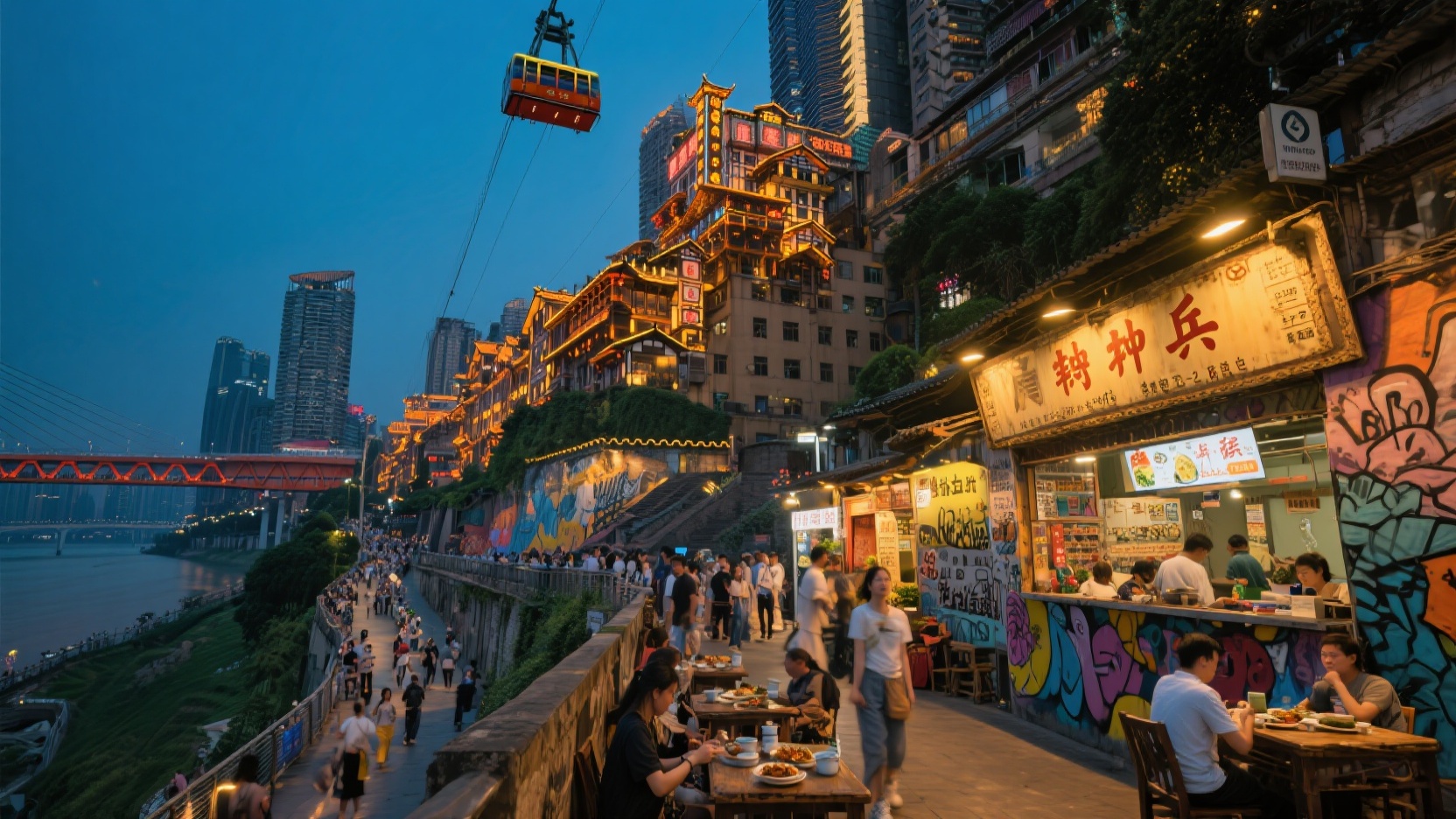
A quick trip to Chongqing doesn't need to be all-encompassing. Just grab a subway line, two hotpot meals, and three nighttime attractions, and you can compress the essence of this 8D mountain city into 48 hours. The two-day itinerary revolves around subway lines 1, 2, and 3. Day 1 focuses on the nighttime views of the Yuzhong Peninsula and Nan'an District, while Day 2 moves on to the old streets of Huangjueping in Jiulongpo District. The pace is compact but not rushed.
Day 1: High-density connection in the city center
Start at 8 AM from Jiaochangkou or Xiaoshizi, and head to Jiefangbei first. 10 minutes is enough to explore Jiefangbei itself; focus on the breakfast options at Bayi Food Street. Try small portions of Chongqing noodles, hot and sour noodles, iron-shaped rice cakes, and red oil wontons, ideally shared between two people to sample the flavors and save room for lunch.
After breakfast, walk about 15 minutes to the main entrance of the Mountain City Trail, and then walk along the cliffside path towards Qixinggang. This section offers panoramic views of the Yangtze River, passes through the old city walls and stilted houses, and is a quieter spot for photography than Baixiangju in the early morning due to its fewer crowds and better lighting. After reaching Qixinggang, take Line 1 and transfer to Line 2 to Liziba.
The best spot to photograph the Liziba light rail train passing through the building isn't on the observation deck downstairs, but rather at the corner platform about 200 meters uphill along the Jialing River riverside road. From there, you can capture both the train entering the building and the river view. After taking your photos, walk or take a taxi from Liziba to Eling No. 2 Factory, which takes about 10 minutes. The rooftop of No. 2 Factory offers a panoramic view of the Yuzhong Peninsula and is suitable for taking photos before noon when the light isn't overhead.
For lunch, head back to Lianglukou or Daping. Local noodle shops or tofu rice stalls in Lianglukou are popular lunch choices, avoiding the 12:00-13:00 office building rush hour. In the afternoon, take the Crown Escalator at Lianglukou, experiencing the 100-meter-long sloping terrain, then take Line 1 back to Xiaoshizi Station to prepare for crossing the river.
It's recommended to book your Yangtze River Cableway time slot in advance through official channels. Queues are relatively less crowded on weekdays between 3:00 PM and 4:00 PM. Take the cable car from the Yuzhong District side, crossing the river to reach Shangxin Street. First, explore Longmenhao Old Street; the views of Dongshuimen Bridge and Raffles City from here are more relaxed than from Hongyadong. In the evening, walk along Nanbin Road and have dinner at an old community hot pot restaurant in Nan'an District. The broth is rich and flavorful, and there are fewer tourists. Try to be seated before 5:30 PM to avoid peak hours.
After dark, head to the Yikeshu (One Tree) viewing platform on Nanshan Mountain. From Nanshan's perspective, you can capture the layered skyline of the Yuzhong Peninsula. When returning to Yuzhong District, navigate directly to the Qianmen Bridge. After 9 PM, Hongyadong lights up, and taking panoramic photos of Hongyadong from the bridge is much more efficient than squeezing through the crowds below. If you still have time, you can walk from the Daijiaxiang cliffside walkway to the 11th-floor platform of Hongyadong, and then descend to Binjiang Road level by level, avoiding the queues against the flow from the 1st floor.
Day 2: In-depth exploration of Huangjueping Old Street
Day 2: Skip the usual Ciqikou and head to Huangjueping in Jiulongpo District, where the old industrial and artistic fabric of Chongqing is preserved. Take Line 2 to Xiejiawan Station at 9 AM, then transfer to a bus or taxi to Huangjueping Main Street. The graffiti street outside the old Sichuan Fine Arts Institute campus is about 1 kilometer long, with graffiti works from different eras covering the exterior walls of residential buildings on both sides. It's less crowded in the morning, perfect for strolling and taking photos.
The Jiaotong Tea House in the middle of Graffiti Street is a daily haunt for local tea drinkers, with its weathered tables, chairs, and thermos flasks creating a picturesque scene. Order a cup of covered-bowl tea, sit down, and relax. Don't just take photos; observe the elderly playing chess and chatting – you'll capture more natural subjects than posed photos for social media. Outside the tea house are several small stalls selling pig's trotter soup and tofu rice, so you can have lunch nearby.
In the afternoon, head to Railway Village No. 4. Walking through the old community alleys, you'll see abandoned railway tracks and the South Railway Station freight depot. This isn't a tourist attraction; the tracks are overgrown with grass, and old carriages are parked nearby, perfect for taking retro film photos. The adjacent Jun Ge Bookstore is filled with old books and old maps of Chongqing; browsing inside will provide valuable background information on the city's transportation history. The entire walk takes about 2-3 hours. Finally, take a bus or taxi from Huangjueping back to the city center. If you have enough time, you can visit the old station building near Caiyuanba Railway Station, or go directly to the airport/high-speed rail station.
Practical Tips: Saving Money, Saving Time, and Avoiding Pitfalls
Regarding cost-saving transportation cards, for the first day of frequent transfers, it's recommended to activate a one-day rail transit pass or use the intercity transit card, as unlimited rides within 24 hours are more cost-effective than accumulating single rides. There are discounts for transferring between Chongqing buses and the rail transit; simply use the same QR code. For the Huangjueping section in the suburbs, take a bus to avoid taxi congestion on the Yangjiaping ring road.
When it comes to packing, a pair of non-slip flat shoes is more important than anything else, as Chongqing has many slopes and often rains; a backpack is better than a suitcase, as it is convenient for climbing slopes and entering and exiting old communities; in summer, bring a small fan, sun hat, and gastrointestinal medicine, and in winter, bring a thin down jacket and hand warmers; your portable power bank should have a large capacity, as navigation and taking photos consume power quickly.
When it comes to avoiding long queues, the Yangtze River Cableway, Hongyadong, and Liziba are the worst-hit areas. Book your cableway online beforehand; at Hongyadong, avoid queuing from the first floor, enter from the Qianmen Bridge or Daijia Lane; when the Liziba viewing platform is crowded, walk to the corner platform on the adjacent riverside road. For hot pot restaurants, try to choose older neighborhood locations and arrive 30 minutes before peak hours, or opt for hot pot for lunch and snacks for dinner to save considerable queuing time.