
How to plan a Chongqing cultural and artistic tour to avoid disappointment? I've created a decision tree based on target audience and number of days.
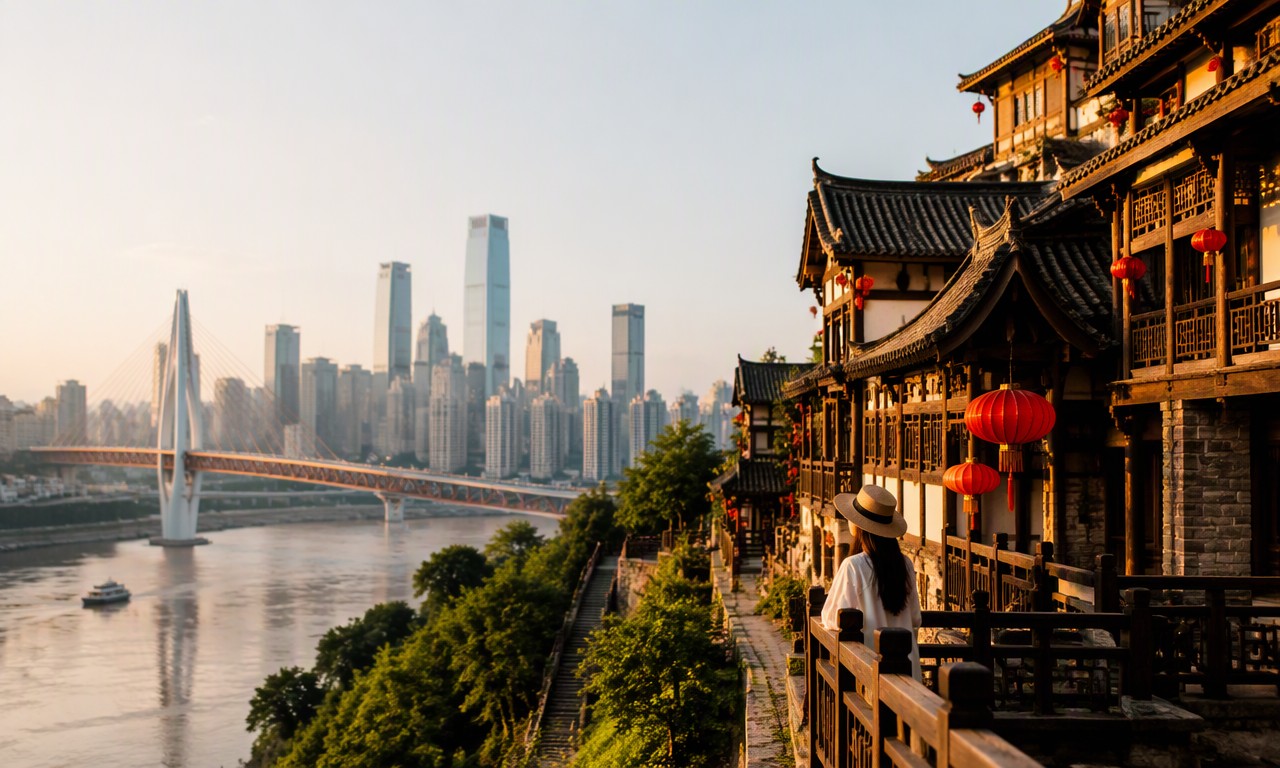
Many readers, before their trip, don't ask "What is there to do in Chongqing?" but rather "How should I plan my itinerary?" The answers vary greatly depending on whether you're traveling with children, accompanying parents, carrying a camera alone, or only having half a day or two full days. This article treats Chongqing's cultural and artistic experiences as a branching tree, exploring it along two main trunks: "number of days" and "population." Each branch offers a practical, followable itinerary, avoiding place names and focusing on judgment and choices.
First level: Look at the number of days; half a day, one day, and two days are three ways to play.
If you only have half a day, don't try to do too much. The worst thing about cultural and artistic experiences is rushing, as you'll need to stop at exhibition halls and shopping streets. With half a day, I suggest choosing only one "cultural area" to explore in depth: either the Zhongshan Fourth Road area plus the Wang Qi Art Museum area, or Huangjueping plus the old campus of the Sichuan Fine Arts Institute. The former is suitable for those who like historical architecture and quiet streets, while the latter is suitable for those who want to see graffiti and an academic atmosphere. Don't mix the two; crossing the river and traffic jams will consume most of your time. The goal of a half-day itinerary isn't to "see everything," but rather to "immerse yourself in an atmosphere."
With a full day, you can do a "cultural comparison between the upper and lower parts of the city." In the morning, visit the Huguang Guild Hall and Baixiang Street area in the lower part of the city to see the immigrant culture and guild hall architecture. In the afternoon, move to the upper part of the city, walking from Tongyuan Gate to Shancheng Lane, passing the former site of the Consulate Lane along the way. The logic behind this route isn't about having many attractions, but rather the relatively complete integration of topography and history. If you can handle walking over 20,000 steps, it's not recommended to take a taxi across districts, as many cultural sites are within walking distance.
With two days, you can divide the exploration of "Traditional Chongqing" and "Industry and Contemporary Art" into two separate days. The first day could be spent exploring the lower city, Tongyuanmen, and Shancheng Lane; the second day could be dedicated to contemporary art spaces in Huangjueping and the Jiulong Peninsula, with a stop at Jiaotong Tea House to conclude the day. The two-day itinerary should be carefully planned, avoiding a day focused entirely on history followed by a day packed with art galleries, which can lead to burnout. Allowing time for a quick meal without waiting in line and some aimless walking will actually foster a deeper connection to the local culture.
The second layer: categorized by target audience, with significant differences between the four lines: family-oriented, artsy/artistic, seniors, and photography.
The biggest pitfall for family trips is "stationary guided tours." Children have limited interest in the inscriptions in the guild halls, but are more interested in the brick walls they can touch, the steps they can run on, and the river views they can observe. It's recommended to use Shancheng Lane as the main area, walking from the entrance to near Ren'ai Hall, looking for air holes in the old walls, the grooves worn into the stone steps, and the arched windows of the old buildings. You can intersperse "observation games" along the way, such as counting the different paving materials along the path. When visiting the Chongqing China Three Gorges Museum, choose only one exhibition hall to see; don't try to see everything. Afterwards, take a walk around People's Square; this is more suitable than forcing three exhibition halls into one. Half a day to a full day is sufficient; the core rhythm is "see half, play half, and walk a bit."
Artistic readers often already have some travel guides and don't need a checklist; they need alternatives that avoid the crowds. Huangjueping's graffiti street is many people's first stop, but the alleys and small exhibition spaces outside the old Sichuan Fine Arts Institute campus are more worth lingering in. If you happen to visit a graduation exhibition or group exhibition, going inside is more interesting than taking photos on the main street. You can sit in the Jiaotong Tea House, but don't just take pictures. Order a cup of tea, sit for twenty minutes, and listen to the conversations around you—it will give you a very authentic sense of being there. A two-day itinerary is suitable for this type of reader. Dedicate the second day entirely to leisurely strolls along the Kowloon Peninsula and the riverside, avoiding any of the popular Instagrammable spots. This will allow you to capture and see something different.
When accompanying elders on trips, the key is to minimize arduous journeys, maintain a slow pace, and ensure adequate seating. Zhongshan Fourth Road is a safe choice; the road is gentle, and the Wang Qi Art Museum and Zengjiayan area allow for alternating between indoor and outdoor activities without causing fatigue. The Huguang Guild Hall in the lower part of the city has many steps; if elders have difficulty walking, they can view the exterior from the plaza at the entrance instead of walking the entire length. Only walk the first section of Shancheng Lane; you can find a place to sit after about twenty minutes. A half-day itinerary is ideal if you include more opportunities to sit down and have tea. A full-day itinerary should be broken up into a morning visit to exhibitions, a midday tea break, and a short walk in the afternoon.
Photography enthusiasts are most concerned about two things: when the light is best and which angle is least disturbed by crowds. Shancheng Lane and Tongyuan Gate are best viewed in the morning or evening; after 10 AM, the crowds increase, and shooting low-angle shots of the steps can easily result in a cluttered background. The graffiti at Huangjueping is actually more photogenic on cloudy days, with better contrast than under strong direct sunlight. The yellow exterior of the Huguang Guild Hall is particularly soft half an hour before sunset, making it ideal for photographing the relationship between the building and the river. On the second day of the two-day trip, you can specifically set aside time after 6 PM to go to the riverbank to photograph the lights gradually brightening on the opposite bank, without having to squeeze into any viewing platforms.
The third level: The budget level affects "how to coordinate," not "whether you can go or not."
Cultural and artistic routes are not budget-sensitive, with many key attractions offering free admission or very low fees. A budget-friendly approach involves using public transportation and walking throughout, opting for street-side noodles and tofu rice for meals; two days won't cost much. A mid-range approach involves finding independent cafes or old teahouses near transportation hubs as rest stops; any fees for exhibitions are perfectly acceptable. A high-end approach involves staying near Shangqingsi or Nanbin Road, walking along the river in the evenings, and hiring a car during the day to minimize travel fatigue. The budget primarily affects comfort and time efficiency, rather than the quality of the cultural experience itself.
Where to stay also depends on your route. Those hiking the lower city and Shancheng Lane should stay near Jiaochangkou and Xiaoshizi in Yuzhong District, but be aware that older buildings may have poor sound insulation. Those hiking Zhongshan Fourth Road and Huangjueping can consider Daping or Xiejiawan, which are not too far from either direction. Readers on a two-day trip should avoid repeatedly moving between Huangjueping and Yuzhong; staying in a central location is more convenient. Allocating some budget for convenient transportation is more important than room decor.
Fourth layer: Make one more minor adjustment based on the season and weather.
One major variable in Chongqing's cultural and artistic routes is the weather. In summer, the outdoor streets and alleys are too hot to walk around at midday; it's recommended to visit indoor exhibitions around noon and explore the streets and alleys in the morning and evening. Winters are damp and cold; the stone steps in the mountain alleys can be slippery after rain, so the elderly and those with children should slow down. Spring and autumn are the best seasons for a complete two-day itinerary, with comfortable temperatures and a high willingness to walk. Photographers should be aware of the temperature difference between day and night in spring, and be aware of strong winds along the river in autumn and winter, which can cause lens fogging. Checking the weather before choosing a route is the most honest advice in Chongqing.