
When visiting an exhibition in Beijing, should I go to 798 first or explore the hutongs first?
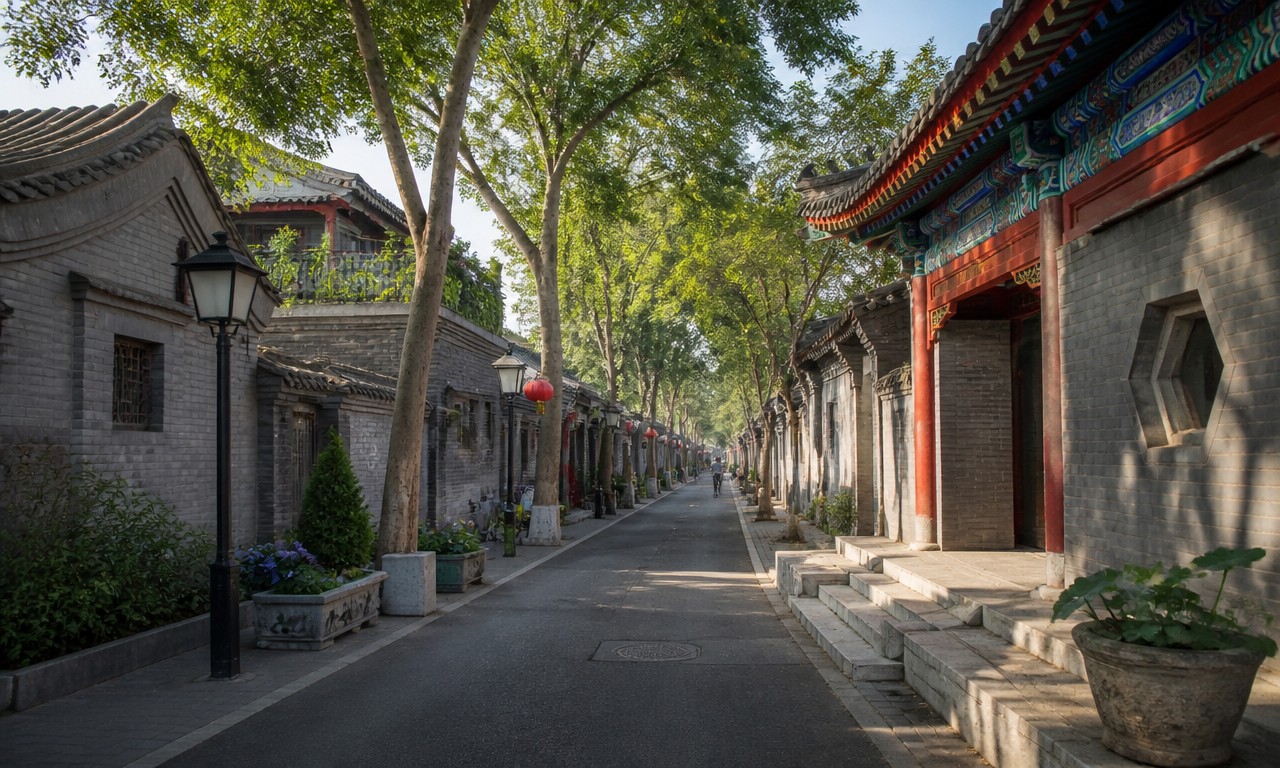
The most perplexing aspect of a cultural and artistic trip to Beijing isn't "which venues to visit," but rather "on the same timeline, should you choose well-known venues or niche, less-traveled ones?" This question deserves a serious answer, because choosing the wrong route could mean wasting a morning in crowded, trendy exhibitions while missing out on truly representative independent spaces showcasing Beijing's local creative ecosystem. Below are seven comparisons, pitting what most guidebooks will tell you against reality, allowing you to find the right fit based on your time and preferences.
Group 1: 798 Art District vs. Independent Art Spaces in Dongsi Hutong
Most guidebooks will tell you that 798 is synonymous with contemporary art in Beijing, with its dense concentration of galleries and rapidly changing exhibitions, making it a must-visit for first-timers. However, the commercialization of 798 has diluted the essence of "exhibition viewing," with many spaces becoming photo backdrops. The truly worthwhile exhibitions are often hidden in the alleys behind the main street. The independent spaces in the hutongs of Dongsi and Xisi, such as some non-profit spaces converted from old factories or courtyard houses, offer smaller exhibitions but with more serious curatorial approaches, and their audiences are mostly local art professionals.
Suitable for: First-time visitors to Beijing who want to see multiple styles at once and don't mind crowds, choose 798; those who want to experience the "contemporary" feel of Beijing's art scene and are willing to take their time exploring, choose Hutong Space. If time is limited, just pick two or three reputable galleries in 798 and then set aside half a day for independent spaces in Dongsi.
Group 2: National Museum of China vs. Shijia Hutong Museum
Most travel guides will tell you that the National Museum of China (NMC) is free and boasts top-notch artifacts, making it the top choice for learning about Chinese history. However, the NMC's permanent exhibitions are enormous, requiring three to four hours even for a quick visit. Furthermore, popular temporary exhibitions often require reservations several days in advance, and long queues can be a significant inconvenience. The Shijia Hutong Museum, also free, is nestled deep within a hutong (traditional alleyway). Its exhibits focus on the history of life in Beijing's hutongs and can be completed in half an hour, while also providing insights into the evolution of the hutong's layout.
Suitable for: Those with a clear interest in general history and large-scale thematic exhibitions and who can get up early to book in advance should choose the National Museum of China; those who want to learn about Beijing's local culture in short bursts of time and avoid the pressure of queuing should choose the Shijia Hutong Museum. When time is tight, choose only one temporary exhibition at the National Museum that you want to see most, and Shijia Hutong can be used as a supplement after exploring the hutongs in Dongsi.
Group 3: The Palace Museum's Permanent Exhibition vs. the Ancient Architecture and Music of Zhihua Temple
Most travel guides will tell you that the Forbidden City is a must-see in Beijing, and that the Treasure Gallery and Clock Gallery are worth separate tickets and require a whole day. In reality, the Forbidden City requires advance reservations, and the crowds are enormous, limiting the exhibition experience due to the throngs of people. Furthermore, many exhibition halls are dimly lit, making it difficult to see details. Zhihua Temple, on the other hand, is an ancient temple from the Ming Dynasty, preserving complete Ming Dynasty architectural paintings and caissons. It features daily performances of Beijing music, has affordable tickets, and is far less crowded, allowing for a quieter and more detailed viewing experience.
Suitable for: First-time visitors to Beijing and those with a strong interest in Ming and Qing dynasty artifacts; those interested in ancient architecture, Buddhist art, and traditional music; Zhihua Temple. If time is limited, visit only the central axis of the Forbidden City and one special exhibition, and allow two hours for Zhihua Temple.
Group 4: Major exhibitions with admission fees at Today Art Museum, Ullens Center for Contemporary Art, etc. vs. Inside-Out Art Museum, Red Brick Art Museum
Most travel guides will tell you that the Today Art Museum and the Ullens Center for Contemporary Art are located in the central area, with frequently updated exhibitions and mid- to high-end ticket prices, making them the mainstream choices for seeing contemporary art. In reality, popular exhibitions at these museums often require queuing to get in, and the exhibition lines are crowded, leaving you feeling exhausted afterward. The Central China Art Museum, located on the west side, is much less crowded, and its exhibition design is more relaxed. The Red Brick Art Museum itself has gardens and red brick spaces, allowing you to combine taking photos with viewing the exhibitions, and its ticket prices are around mid-range.
Suitable for: Those who want to stay up-to-date with the latest art news and don't mind crowds should choose the former; those who want a quiet exhibition and want to explore the architectural spaces should choose the latter. If you're short on time, instead of queuing at Ullens Center for Contemporary Art, it's much more efficient to book an exhibition at the Indoor Art Museum directly.
Group 5: Cultural and creative shops in Nanluoguxiang vs. small theater performances at Gulou West Theater
Most travel guides will tell you that Nanluoguxiang is an artsy landmark, with countless creative and handmade shops, perfect for buying souvenirs. In reality, the main street of Nanluoguxiang has become highly homogenized, selling items not much different from other ancient towns across the country, and it's densely populated. The Gulou West Theater is nearby, regularly hosting small-theater plays and crossover performances. Tickets are mid-range, and the seating is very close, allowing you to see the actors' subtle expressions – this is Beijing's true "artistic scene."
Suitable for: Those who want to buy souvenirs and enjoy shopping and taking photos should choose Nanluoguxiang; those who want to see a memorable performance and experience the theatrical atmosphere of Beijing should choose Gulou West Theater. If you are short on time, skip the main street of Nanluoguxiang and buy a ticket for the small theater that evening for a much more immersive experience.
Group 6: Free outdoor art installations vs. paid indoor thematic exhibitions
Most travel guides will tell you that places like Shougang Park and Chaoyang Park have large outdoor sculptures and public art that are free and great for taking photos, making them good weekend destinations. However, outdoor art installations are greatly affected by the weather—scorching in summer and dry and cold in winter—and many are part of commercial real estate developments, limiting their artistic value. Paid indoor thematic exhibitions, such as temporary exhibitions at some design museums, have clear curatorial threads and background information on the works, offering genuine learning opportunities.
Suitable for: Outdoor exhibitions are suitable for those who enjoy pleasant weather, prefer a leisurely stroll, and are not looking for in-depth curatorial experiences; indoor exhibitions are suitable for those who are particularly interested in a specific theme and are willing to pay for a complete viewing experience. If time is limited, only visit one or two outdoor exhibitions in the evening, and dedicate most of your time to an indoor exhibition that you truly want to see.
Group 7: Central Academy of Fine Arts Museum vs. Songzhuang Art Museum Cluster
Most travel guides will tell you that the CAFA Art Museum, relying on the academy's resources, has impressive graduation and faculty exhibitions, and its location in Wangjing makes it easily accessible. However, the quality of exhibitions at the CAFA Art Museum is inconsistent; some are overly academic and incomprehensible to the average viewer. The Songzhuang Art Museum cluster, while further from the city center, houses dozens of galleries and studios, with artists creating right there, creating a more vibrant atmosphere. Many exhibitions are free, and you might even bump into the artists themselves.
Suitable for: Those who want to learn about the latest trends in academic art and have a convenient spot for food and drinks in Wangjing; those who want to spend a whole day exploring art communities and chatting with creators; and those who want to choose Songzhuang. If you're short on time, you'll need to allocate a separate day for Songzhuang; otherwise, skip it and just spend two hours at the CAFA to see one special exhibition.