
Jinghua Art Realm: Exploring the Cultural Heritage of the Ancient Capital and the Splendor of Contemporary Art
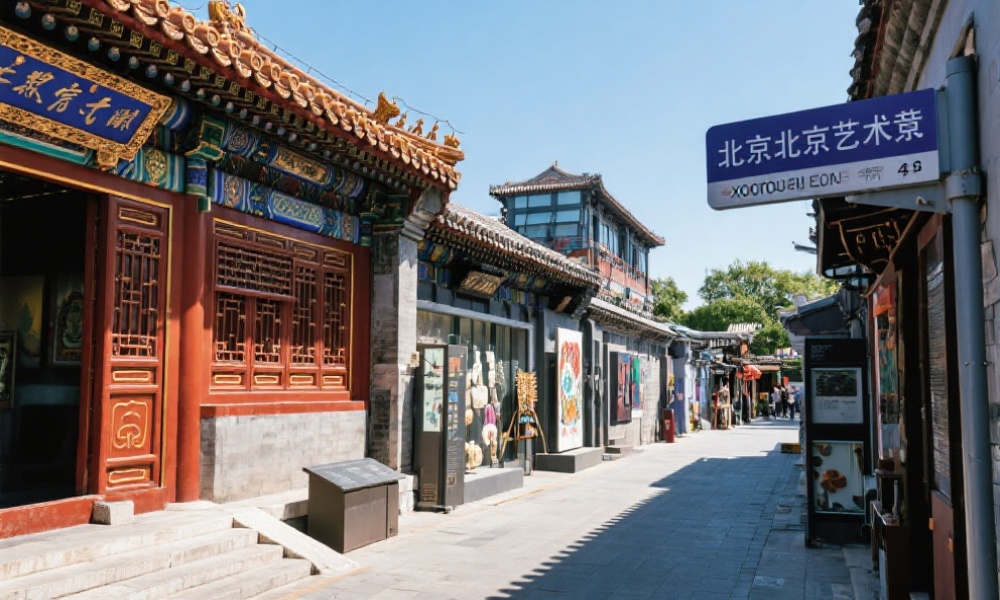
Beijing, an ancient metropolis with over 3,000 years of history as a city and over 800 years as a capital, possesses a cultural and artistic depth and breadth that far exceeds its surface appearance. XOOTOUR understands this well and has specially planned a slow-paced cultural and artistic tour route to guide visitors away from superficial impressions and to delve into the diverse charm of Beijing, from imperial etiquette to everyday life and contemporary art.
Day 1: Imperial Etiquette and Court Art
The first day's itinerary focuses on Beijing as the core symbol of the imperial capital, exploring its rigorous system of etiquette and magnificent court art.
The Palace Museum: As the imperial palace of the Ming and Qing dynasties, the Palace Museum is not only the world's largest and best-preserved wooden architectural complex, but also a vital carrier of Chinese civilization. Its architectural layout strictly adheres to the "front court, rear palace" ritual system, with the Hall of Supreme Harmony, Hall of Central Harmony, and Hall of Preserving Harmony along the central axis symbolizing the supreme power of the emperor. Visitors can gain a deeper understanding of its architectural style, painted craftsmanship, and the various cultural relics housed within, including ceramics, bronzes, calligraphy and paintings, and jade artifacts. These collections not only showcase the superb craftsmanship of ancient China but also carry profound historical and cultural information, serving as keys to understanding traditional Chinese art and social systems. It is recommended to focus your visit on specific themed galleries, such as the Ceramics Gallery and the Clock Gallery, for a more concentrated art experience.
The National Museum of China: Located adjacent to Tiananmen Square, the National Museum of China, with its grand scale and rich collection, systematically showcases the 5,000-year history of Chinese civilization. Its permanent exhibition, "Ancient China," traces the evolution of Chinese civilization from prehistoric times to the Ming and Qing dynasties through nearly ten thousand precious artifacts. Here, visitors can examine the court art seen in the Forbidden City within a broader historical context, understanding the changes in artistic styles across different historical periods and the social, political, and ideological motivations behind them. The museum's permanent special exhibitions also serve as windows into specific art forms or cultural phenomena.
Day Two: Cultural Heritage and Religious Philosophy
The second day's itinerary will turn its attention to Beijing's cultural and educational traditions and religious art, allowing visitors to experience the profound influence of Confucianism and the unique charm of Tibetan Buddhism.
The Temple of Confucius and the Imperial College: These adjacent architectural complexes served as the sites for worshipping Confucius and for cultivating the nation's highest institution of learning during the Yuan, Ming, and Qing dynasties. The Temple of Confucius boasts towering ancient cypress trees and a forest of steles, recording the historical facts of emperors' veneration of Confucius and the evolution of the imperial examination system. The Imperial College, on the other hand, was the highest institution of learning in ancient China. Its Biyong Hall was where the emperor lectured, embodying the solemnity and sanctity of the "Great Learning." Visitors can gain a deeper understanding of the shaping influence of Confucianism on Chinese society, education, and political systems, and experience the lives and patriotic sentiments of students who achieved academic success.
Yonghe Temple: As the largest and best-preserved Tibetan Buddhist temple in Beijing, Yonghe Temple was originally the residence of Emperor Yongzheng of the Qing Dynasty, later converted into a Lama temple. Its architectural style blends Han, Tibetan, and Manchu characteristics, with magnificent halls and numerous exquisite Buddhist statues, thangkas, and ritual implements. The enormous Maitreya Buddha statue in the Wanfu Pavilion is particularly breathtaking. Yonghe Temple is not only an important religious site but also a valuable example for studying Tibetan Buddhist art and cultural exchange during the Qing Dynasty. Visitors can experience the fusion and collision of different cultures and religious arts here.
Peking Opera Experience: An evening performance can be arranged. Peking Opera, a quintessence of Chinese culture, is a comprehensive stage art integrating singing, recitation, acting, and acrobatics. Its facial makeup, costumes, singing styles, and movements all embody profound cultural connotations and aesthetic value. Choosing a historic theater to appreciate the vocal art and performance techniques of Peking Opera is a direct way to understand the essence of traditional Chinese performing arts.
Day 3: Everyday Life and Contemporary Art
The third day's itinerary will take visitors through Beijing's everyday life and modern art spaces, allowing them to experience a dialogue between tradition and modernity.
Hutongs in Beijing: Hutongs are a unique part of Beijing's urban fabric, carrying the everyday life and historical memories of old Beijing. Choose a relatively well-preserved hutong with a moderate level of commercialization (such as Guozijian Street or Shijia Hutong), stroll through it, observe the architectural features of the courtyard houses, and experience the daily life of the neighbors. Deep within the hutongs, you can often find traditional handicraft workshops, such as those for dough figurines, paper cutting, and cloisonné, which are points of transmission for intangible cultural heritage. These traditional skills not only demonstrate exquisite craftsmanship but also represent the living inheritance of Beijing's regional culture. Visitors can choose to participate in a hands-on experience to personally feel the charm of traditional crafts.
Dashilan: As one of Beijing's oldest and most famous commercial streets, Dashilan carries the commercial and cultural history of Beijing since the Ming and Qing dynasties. It is home to numerous century-old brands, such as Ruifuxiang silk, Neiliansheng cloth shoes, and Zhang Yiyuan flower tea. These time-honored brands not only provide goods but are also cultural symbols, witnessing the prosperity and evolution of Beijing's commerce. Visitors can experience the unique atmosphere of a traditional commercial district and learn about the brand stories and cultural heritage behind these established brands.
798 Art District: Transitioning from ancient hutongs and traditional commercial streets, the 798 Art District showcases another side of Beijing's culture and art. Originally industrial buildings constructed in the 1950s, the 798 Art District transformed into a hub for contemporary art in the early 21st century. It houses numerous galleries, art studios, design companies, and cultural institutions, becoming a vital window into Chinese contemporary art. Visitors can appreciate avant-garde artworks, experience the organic fusion of industrial heritage and modern art, and contemplate the dialogue between tradition and modernity, East and West. The 798 Art District is not merely an art exhibition space, but a cultural phenomenon, reflecting the artistic exploration and spiritual outlook of China during its period of social transformation.
A cultural and artistic journey through Beijing is a profound dialogue across time. From the solemn grandeur of the Forbidden City to the warm charm of the hutongs, from the wisdom of Confucian classics to the free expression of contemporary art, each place holds a unique cultural story. XOOTOUR encourages you to slow down, feel with your heart, and make every stop a profound cultural experience.