
Avoid the crowds at Nanluoguxiang | A local's guide to avoiding the pitfalls of Beijing's cultural and artistic tour: This 4.8km walking route in Dongsi is definitely worth it.
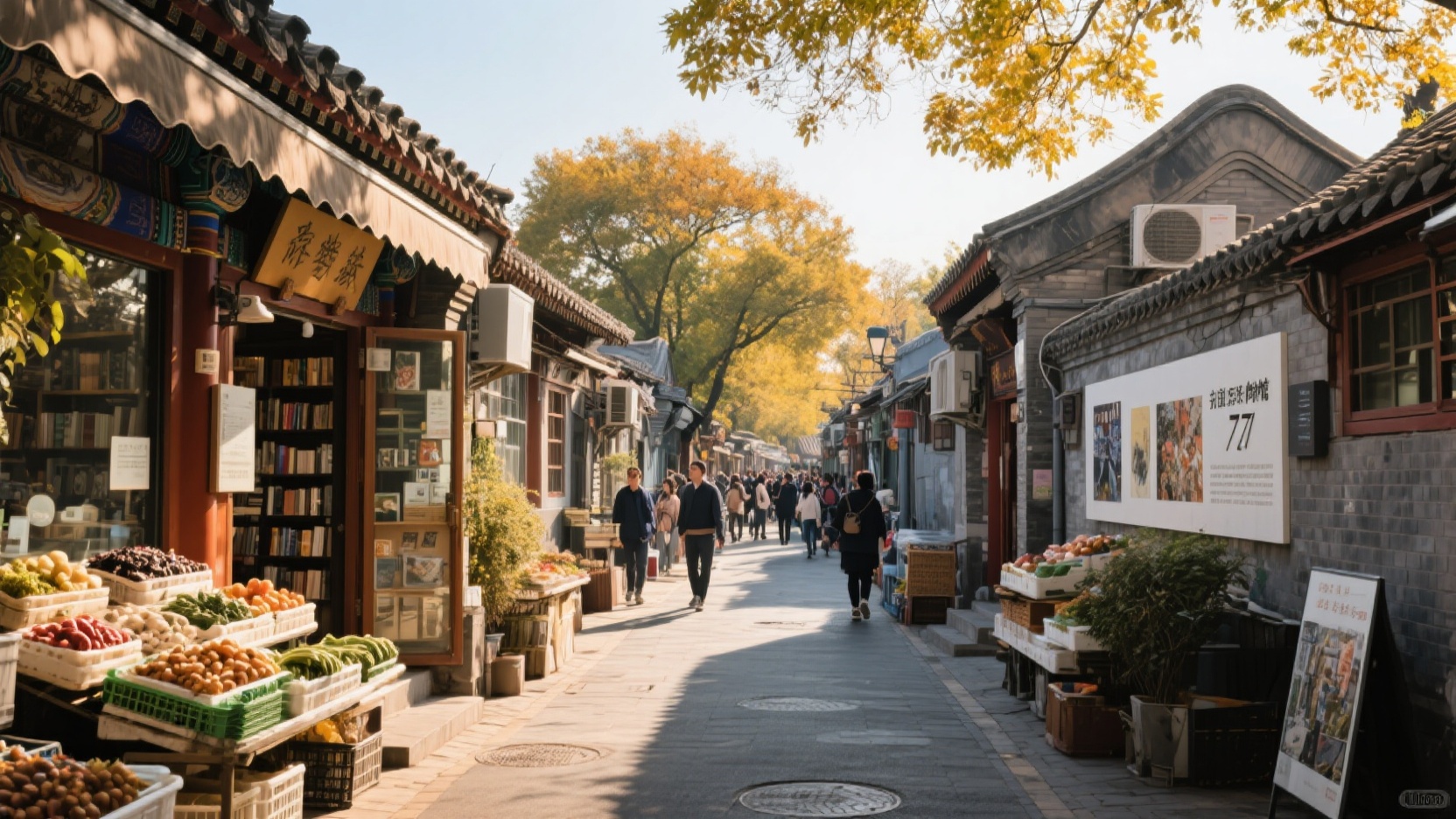
When the entrance to Dongsi Sitiao was blocked by tourists holding signs that read "I miss you so much in Beijing," I realized once again that what people should avoid most in Beijing is not the weather, but those artsy spots that are touted as "must-visit" by travel guides.
Beijing is never short of culture and art; what it lacks is a way of experiencing culture and art separately from queuing for photos. Locals might pass by Nanluoguxiang, Wudaoying, or the 798 Art Zone without even going in; the real everyday art and culture of Beijing is hidden along a 4.8-kilometer walking route from Dongsi to Chaonei.
Let me first tell you about three artsy spots that even locals wouldn't go into.
Nanluoguxiang Main Street: The entire street is filled with stalls selling giant fried squid, old Beijing yogurt, and bamboo tube milk tea, completely obscuring the original gray walls and tiles of the hutongs. Locals would rather go through Yu'er Hutong or Suoyi Hutong than stop on the main street. You might think you're filming old Beijing, but you're actually filming a nationally standardized tourist commercial street.
Wudaoying Hutong: A row of filter-style cafes, each with a "Welcome to Take Photos" sign outside. A cup of coffee inside is surprisingly expensive, and the desserts are mediocre. The so-called artistic vibe relies on vines and signs; long-time residents have long since stopped going out. If you want to take beautiful photos of hutongs, go to Dongsi Sitiao and look at the doorsteps.
The 798 train engine and graffiti wall: Tourists line up to make peace signs in front of the old train, with passersby in the background, while truly free and good exhibitions go unnoticed. Locals entering 798 only head straight for a few galleries, and even complain that the train engine is in their way.
A 4.8-kilometer indigenous walking route: Dongsi—Longfusi—Chaonei
This route starts at the west entrance of Dongsi Third Street, passes through Dongsi Fourth and Fifth Streets, goes through Longfusi Street, the outer street of the National Art Museum of China, 77 Cultural and Creative Park, then to Sanlian Bookstore, and finally turns into Chaonei Market. If you're not in a rush in the afternoon, you can even catch a small theater performance on Longfusi Street in the evening.
It lacks the bustling atmosphere of Nanluoguxiang and the staged feel of 798 Art Zone. Instead, it connects hutongs, parks, old factories, bookstores, and farmers' markets into a daily path for local artistic enthusiasts. It's best visited in spring and autumn, and also in the mornings or evenings of summer.
Dongsi Old Street Entrance and Hutong Museum: Look at the gate piers first, then enter the courtyard.
Between Dongsi Third and Fifth Alleys, any alleyway entrance is worth stopping for 10 minutes. The gray brick gate towers, stone drum-shaped doorposts, old locust trees, and old bicycles parked at the entrances are more authentic than any "artistic wall." First, walk through the Dongsi Olympic Community Park, observe the elderly playing chess and the children leaving school, and then venture deeper into the alleys. The best spot is at the eastern entrance of Fourth Alley, facing west; the afternoon light around 3 or 4 pm will cut diagonally into the depths of the alley.
If you're hungry, don't look for trendy cafes. The roujiamo (meat-filled flatbread) and bean noodle soup on Dongsi North Street are affordable and authentically delicious, costing only around ten yuan per person. Buy one and eat it on the go; it's more like Beijing than the bamboo tube milk tea in Nanluoguxiang.
The Dongsi Hutong Museum is free to enter. The courtyard house is well-preserved and often features small handicraft exhibitions on the theme of hutongs. A 10-minute stop is enough to see the second courtyard. Choose a low angle below the hanging flower gate to frame the eaves and the pomegranate tree in the courtyard.
Longfusi Street Small Theater and 77 Cultural and Creative Park: Local Arts and Culture in Old Factory Buildings
Longfusi Street has remained relatively quiet since its renovation, which is a good way to avoid the crowds of tourists. The Longfu Theater on the street often hosts short plays and stand-up comedy shows, and the posters outside the entrance have a more authentic old-world charm than the performances themselves. The best vantage point for the camera was at the east end of the street, looking west, with the black brick exterior of the Longfu Building and the old shop signs in the background.
Nearby, you can enjoy Fengnian sausage with garlic sauce or Bai Kui Lao Hao's cream-filled fried cakes, both local snacks that have been around for decades, costing between ten and several tens of yuan per person.
The 77 Creative Park was converted from the former Beijing Offset Printing Factory, and its red brick chimneys and iron staircases are well preserved. When there are few people, you can only hear the wind whistling through the steel frame. A good spot is in the atrium to shoot from below, capturing the chimneys and glass curtain walls overlapping; the corner of the iron staircase is also suitable for half-body shots.
There are cafes in the park, where hand-drip coffee is priced in the mid-range, costing a few tens of yuan per person. Sitting there for ten minutes is just enough to restore your energy.
Sanlian Bookstore and Chaonei Market: A blend of literary atmosphere and everyday life separated only by a street.
Sanlian Taofen Bookstore is a long-established humanities bookstore in Beijing. It doesn't have those trendy rotating bookshelves; instead, it offers quiet corners for browsing. Spending 10 minutes flipping through a couple of books on Beijing's urban history is much better than queuing at a trendy bookstore to buy blind boxes. My camera was positioned by the second-floor window, capturing the shadows of the trees in Xizongbu Hutong below.
Less than a kilometer north of here is the Chaonei Market. The entrance isn't fancy, but it's the epitome of Beijing life. Stopping for 10 minutes to watch the vendors arrange vegetables, the locals buying cooked food, and listening to a few words of Beijing dialect is more relaxing than looking at ten Instagram-worthy walls. The best spot to photograph the vegetable piles against the light at the entrance is for stable colors; it's best to nod to the vendor before taking the picture.
You can conveniently buy some douzhi (fermented mung bean juice), gezhihe (fried dough sticks), and braised meat inside; the prices are reasonable. I wouldn't recommend trying douzhi on an empty stomach for the first time, but just smelling the aroma is enough to say you've been to Beijing.
In closing: Don't ask the locals if I didn't tell you.
First, avoid going to the Dongsi Hutong Museum on weekend afternoons, as community activities will occupy the courtyard; it's much quieter on weekdays.
Secondly, some studios in the 77 Cultural and Creative Park are not open to the public. You can enter the park, but don't force your way into studios with signs.
Third, if you absolutely must visit Nanluoguxiang, only walk through Suoyi Hutong and Yu'er Hutong on both sides, and leave the main street as early as possible.
Fourth, this route is best suited for spring and autumn. It's too sunny in the afternoons in summer, and the Chaoyangmen vegetable market is very warm in winter.
Fifth, don't ask locals "where are the best places to take photos," but ask "which door pier has the thickest patina," and you'll be more likely to be considered one of their own.