
Five-day leisurely tour of Taiyuan | A route that won't tire your feet, tested by my parents; elevators, toilets, and hospitals all marked.
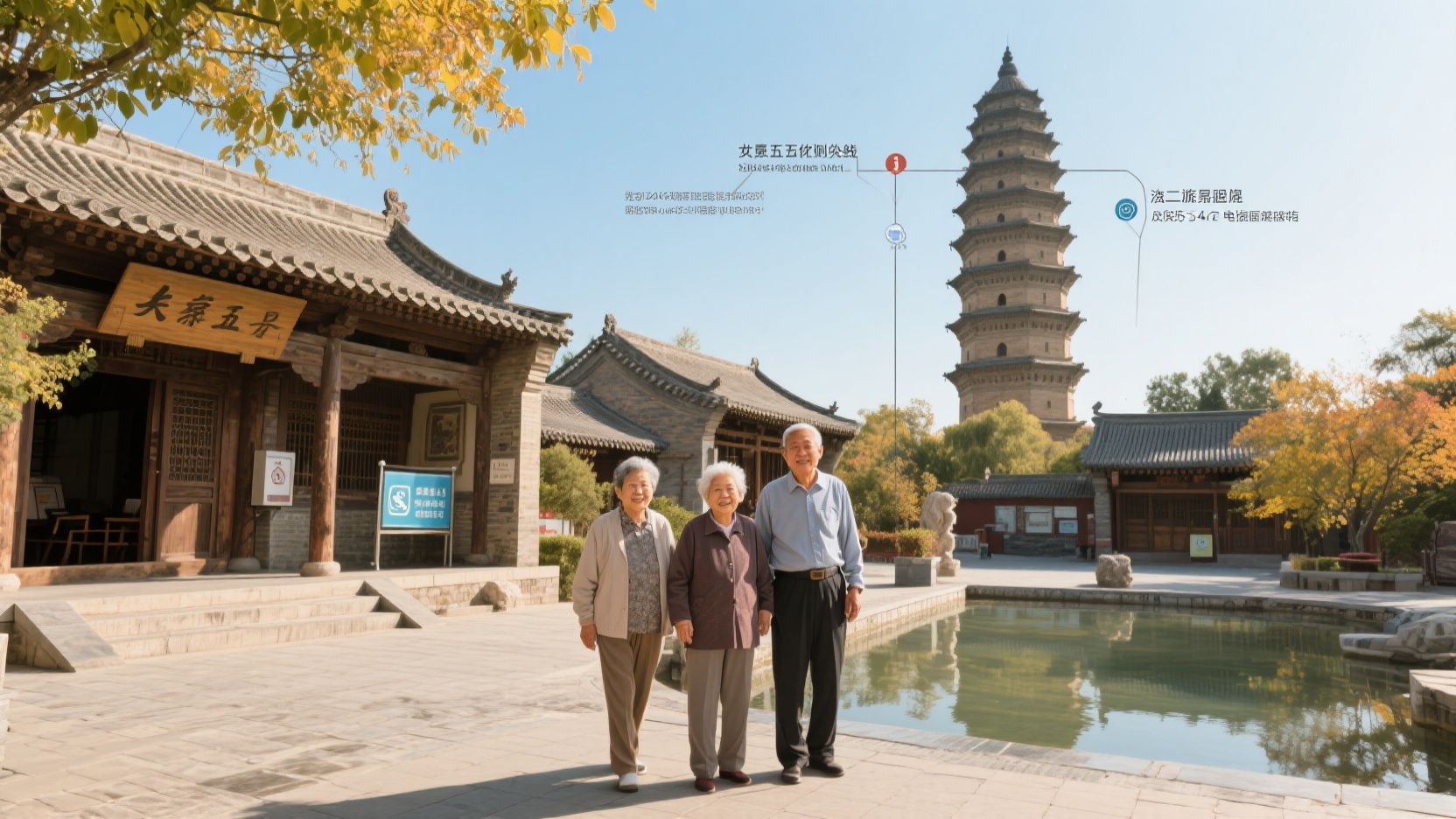
I took my parents to Taiyuan for four nights this time, and we kept our average daily steps under 8,000. The principle was to do one walk in the morning, take a two-hour nap at the hotel after lunch, and do light walking or nothing in the afternoon. My parents have mild knee problems, so I only recommended places with elevators, gentle slopes, and plenty of restrooms. I also checked the distance to the nearest level 2 or higher hospital in advance.
I. Why Taiyuan is suitable for senior citizens to enjoy a leisurely trip: flat terrain, abundant toilets, and close proximity to hospitals.
Taiyuan's old city has a well-organized road network, with most attractions situated on flat ground. Jinci Temple has sightseeing buses to its core area, the Shanxi Museum has elevators and accessible restrooms on every floor, and the lakeside walkway in Yingze Park has almost no steps. Traveling with elderly people is most challenging as it's difficult to find rest areas and restrooms. Based on my own experience, restrooms at Jinci Temple, the Shanxi Museum, and Yingze Park are all within a 5-10 minute walk. Regarding hospitals, the old city's core area has a high concentration of top-tier hospitals; most are within a 15-minute drive from the recommended hotels, as indicated by daily updates.
For accommodation, it is recommended to choose the area around Yingze Street or Fudong Street, rather than guesthouses. You must confirm the width of the elevator door and the width of the corridor, as many old hotels have narrow elevators, making it difficult for wheelchairs to turn.
II. Daily Rhythm for 5 Days 4 Nights: One hour in the morning, two-hour nap at noon, light exercise in the afternoon.
Day 1: Arrival day - No sightseeing planned. After checking in in the afternoon, allow the elderly to take a leisurely 20-minute walk on flat ground near the hotel. Dinner will be at a nearby shopping mall. A top-tier hospital is about a 15-minute drive away. No showers will be taken that day to avoid significant temperature differences.
Day 2: Jinci Temple in the morning, followed by a lunch break and then Yingze Park. Purchase sightseeing bus tickets at Jinci Temple; after getting off, only walk along the central axis, avoiding the hillsides on either side. Some ancient buildings have high thresholds, so it's not recommended to force a wheelchair in. Have lunch outside Jinci Temple, then return to the hotel for a two-hour rest. A secondary-level hospital near Jinci Temple is about a 15-minute drive away. After 4:30 PM, head to Yingze Park and walk halfway around the lake. There are many benches along the lake. The park is about a 10-minute drive from a tertiary-level hospital.
Choose one of D3 options; see the next section.
On Day 4, visit the Shanxi Museum in the morning. The entire museum has elevators and accessible restrooms. Visit each floor from top to bottom; it takes about an hour and a half to complete. A top-tier hospital is about a ten-minute drive away. After lunch, go to a traditional shop near the food street to buy some vinegar and pastries. Avoid carrying heavy items and have the shopkeeper ship them.
Day 5: Return trip. After breakfast, only stretching will be done. Check out before 10:00 AM and head to the station or airport. No sightseeing is planned.
Day 3: Choose one of the following: leisurely explore Qinglong Ancient Town or spend half a day soaking in the hot springs.
If your parents are still able to walk, choose Qinglong Ancient Town. The main street is a long, narrow stone-paved road with a few gentle slopes. There are toilets every two to three hundred meters on both sides. Avoid the paid area leading to the city wall; just explore the main street, the Guandi Temple, and the ancient stage. Electric carts are available for rent about 300 meters from the visitor center to the main street. The nearest secondary hospital is about a 20-minute drive away.
If your parents have knee problems or the weather is cold, choose a hot spring. Select a high-end hot spring with a rest area; the changing room and pool area should be non-slip with handrails, and you must get up and drink warm water after soaking for 15 minutes. The toilets and showers in the hot spring area should be close together to avoid walking long, slippery distances. Enter the pool at 10:00 AM, have a light lunch, and return to the hotel to sleep before 2:00 PM. Neither option includes any other attractions.
IV. Three pitfalls to avoid when parents force their children to follow their parents' lead.
The first pitfall was the Twin Pagodas Temple. The numerous steps and narrow, steep staircases inside the pagodas made it completely unsuitable for seniors. The second pitfall was the alleyways of some popular old streets, where the gaps between the stone slabs were wide, and electric scooters could easily cause tripping. The third pitfall was overly pursuing multiple attractions in one day. Taking parents out isn't about completing a task; continuously checking off tourist spots can cause fluctuations in blood pressure and blood sugar. This time, I eliminated all places requiring climbing or walking on gravel paths, which my parents found the most relaxing.
V. Blogger's Summary: The key to a slow and controlled travel experience in Taiyuan lies in "controllability".
My biggest takeaway after five days: the destination isn't important, the exit strategy is. Only one essential activity is allowed each day; a midday rest is crucial, avoiding emotional drain while rushing. Taiyuan is friendly to seniors; as long as you avoid areas with many steps, you won't tire your feet, need to urinate, or feel anxious.
VI. 20-Item Packing Checklist for Seniors and 5 Types of Commonly Used Medications
The list includes 20 items: 1. Folding seat cushion; 2. Folding trekking poles or crutches; 3. Two pairs of non-slip soft-soled shoes; 4. Knee pads; 5. Disposable underwear; 6. Medicine boxes; 7. Thermos cup; 8. Night light; 9. Folding toilet stool; 10. Non-slip slippers; 11. Identification documents and medical insurance card; 12. Medical record summary; 13. Blood glucose meter and blood pressure monitor; 14. Individually packaged snacks; 15. Lightweight umbrella; 16. Thin down vest; 17. Portable urine bag; 18. Reading glasses; 19. Spare batteries for hearing aids; 20. Emergency contact card.
Five Commonly Used Medications: Bring enough cardiovascular medications and divide them into two portions; carry blood sugar medications and a blood glucose meter with you; consult your doctor beforehand about joint pain relief patches or oral nonsteroidal anti-inflammatory drugs; bring gastrointestinal medications and oral rehydration salts; keep allergy medications and, if necessary, sleeping pills on hand. Do not check any medications; keep them in your carry-on bag.